Should your next material order run through a leather distributor, or straight to the factory? Most procurement teams answer with habit, and habit is expensive in both directions. Buyers who always go direct tie up cash in inventory they do not need. Buyers who always use distributors pay a middleman margin on programs big enough to skip it. The right answer depends on order size, repeat cadence, and who holds the stock between orders.
This guide walks the price chain with real numbers and shows when distribution earns its margin. It closes with a pre-signing checklist you can run this week.
Where a Leather Distributor Sits in the Price Chain
Consumer cost breakdowns make the layering visible. One widely cited teardown of a $320 branded handbag assigns 20% to the distributor. Retail takes 25%, and brand marketing takes 35%. The factory-side product cost accounts for only 20%. Materials move through the same chain in B2B, just with thinner percentages at each stop. The distributor’s 20% buys warehouse space, working capital, and local service. Whether that purchase is worth it is the entire question of this article.

Warehouse stock is the distributor’s core product. The material itself comes second.
The Margin Math: What Each Layer Adds
Sourcing analysts who model the same wallet order across channels found the factory-direct route at $4.80 per unit. The identical goods through a trading company landed at $6.00. The same item bought through a marketplace listing cost $7.30 once platform premiums were counted. Handbag-industry guides put the trading-company premium at 15% to 30% of landed cost. Wholesaler business-plan benchmarks complete the picture. A merchant wholesaler under NAICS 424990 realistically runs 18% to 30% gross margin. Net sits at only 3% to 8%, because warehousing and credit terms consume the rest:
| Channel | Indicative cost | Premium vs factory | What you buy |
|---|---|---|---|
| Factory direct | $4.80 / unit | Baseline | Production control, batch consistency |
| Trading company | $6.00 / unit | 15-30% | Aggregation, export handling |
| Distributor with stock | +18-30% gross | Varies by region | Local inventory, credit, short lead |
| Marketplace listing | $7.30 / unit | ~50% | Convenience only |
The table reframes the debate. A distributor’s premium is not wasted money by definition. It is a price on inventory risk and service. Your job is to check whether you actually receive those two things.

Sample evaluation should include the question: who physically holds this stock?
A Worked Example: Two Programs, Two Answers
Numbers settle this faster than principles. Take two buyers sourcing the same coated fabric at $4.80 per meter factory price. Buyer A runs a 10,000-meter annual program in one article. Buyer B runs a studio that needs 300 meters a quarter across four colors. Model both with distribution at a 20% premium and inventory carrying cost at 20% a year:
| Cost line | Buyer A: 10,000 m direct | Buyer B: 300 m via distributor |
|---|---|---|
| Material cost | $48,000 | $1,728 (with 20% premium) |
| Inventory carrying | High, whole batches held | Near zero, stock stays with distributor |
| Freight profile | Consolidated sea freight | Local delivery, no sea leg |
| Re-order risk | Low, factory controls batch | Medium, depends on replenishment terms |
Buyer A pays roughly $9,600 in distribution premium for stock services it does not need. Buyer B avoids holding $1,400 of dead material between quarters. Same material, opposite answers. This is why the question “distributor or factory” only has a per-program answer, never a global one.
When a Leather Distributor Is the Right Call
Distribution earns its margin in four situations. First, small and mixed orders. A distributor aggregates volumes across customers, so a 200-meter order becomes practical when a factory line runs in tonnage. Second, program restarts. When a customer cancels mid-season, distributor stock can save a retail window that factory lead times cannot. Third, local service. Returns, cut-to-size service, and short-notice top-ups all favor a partner in your time zone. Fourth, credit. A distributor that offers 60-day terms is extending working capital that a factory in another currency usually will not.
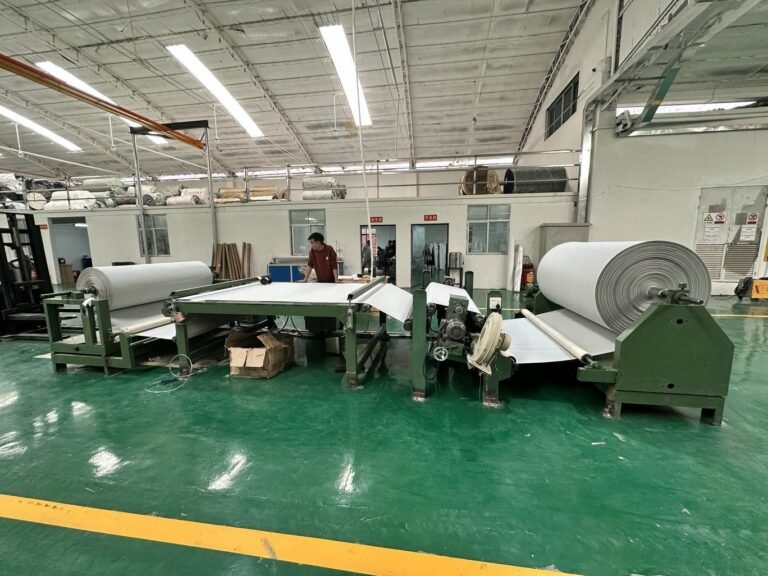
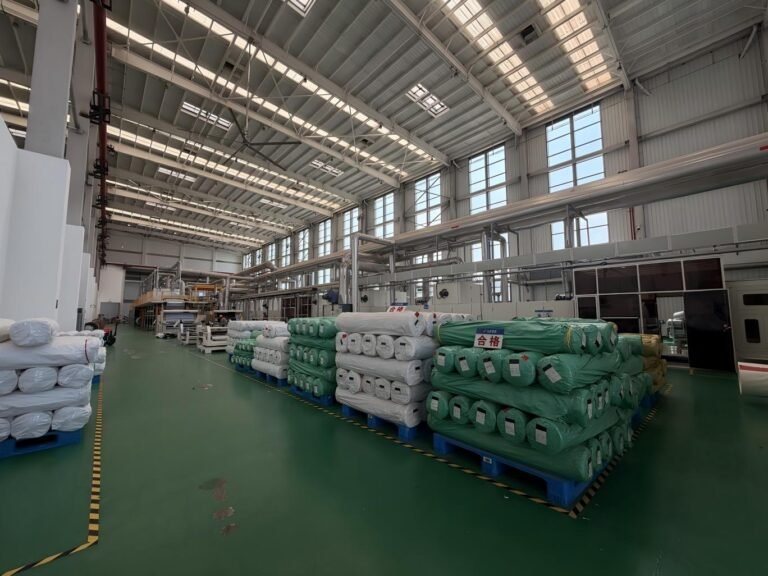
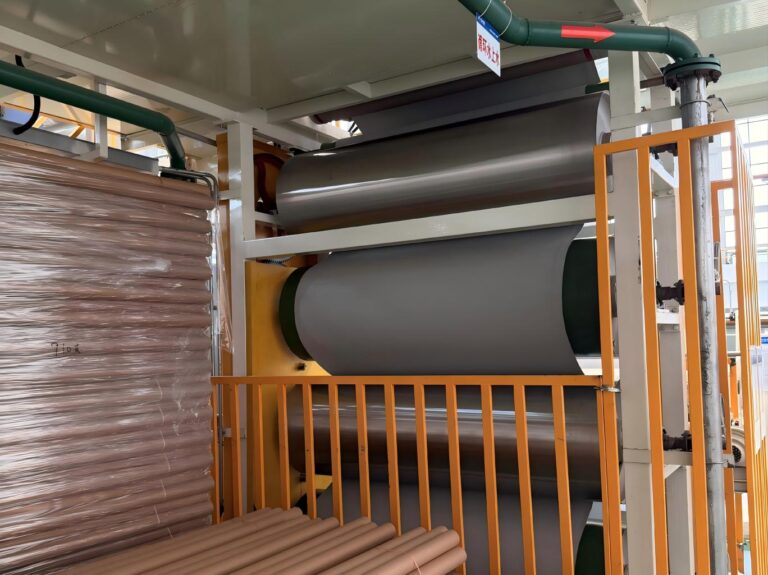
Production-heavy programs sit at the opposite end. Custom colors, performance specifications, and any program where batch consistency drives claims all belong with the producer. Our factory production walkthrough shows what that control looks like on the coating line.

Custom programs need the coating line, not the warehouse.
There is also a hybrid path that mature buyers use more every year. Contract the factory for your two highest-volume articles, and let a distributor cover the long tail of low-volume colors. You capture factory pricing where it matters and distribution flexibility where volumes are too thin to justify a batch. The arrangement works only when both channels know about each other, so put the split in writing with your factory from the start.
The Repeat-Order Test Most Buyers Skip
Leather-industry buying guides draw a distinction that most first orders never surface. A tannery quotes a minimum per color per batch. Re-making it takes three to six weeks from crust. A warehouse quotes what is on the shelf today, with no guarantee of tomorrow. For a brand that intends to re-order, the second number matters more than the first. The same logic applies to coated fabrics.
Run the test before committing. Ask the distributor to confirm two things in writing. The first is batch traceability for the exact article you plan to re-order. The second is the replenishment time you can expect. Wholesale lead times across the trade run four to twelve weeks depending on complexity and season. A distributor who cannot state a replenishment time is selling stock, not supply. That difference appears in year two, when your best-selling color goes stale between production runs.
Seasonality sharpens the test. Distributors stock what sold last season, and factories schedule what is ordered this season. If your program peaks in spring, ask when the distributor places its own re-orders. A partner who restocks in November has already solved your March problem. A partner who restocks in February has not, no matter how attractive the per-meter quote looked.
Four Checks Before Signing a Distribution Agreement
Contract terms decide whether the premium buys protection or just cost. Verify these four points before signature:
- Source transparency: the agreement should name the producing mills or factories. A distributor who hides its sources also hides its quality system.
- Stock commitment: minimum holding quantities for your articles, with audit rights on inventory levels.
- Batch consistency data: color difference targets across incoming lots. Without Delta E style controls, your re-orders drift.
- Exclusivity scope: any territory exclusivity you grant should be matched by a minimum purchase the distributor must hit to keep it.
Video: what a producing partner’s operation looks like behind a distribution agreement.
One warning from our export files. Distributors add real value in materials with long shelf life and stable specifications. For buyers specifying a premium material such as eco-friendly silicone leather, storage matters. Check that the distributor’s warehouse conditions match the producer’s requirements before assigning them the program.
Your Pre-Signing Action Checklist
Work this list before any distribution agreement reaches your signature block:
- Model three landed costs: factory direct, distributor, and marketplace. Include freight, duty, and your own inventory carrying cost at 20% a year.
- Run the repeat-order test: written replenishment time and batch traceability for each article you plan to re-order.
- Audit the warehouse: physically or by live video. Confirm the stock depth matches the committed quantities.
- Compare consistency data: request cross-batch color and performance records from the last two shipments.
- Cap the exclusivity: trade any territory rights for minimum purchases with a review date.
Buyers who run this sequence typically find one clear answer per program. The material decisions behind those numbers are covered in our silicone leather introduction for teams weighing premium specifications.
Revisit the answer annually. Programs grow out of distribution as volumes consolidate, and mature programs sometimes shrink back into it when SKU count explodes. The channel decision is not a one-time verdict. Treat it as a standing line item in your annual sourcing review, and the middle layer will always be there because it earns its place, not because nobody re-checked.
Frequently Asked Questions
Is a leather distributor ever cheaper than the factory?
Per meter, almost never. Per program, sometimes. When your order is small, mixed across articles, or urgent, aggregation helps. The distributor’s stock can land cheaper than a factory minimum plus air freight. Model the full landed cost before assuming either way.
What documents should a distributor provide about the source factory?
Ask for the producing mill’s business license. Add its ISO 9001 certificate scope and batch test reports tied to your article numbers. A distributor with a healthy factory relationship provides all three without hesitation.
References
- GetSourceDirect, The Real Cost of a $320 Handbag: https://www.getsourcedirect.com/blog/why-you-pa…
- Diriana, Trading Company vs Direct Handbag Factory: https://diriana.com/trading-company-vs-direct-h…
- TLSanmartin, 12 Questions to Ask a Leather Supplier Before Ordering: https://tlsanmartin.com/en/guides/questions-to-…
- Adnan Lederwaren, Signs of a Trustworthy Leather Goods Wholesaler: https://www.adnanlederwaren.nl/signs-of-a-trust…