Walk into any furniture or automotive sourcing meeting and the same question comes up: which leather type fabric should we specify? Most teams answer by comparing unit prices. Full-grain looks expensive, bonded looks cheap, and synthetic sits in the middle. But strip away the price column and rank these materials by cost-per-year — the metric almost no procurement team calculates — and the ranking flips. A bonded leather sofa that costs half as much as full-grain but peels in 3 years is the most expensive option per year of service. This article ranks six leather fabric grades by the numbers that actually predict long-term value: abrasion cycles, temperature tolerance, UV stability, and total cost of ownership.
The 6 Leather Type Fabric Options Ranked
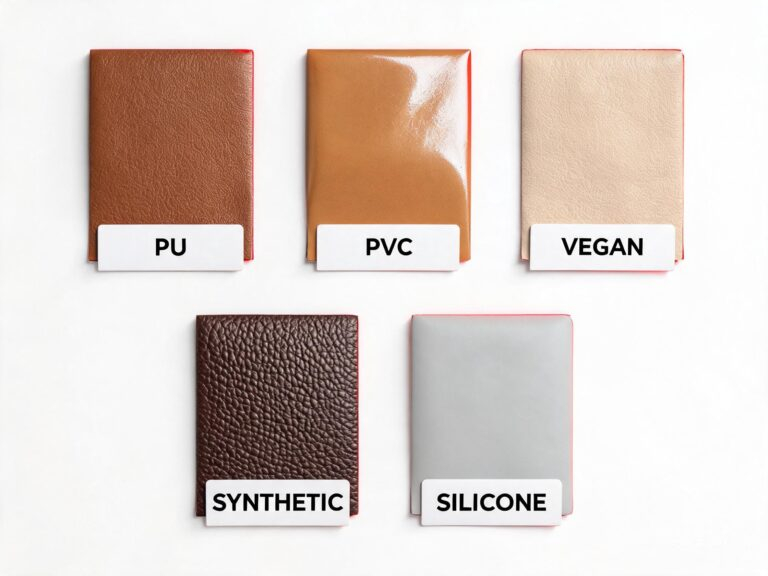
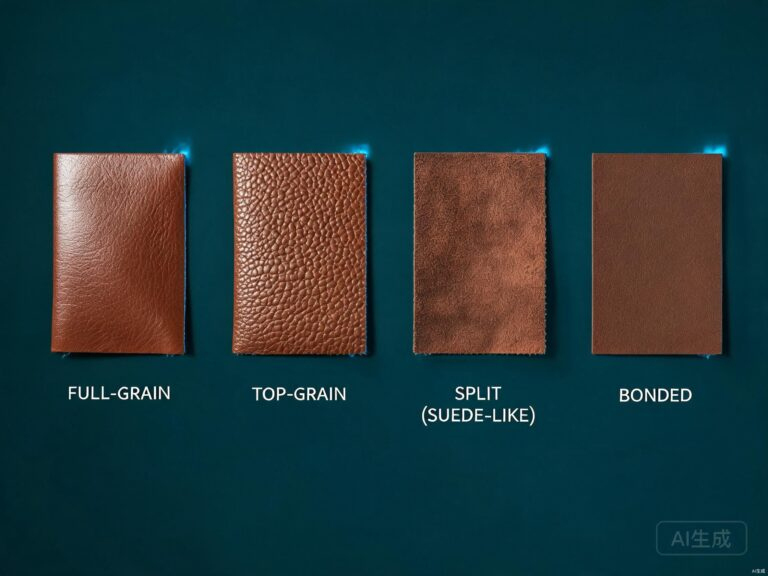
Every leather type fabric on the market falls into one of six categories. Three come from animal hides — full-grain, top-grain, and genuine (split) — each with progressively lower durability and cost. Then there is bonded leather, which is technically 10 to 20 percent real leather scraps mixed with polyurethane binder and pressed onto a backing. Below that sit the synthetics: PU and PVC, engineered to mimic leather’s surface without any animal content. And now there is a sixth category — silicone leather — which is changing the performance ceiling entirely.
The table below ranks all six by the metrics that B2B buyers actually need: expected service life, Martindale abrasion resistance, cost index (relative to full-grain at 100 percent), and the resulting cost-per-year figure. This is the data your sourcing team should be working from.
| Grade | Source | Lifespan | Martindale | Cost Index | Cost/Year |
|---|---|---|---|---|---|
| Full-grain | Animal hide (top) | 20-30 yrs | ~25,000 | 100% | High |
| Top-grain | Sanded hide | 10-15 yrs | ~20,000 | 60-70% | Medium |
| Genuine (split) | Lower hide layer | 3-7 yrs | ~8,000 | 30-40% | Medium-high |
| Bonded | 10-20% scraps + PU | 2-4 yrs | ~3,000 | 15-20% | Highest |
| PU synthetic | Polyurethane coating | 5-8 yrs | ~15,000 | 20-30% | Low-medium |
| Silicone | 100% silicone polymer | 10-15+ yrs | 200,000+ | 40-50% | Lowest |

Six leather grades produce visibly different surface quality and color depth
Cost Per Year: The Selection Metric Buyers Never Calculate
Here is the problem with ranking leather fabric by unit price: a $90 bonded leather panel that lasts 3 years costs $30 per year. A $150 top-grain panel that lasts 12 years costs $12.50 per year. The cheaper option costs 2.4 times more per year of actual service. Yet most sourcing decisions are made on the $90 vs $150 line item comparison without anyone running the per-year math.
For B2B buyers, the cost-per-year gap widens further when you factor in replacement labor, downtime, and warranty claims. A hotel replacing bonded leather booth seating every 3 years pays for materials, reupholstery labor, and room downtime three times over a 9-year period — versus a single installation of silicone leather that is still going strong at year 9. When one of our hospitality clients switched from PU to silicone for a 400-room renovation, the 5-year TCO dropped by 38 percent despite a 15 percent higher material unit cost.
Bonded leather has the lowest unit price and the highest cost-per-year. Silicone leather has the lowest cost-per-year despite a mid-range unit price. The ranking flips when you divide by lifespan.
Leather Type Fabric Specs: Abrasion, UV, Temperature
Knowing how to choose leather fabric means looking past the surface and into the test data. Three specifications predict how a leather type fabric will perform over its service life, and they are the ones procurement teams should put on every spec sheet.
First, Martindale abrasion resistance. This test — governed by ASTM and ISO standards — rubs the fabric surface under a known load until visible wear appears. Full-grain leather typically reaches 25,000 cycles before surface breakdown. PU manages around 15,000. Silicone leather clears 200,000 cycles — eight times the natural leather benchmark. That gap directly predicts how many years a sofa or car seat will hold its surface before looking worn.

Scratch resistance testing quantifies how each leather grade resists daily wear
Second, UV stability. Natural leather fades and dries under prolonged sun exposure, requiring conditioning treatments to prevent cracking. PU and PVC yellow and embrittle under UV. Silicone polymer is inherently UV-stable — its molecular structure does not break down under ultraviolet light, which is why it is the material of choice for outdoor furniture and marine applications.
Third, temperature tolerance. Leather stiffens and cracks below freezing; PU becomes brittle in cold and softens in heat. Silicone leather maintains flexibility from -40 to 250 degrees Celsius, a range no other leather type fabric can match. That matters for automotive interiors in extreme climates, outdoor seating, and any product shipped through uncontrolled-temperature logistics.
Head-to-head durability test: silicone leather vs natural leather vs PU — see which survives longest
Where Silicone Fits in the Grade Hierarchy
Silicone leather does not replace full-grain for heritage luxury goods where the patina story matters. But for the majority of B2B applications — contract furniture, automotive interiors, medical seating, consumer electronics — it occupies a unique position: top-grain aesthetics at a cost-per-year lower than PU. The full versus semi silicone leather distinction matters here — full-silicone construction delivers the complete performance envelope, while semi-silicone offers a cost-optimized hybrid for budget-sensitive projects.
For furniture applications specifically, silicone leather in sofa upholstery delivers the softness and grain fidelity buyers expect from top-grain, with the added benefits of waterproofing, stain resistance, and zero maintenance. Buyers evaluating artificial leather types for commercial projects consistently find that silicone sits above PU in performance and below full-grain in unit cost — but below both in cost-per-year.

Lychee grain texture — silicone leather replicates natural hide patterns with high fidelity

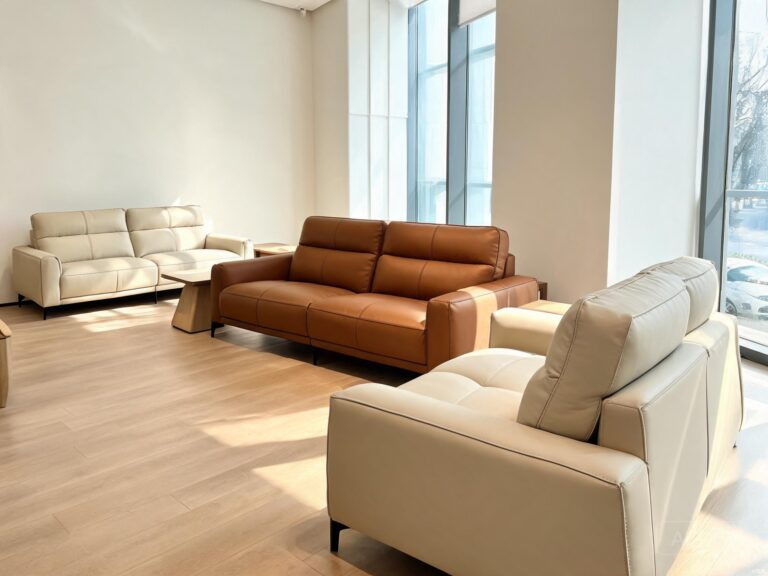
Furniture upholstery application — where cost-per-year and durability matter most
Frequently Asked Questions
Which leather type fabric lasts the longest?
Full-grain leather has the longest natural lifespan at 20 to 30 years, but it requires regular conditioning and is vulnerable to water damage. Among engineered materials, silicone leather offers the longest maintenance-free lifespan — 10 to 15-plus years with zero conditioning, backed by 200,000-plus Martindale abrasion cycles. In cost-per-year terms, silicone outperforms every grade including full-grain.
Is bonded leather a good value for B2B furniture?
No. Bonded leather contains only 10 to 20 percent actual leather fiber, bonded with polyurethane. It typically peels and flakes within 2 to 4 years and cannot be repaired. Despite the low unit price, its cost-per-year is the highest of any leather type fabric. For budget-conscious B2B buyers, PU or silicone leather delivers far better long-term value.
Rank by Cost-Per-Year, Not by Price Tag
The leather type fabric you specify should be decided by total cost of ownership, not by the unit price on the purchase order. Run the math: divide material cost by expected service years, then add replacement labor and downtime. Bonded leather wins on price and loses on everything else. Full-grain wins on prestige but carries hidden environmental and maintenance costs. Silicone leather wins on cost-per-year, abrasion resistance, UV stability, and temperature range — the four metrics that predict real-world performance. For B2B procurement teams in 2026, that is the ranking that matters.
About TOPSUN
TOPSUN engineers silicone-coated leather fabric across 18 automated production lines, giving B2B buyers a leather type fabric that combines full-grain aesthetics with engineered batch consistency for furniture, automotive, and consumer electronics applications.
200,000+ Martindale cycles | -40 to 250°C tolerance | Zero VOC emissions | ISO 10993 certified | REACH & FDA compliant