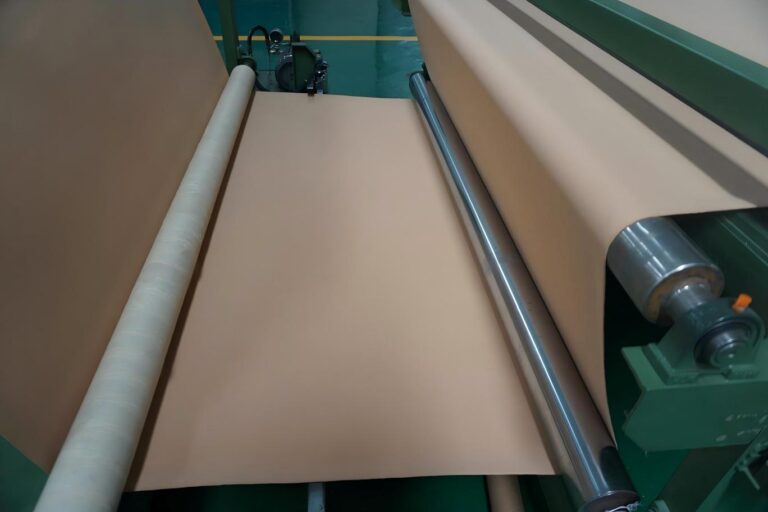
Here is something I rarely say on a sales call. The loudest leather sales banners of the season are not where the real money is saved. Most markdown events move old stock that buyers already rejected. The genuine bargains hide in quieter places: overruns, discontinued colorways, and factory-direct programs. A $13.2 billion market growing toward $20.1 billion by 2034 churns a lot of inventory every year.
This guide reads leather sales the way a factory insider does. First the calendar, then the clearance rack, then the math behind factory-direct pricing. By the end, you will know which discounts to chase and which to walk past.
What Leather Sales Data Shows in 2026
Start with the numbers, because they explain why discount events keep multiplying. Analysts tracking the market expect a steady 4.8% CAGR through 2034. North America alone takes roughly one-third of global revenue. Fast growth sounds like good news for buyers, and it is. It also means brands fight harder for shelf space, over-order, and push last season’s stock out through aggressive markdowns.

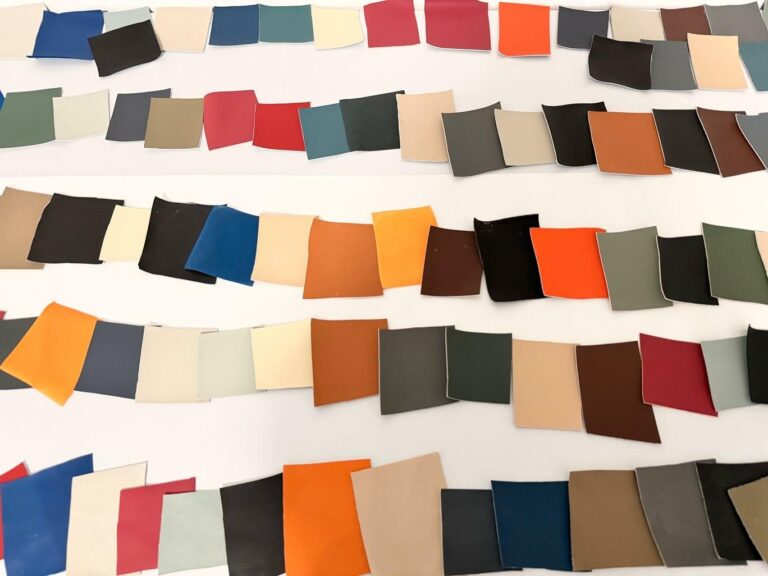
Every color on this rack is a future decision; some will become next season’s clearance.
The Real Leather Sales Calendar
Retail runs on predictable cycles, and you can set your watch by them. New collections launch in February and August. The month before each launch, showrooms slash old inventory hard, with discounts commonly running 20 to 50 percent. Holiday weekends add promo events on top, and the largest clearance windows land in January and July.
| Period | What Happens | Why Prices Drop |
|---|---|---|
| January & July | Inventory clearance | Showrooms make room for February and August collections |
| Holiday weekends | Promo pricing events | Predictable, heavily advertised discounts |
| End of month | Quota push | Commissioned sales floors negotiate harder |
One warning from the same retail guides: the deepest cuts usually apply to finite stock. Some clearance events reach 70% off, and once a color sells through, the price is gone. Decide with your measurements and spec sheet ready, not after the weekend.

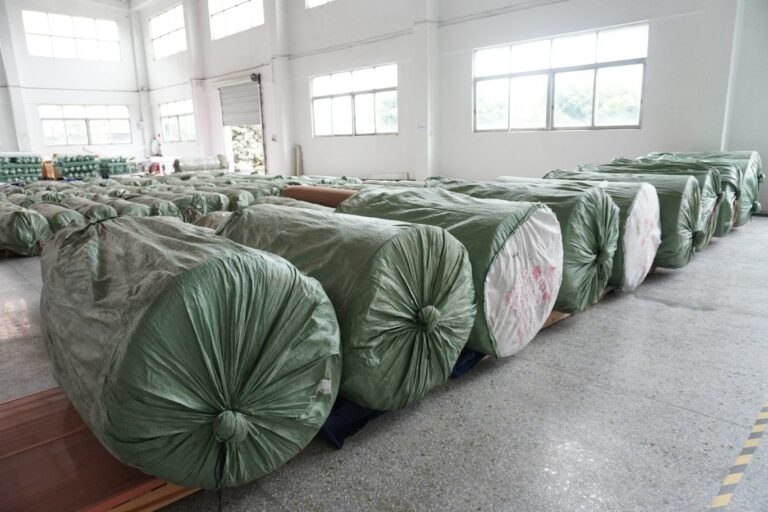
Clearance starts here: pallets of rolls waiting for a colorway decision upstream.
What Clearance Racks Are Actually Full Of
Clearance leather is not one thing. A close look at major US retail chains found their sale sections mix floor samples, discontinued models, and overstocked items. Each category carries different risk. Floor samples have lived in a showroom under lights and strangers’ elbows. Discontinued models may be perfectly good leather in an unfashionable color. Overstock is often the best value on the rack.
We see the same math from the factory side. When a colorway is discontinued, the remaining rolls go to clearance at 30 to 60% off. The material is identical to what shipped at full price last quarter. Only the color died. Ask what happened to the stock before you assume a discount means a defect.
Labels deserve as much scrutiny as prices. Clearance pages lean on phrases like genuine leather and leather match. In a leather match, only the contact areas are hide; the rest is synthetic. Before you pay, ask the exact type: full grain, top grain, corrected grain, or leather match. For room-specific guidance, our furniture and sofa applications page shows how each type holds up in real settings.
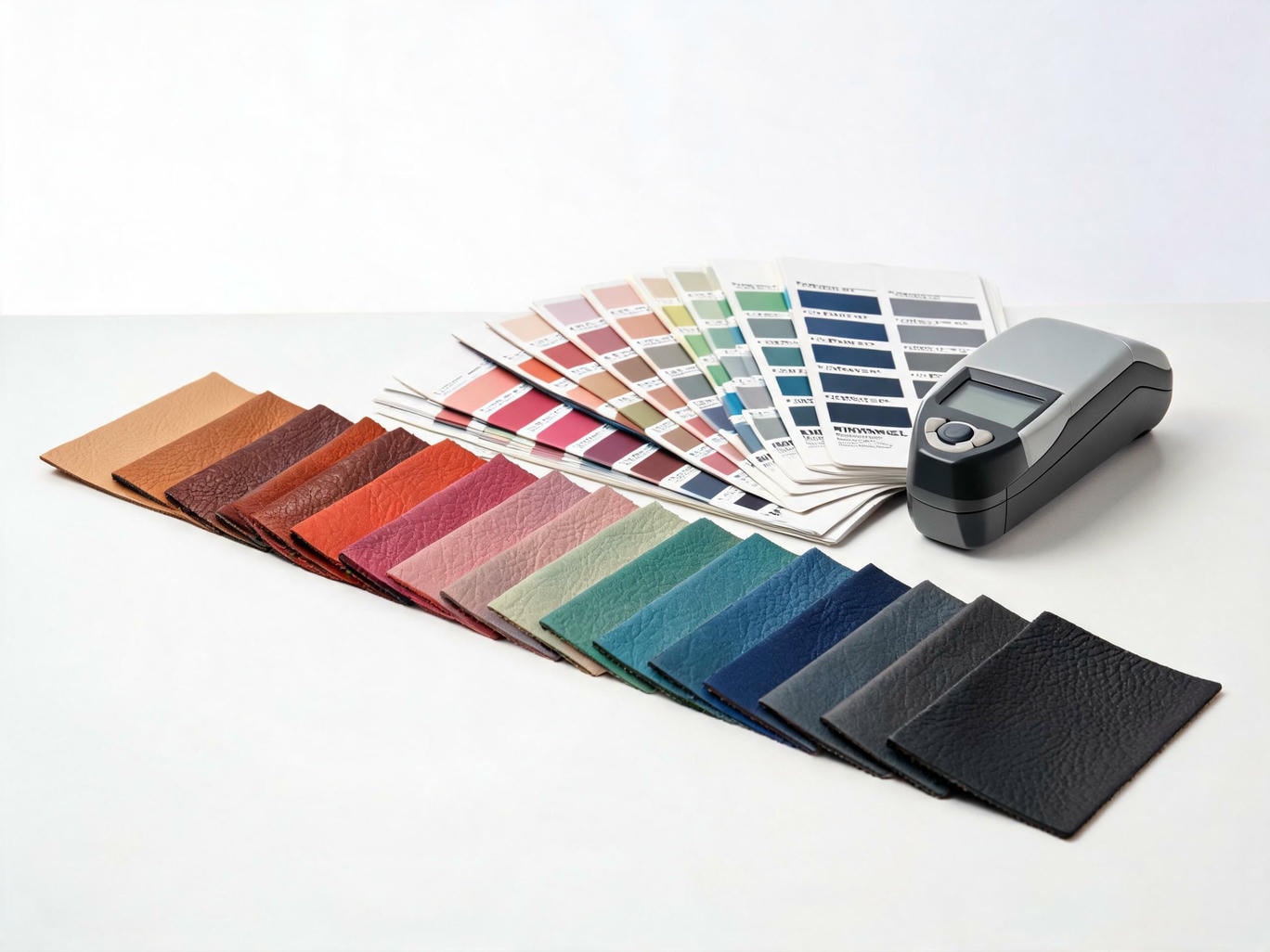
Discontinued does not mean defective: the shade died, not the material.
Factory-Direct vs Retail Markdown: Where Savings Really Come From
A retail price covers freight, importer margin, distributor margin, showroom rent, and sales commission. Remove those layers and the math changes completely. That is what factory-direct programs do. Our lines run 500,000 meters per month with a 500-meter MOQ and 7 to 15 day delivery. The production process behind those numbers is in our factory production overview.
Price is only half the equation, though. A discounted sofa upholstered in cheap PU carries a hydrolysis clock that starts ticking in year three or four. Paying less for material that fails sooner is the most expensive sale of all. Our silicone vs PU comparison breaks down the total cost of ownership with test data.
See how our cost-effective silicone leather line is built for long service life, not just a low first price.
Are January and July really the best months for leather sales?
For retail clearance, yes. Those months precede the February and August collection turnover, which is why they deliver the deepest and most predictable discounts. B2B buyers work on a different calendar and should order ahead of production holidays instead.
Is leather bought on sale always lower quality?
No. Overruns and discontinued colorways are the same material that sold at full price. The risk sits with floor samples, corrected or bonded grades, and final-sale terms that remove your recourse. Verify the type and construction, then the discount is just a bonus.
Leather Sales Reward Prepared Buyers
Leather sales reward the buyer who arrives with questions already written down. Know the calendar. Ask what kind of stock is on discount. Verify the grade behind the label. Then compare the discounted price against factory-direct terms. Do that, and the sale works for you instead of on you. That is the whole play.
Request Leather Samples Before You Buy
About TOPSUN
I have sold silicone leather for TOPSUN for eight years, and much of that job is teaching buyers what a spec sheet hides. We run our own coating lines, ship to clients in more than 30 countries, and back every order with SGS test reports.
References
- 1. https://www.intelmarketresearch.com/leather-sof… — Leather sofa market $13.2B (2025) to $20.1B (2034), CAGR 4.8%; North America about one-third of revenue
- 2. https://www.meetcofurniture.com/blog/when-do-fu… — January and July clearance windows; discounts commonly 20-50%, deepest events up to 70% off
- 3. https://theleatheritems.com/genuine-leather-sof… — Clearance sections mix floor samples, discontinued models, and overstock; “genuine” alone is not a grade