A hospitality group in Lyon sent us a questionnaire last spring. Forty pages, no color charts, no price columns. Every question was an environmental data request, and every request traced back to CSRD reporting deadlines. The procurement team had one instruction: any material whose leather production environmental impact could not be documented would not pass the first round.
That questionnaire is the market now. Sustainability claims are moving from brochures into audit files. The problem is that most footprint numbers quoted in upholstery meetings cannot survive the audit they are invoked for. Here are the three that matter, and the math that reframes all of them.
Where Leather Production Environmental Impact Actually Starts
Ask a tannery manager where the footprint lives and you will hear about effluent. Ask the auditor and you will hear about cows. The numbers back the auditor. Producing one kilogram of finished leather can consume up to 17,000 liters of water, mostly in the tanning stages, per the Water Footprint Network. The wider livestock linkage runs deeper: the leather industry, tied to beef and dairy, accounts for roughly 0.5% of global greenhouse gas emissions per FAO’s assessment, and cattle ranching drives about 80% of Amazon deforestation.
The practical reading: most of hide leather’s impact is front-loaded, upstream of any tannery’s control. A buyer auditing a tannery is auditing the tail of the curve. That is why Life Cycle Assessment summaries keep stressing allocation rules. How you assign the cow’s emissions between beef and leather changes the per-square-meter number more than any finishing choice.

Our input chain starts at quartz-derived silicone and base fabric. No herd, no slaughter, no allocation debate.
The Effluent Line: Chrome, Salt, and a Five Percent Recycling Rate
The tanning stage itself still carries a heavy load. Over 85% of global leather production relies on chrome tanning, discharging heavy-metal effluent, per UNIDO’s sector report. Conventional operations discharge around 25 cubic meters of effluent per tonne of leather, and tanning consumes 100 to 300 liters of water per square meter produced. At end of life, the circularity story nearly disappears: only about 5% of leather waste is recycled globally.

Chrome basins are where hide routes split. Chrome-free and water-based routes trade some hand feel for a shorter effluent ledger.
Consumer pressure is real. Seventy-eight percent of buyers prefer leather labeled sustainably tanned, yet about 20% do not know which process made their product. That gap is exactly where audit questionnaires get painful. A spec that says “sustainable leather” without a process route behind it answers nothing.
Watch: the certification stack we hand auditors, and which environmental claims each document actually supports.
Cutting Leather Production Environmental Impact per Service-Year
Now the math that reframes the debate: divide by service life. Lifecycle comparison data puts PU leather at roughly 9 kg CO₂-equivalent per square meter, and bovine leather near 21 kg. That looks like a knockout for the synthetic. Then lifespan enters. PU typically serves three to five years; well-maintained hide serves twenty or more. Spread over service-years, the synthetic lands around 2 to 3 kg per square meter per year while the hide lands near 1.
- Bovine leather: ~21 kg CO₂e/m², 20+ year service, ~1 kg per m² per year.
- PU leather: ~9 kg CO₂e/m², 3-5 year service, ~2-3 kg per m² per year.
- Our silicone leather: under 6 kg CO₂e/m² with 10+ year service, verified to ISO 12947-2 at 200,000 cycles.
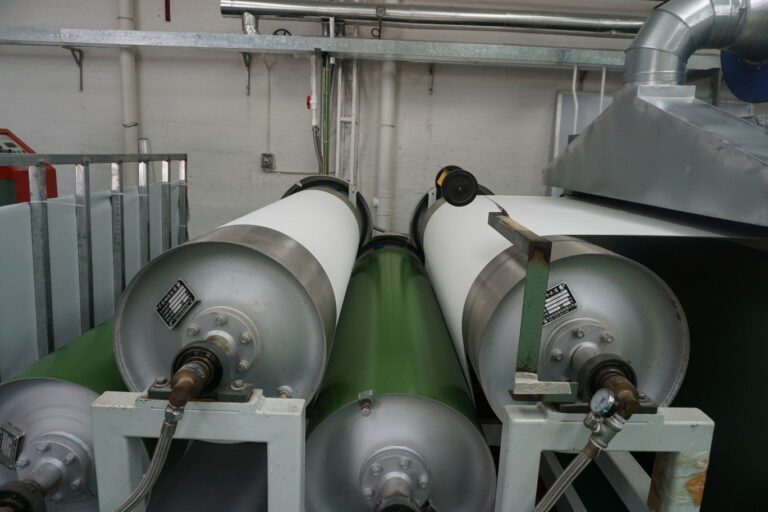
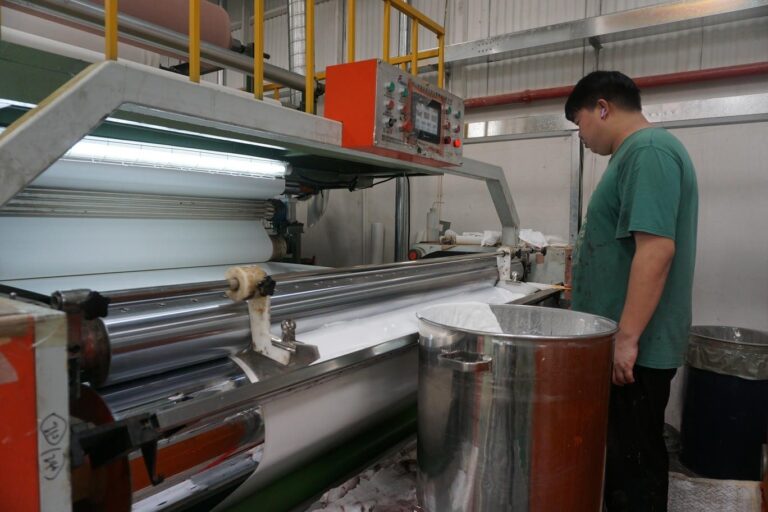
The audit lesson is blunt. A low per-square-meter number on a material that peels in year three is not a footprint win. It is a re-purchase event with emissions attached. This is why we publish our line’s hydrolysis behavior alongside the carbon figure, and why our eco-grade silicone leather documentation maps each claim to its test standard. You can see the same discipline on our cleaner coating-line production page: no chrome basins, water-cooled calendering, non-detect VOC output per ISO 16000-6.

Solvent-free routes cut one ledger line. Lifespan cuts the whole column.
The Environmental Numbers That Survive an Audit
So the Lyon questionnaire. The group specified silicone leather across two hotel refurbishments last autumn. The forty-page form was answered with eleven numbered reports, and the per-service-year column carried the argument. When your leather production environmental impact data has to survive an auditor, one number wins every time: kilograms per square meter per year of real service, with a test standard attached.
About TOPSUN
TOPSUN documents the environmental ledger of its silicone leather for hospitality, transit, and furniture buyers preparing CSRD and Scope 3 disclosures.
Under 6 kg CO₂e per m² with 10+ year verified service · non-detect VOC emissions per ISO 16000-6 · REACH-compliant, phthalate-free formulation · three bases, 6 million meters annually, single-factory traceability.
Does “sustainably tanned” labeling change the footprint numbers?
It changes one line of them. Better effluent treatment and chrome recovery cut the tanning-stage load, and LWG-rated tanneries document that well. The livestock allocation and the 5% end-of-life recycling rate stay largely untouched. Ask which stage the label actually addresses.
Is a cradle-to-gate carbon figure enough for a material spec?
Only for comparison between materials with the same service life. Once lifespans differ threefold, as hide and PU do, cradle-to-gate numbers mislead the buyer. Specify cradle-to-service-year instead, and require the abrasion or flexing standard behind the lifespan claim.
References
1. https://www.selvane.co/es/blogs/knowledge/the-e… — up to 17,000 L water per kg finished leather (Water Footprint Network); over 85% chrome tanning (UNIDO); ~0.5% of global GHG emissions (FAO) ([2026])
2. https://worldmetrics.org/tanning-industry-stati… — 100-300 L water per m² tanned; 78% of consumers prefer sustainably tanned labels; ~5% of leather waste recycled globally ([2026])
3. https://isitleather.com/pu-leather/ — PU leather ~9 kg CO₂e/m² vs bovine ~21 kg; per-service-year comparison across 3-5 vs 20+ year lifespans