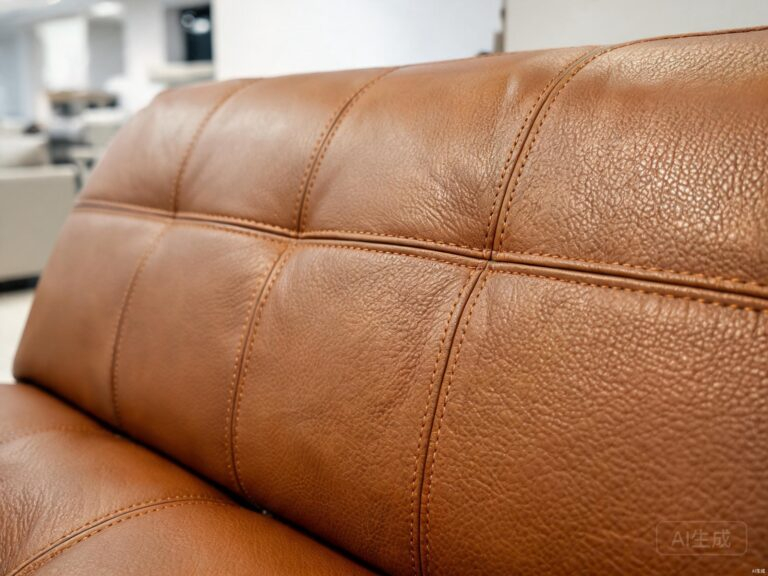
The Quality Illusion: When Good Looks Hide Bad Performance
A product manager runs her fingernail across a leather swatch and nods approvingly — “feels premium.” Three months later, that same leather is cracking along the seams of 5,000 manufactured units returned from the field. The gap between perceived quality at the sampling stage and actual quality in daily use costs B2B buyers millions annually. When we audit field failure data across automotive, furniture, and consumer electronics applications, the pattern repeats: teams specified leather high quality based on hand-feel and visual inspection, then discovered that neither predicts performance under real-world stress.
The problem isn’t that buyers are careless. It’s that “high quality leather” has become a marketing term disconnected from measurable specifications. A material can look flawless, feel supple, and carry a premium price tag — while scoring poorly on the tests that actually determine whether it survives daily use. This guide reframes leather quality around six measurable indicators that predict field performance, not showroom appeal.
What Makes Leather High Quality: 6 Measurable Indicators
Quality in leather materials isn’t subjective. It’s a profile of six testable parameters that, taken together, predict how the material will perform across its intended lifecycle. Here’s what each indicator measures and why it matters in daily use:
- Martindale abrasion resistance — Measures how many rubbing cycles the surface survives before visible wear appears. The single most important indicator for seating, furniture, and any application involving repeated friction. Residential grade starts at 25,000 cycles; commercial grade begins at 50,000; premium materials exceed 100,000.
- Tensile strength — Measures the force required to pull the material apart (N/mm). Indicates structural integrity under load — critical for stitched applications where tension concentrates at seam points. Low tensile strength means tearing at stress points during normal use.
- Tear strength — Measures resistance to propagation of a cut or nick. Distinct from tensile strength because it tests how easily an existing small cut spreads. Materials with low tear strength develop runs from minor damage, like a snagged thread in fabric.
- Flexing endurance — Measures how many flex cycles the material survives before cracking. Critical for any application with repeated bending — wallets, bags, automotive seats, wearable straps. Materials that feel soft can still crack rapidly under cyclic flexing.
- UV/light fastness — Measures color stability under prolonged light exposure. Determines whether the material retains its original appearance after months of sunlight — the difference between a car interior that looks new at year five and one that fades to a different shade by year two.
- Hydrolysis resistance — Measures degradation from moisture and humidity over time. Particularly critical in tropical climates and applications exposed to perspiration, cleaning solutions, or environmental moisture. Poor hydrolysis resistance causes the coating to separate from the substrate.
A material that scores well on hand-feel but poorly on these six indicators will fail in the field. A material that scores well on all six will maintain its appearance and structural integrity through years of daily use — which is what “high quality” should actually mean.

Tensile strength testing — pulling the material to failure to measure structural integrity under load.
Genuine Leather vs Silicone: Redefining the Quality Hierarchy
Traditional leather quality hierarchies rank materials by source: full-grain at the top, then top-grain, then genuine, then bonded leather. This hierarchy reflects the natural hide’s structural integrity — full-grain retains the complete dermis with its dense fiber network, while lower grades use split layers or reconstituted scraps. But this ranking system was built for natural leather. It doesn’t account for synthetic materials engineered to exceed natural leather’s performance limits.
The comparison below shows how the traditional hierarchy breaks down when measured against the six quality indicators:
| Quality Indicator | Test Method | Genuine Leather (Full-Grain) | PU Leather (Typical) | Silicone Leather (TOPSUN HP) |
|---|---|---|---|---|
| Abrasion (Martindale) | ISO 12947-2 | 30,000–60,000 cycles | 25,000–50,000 cycles | ≥200,000 cycles |
| Tensile Strength | ISO 3376 | 15–25 N/mm | 10–18 N/mm | ≥25 N/mm |
| UV/Light Fastness | AATCC 16.3 | Grade 3 (fades, requires conditioning) | Grade 3 (400h) | Grade 4+ (1,000h+) |
| Hydrolysis Resistance | 70°C/95% RH | Moderate (requires conditioning) | 2–4 weeks | ≥10 weeks |
Table: Quality indicator comparison based on TOPSUN internal test data and industry-typical values for genuine and PU leather. Genuine leather values vary significantly by hide grade and tanning process.
The data challenges the assumption that genuine leather is inherently the highest quality option. Full-grain leather scores moderately across most indicators but requires ongoing maintenance (conditioning, protection treatments) to maintain performance. PU leather scores lower across the board but costs less. Silicone leather outperforms both on every measurable indicator — and requires zero maintenance throughout its lifecycle.

Scratch resistance testing — surface damage resistance is a key quality indicator for daily-use applications.
Testing Leather High Quality: Lab Data vs Marketing Claims
Every leather supplier claims their material is “high quality.” The difference between a claim and a fact is a test report. When evaluating leather material quality, buyers should require documentation that transforms subjective adjectives into verifiable numbers. Here’s what to ask for and how to read it:
- Request the full test report, not just the certificate — A certificate says “Grade 4.” A test report shows the test method, duration, conditions, laboratory name, and date. Without the full report, you can’t verify whether the test was conducted under conditions relevant to your application.
- Check the test standard, not just the result — “100,000 Martindale cycles” means nothing without knowing the load pressure (typically 12 kPa for apparel, 59 kPa for furniture) and the assessment method (weight loss vs. visual breakdown). Different test conditions produce dramatically different cycle counts for the same material.
- Verify third-party testing — In-house testing is useful for development but carries less weight than independent laboratory verification. SGS, TUV, Intertek, and Bureau Veritas are recognized internationally. Ask for the original lab report, not a photocopy.
- Match test conditions to application conditions — A material tested at 23°C/50% RH may perform differently at 40°C/80% RH. If your product will be used in tropical or automotive-interior conditions, request testing under those parameters.
In our experience working with product teams, the most common quality evaluation failure is accepting a summary spec sheet instead of full test documentation. A spec sheet that lists “Martindale: 100,000+” without the test standard, conditions, and lab name is a marketing claim, not a quality verification. Our High Performance Collection ships with complete third-party test reports for every batch — because quality claims should be auditable, not aspirational.

Flexing endurance testing — cyclic bending reveals cracking behavior that static testing cannot predict.
Quality Indicators That Predict Real-World Lifespan
Not all six quality indicators carry equal weight in predicting how long a material will last in your specific application. The indicators that matter most depend on how the product is used daily:
- Seating and furniture — Martindale abrasion is the primary lifespan predictor, followed by hydrolysis resistance (for humid environments) and flexing endurance (for cushioned surfaces that compress and release).
- Automotive interiors — UV fastness dominates (sunlight through windshields), followed by temperature range resistance (dashboard surfaces reaching 80°C+ in parked vehicles) and flexing endurance (seat surfaces during entry/exit).
- Consumer electronics — Flexing endurance matters most (repeated handling, folding cases), followed by abrasion (pocket friction) and tear strength (impact damage resistance).
- Marine and outdoor — Hydrolysis resistance and UV fastness are co-primary, as the material faces simultaneous moisture and sunlight exposure that accelerates degradation synergistically.
Understanding which indicators predict lifespan for your application prevents over-specifying (paying for performance you don’t need) and under-specifying (saving on material cost but paying for premature replacement). A material that achieves 200,000 Martindale cycles is over-specified for a seasonal fashion accessory but exactly right for a commercial furniture application targeting a 10-year lifecycle.

Texture and softness display — aesthetic quality matters, but only when backed by the performance data that predicts long-term appearance retention.
FAQ: Leather High Quality Evaluation
Is genuine leather always higher quality than synthetic alternatives?
No. The traditional assumption that genuine leather represents the highest quality standard doesn’t hold up under performance testing. Full-grain genuine leather scores moderately on abrasion (30,000–60,000 Martindale cycles) and UV resistance (Grade 3, requiring conditioning), while high-grade silicone leather achieves 200,000+ Martindale cycles and Grade 4+ UV resistance without any maintenance. Genuine leather’s advantage is its natural aesthetic and breathability — not its measurable performance parameters. For applications where durability, chemical resistance, and UV stability are the primary quality criteria, synthetic materials like silicone leather outperform genuine leather by significant margins. For a detailed silicone vs PU comparison, our technical page covers every parameter.
What Martindale cycle count qualifies as high quality for commercial use?
For commercial applications — hospitality furniture, office seating, public transport, automotive interiors — the minimum threshold for “high quality” is 50,000 Martindale cycles under ISO 12947-2 at 12 kPa load. Materials below this threshold are residential-grade and will show visible wear within 1-2 years of commercial use. Premium commercial-grade materials start at 100,000 cycles. TOPSUN’s High Performance Collection achieves 200,000+ cycles, placing it in the heavy-duty commercial category suitable for applications targeting 8-10+ year lifecycles. Always verify the test was conducted at the appropriate load pressure for your application — 12 kPa for upholstery, 59 kPa for heavy-duty surfaces.
About TOPSUN
TOPSUN engineers silicone leather collections with documented performance parameters across every quality dimension — from Martindale abrasion to tensile strength to UV stability. Our High Performance Collection delivers 200,000+ Martindale cycles and ≥25 N/mm tensile strength, our Classic Collection provides 100,000+ cycles for standard commercial applications, and every batch ships with full third-party test documentation. We offer custom formulation capabilities for application-specific quality requirements, including thickness optimization, color matching, and texture engineering. Learn more about TOPSUN.
Stop Guessing. Start Measuring.
If your current leather specification is based on hand-feel and supplier reputation rather than test data, you’re guessing — and the field will eventually prove you wrong. Quality isn’t how a material feels in the showroom. It’s how it performs after 100,000 cycles, 1,000 hours of UV exposure, and 10 weeks of humidity. Request our quality test data package, compare the numbers across materials, and specify based on what the data tells you — not what the swatch suggests.
Request Quality Test Data Package
Related reading: silicone vs PU leather comparison and application-specific material recommendations.