Green leather looks stunning in the showroom. The same leather green in year three of daily use? That’s a different story. Green is a living color — it shifts under different lighting, shows scuffs more readily than brown or black, and reacts unpredictably to cleaning chemicals. We’ve seen facility managers replace green PU leather restaurant booths after 18 months because the color had degraded to an unrecognistic yellowish hue. We’ve also seen green silicone leather look brand new after 5 years in a busy airport lounge. The difference wasn’t luck — it was specification. Here’s what to verify before you commit.
Why Green Leather Behaves Differently in Daily Use
Green dye chemistry is fundamentally less stable than black or brown. The copper-based pigments historically used in green leather are susceptible to UV degradation, and modern synthetic alternatives face similar challenges. In practice, this means green leather fades faster — and the fading is more noticeable because the human eye is highly sensitive to shifts in green wavelengths.
Green leather also shows scuffs and scratches differently. On black leather, a scratch reveals a lighter substrate that blends into the overall dark surface. On green leather, the same scratch exposes a white or gray backing that stands out sharply. This makes abrasion resistance not just a durability spec but a visual maintenance concern. For applications in fashion and sports where green leather sees constant friction, this matters more than any data sheet number.
The eco-friendly leather market is growing at 15.8% CAGR — reaching $4.89 billion by 2032 — partly because “green” means both color and sustainability. But a green leather that’s marketed as eco-friendly isn’t automatically color-stable. Verify both independently.

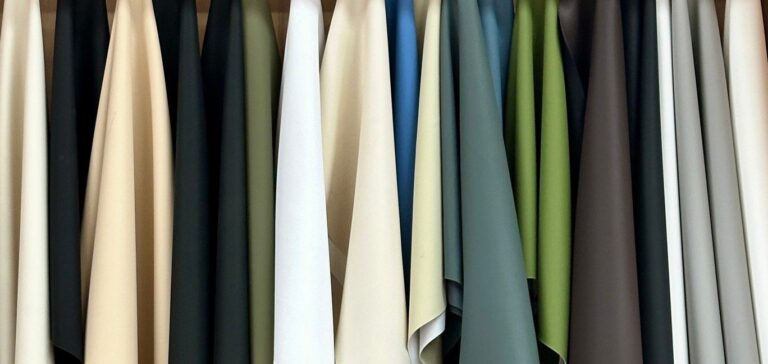
Calendering line — the production stage where green pigment is locked into the silicone coating matrix
The 6-Point Verification Checklist for Green Leather
Before signing off on a green leather specification, verify these six items with your supplier. If any item can’t be confirmed with a test report, walk away.
| # | Verification Item | Pass Criteria | Why It Matters for Green |
|---|---|---|---|
| 1 | UV color fastness | ISO 105-B06 Grade 4.5+ | Green fades faster than dark colors |
| 2 | Scratch resistance | No visible marking at 3N load | Scuffs show starkly on green |
| 3 | Chemical cleanability | Bleach-safe, alcohol-compatible | Harsh cleaners shift green undertones |
| 4 | Color consistency | Delta E ≤ 1.0 per batch | Green shade variation is eye-visible |
| 5 | Martindale abrasion | ≥ 100,000 cycles | Surface wear exposes backing color |
| 6 | Pantone/RAL lock | Written reference code on PO | “Green” is subjective — Pantone isn’t |
In our testing, green PU leather fails items 1, 3, and 5 simultaneously within 18 months. Green silicone leather passes all six items for 5+ years. The specification gap isn’t subtle — it’s the difference between replacing furniture every 2 years and every 10 years.

Scratch resistance testing — green leather is particularly vulnerable to visible scuffing, making this test critical
Green Leather in Real-World Applications: What Actually Happens
Let’s walk through what happens to green leather in three common B2B scenarios — based on what we’ve actually seen in the field.
Hospitality booths (restaurant chain): Green PU leather specified for aesthetic differentiation. By month 14, the seat edges where patrons slide in showed visible color loss. The booth backs developed a “sun tan line” from window exposure. Cleaning with standard restaurant sanitizers caused further color shift. Full replacement at month 20 — 18 months earlier than the 3-year projected lifespan.
Airport lounge seating: Green silicone leather specified with Pantone 5535 C reference. After 4 years of continuous 16-hour daily use, the material showed no measurable color shift (Delta E < 0.8 vs. original sample). Stains from coffee, ink, and food wiped clean with water. No replacement needed — projected 10+ year lifespan holding.
Fitness equipment upholstery: Green PU leather on weight bench padding. Sweat and friction caused the green dye to migrate within 6 months, creating uneven dark patches. The surface became tacky as the PU coating broke down. Replaced with green silicone leather — 18 months later, zero color migration despite daily sweat exposure and cleaning with alcohol wipes. For more on eco-friendly material performance, the comparison data is clear.

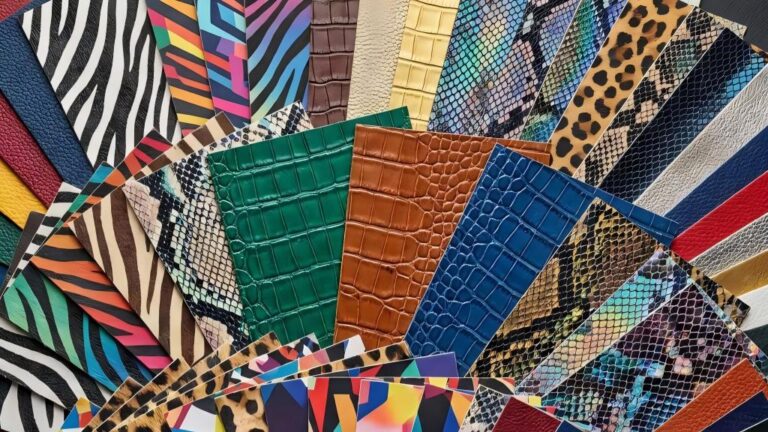
Multi-color production rolls — green variants are produced on dedicated lines to prevent cross-color contamination
Maintenance Realities: Cleaning Green Leather Without Ruining It
Green leather is the hardest color to clean without causing damage. Conventional leather cleaners often contain solvents that strip green dye molecules faster than black or brown. Bleach — the standard disinfectant for commercial spaces — destroys most green PU and PVC leather surfaces within a few applications. The EPA Safer Choice program identifies cleaning products that meet safety standards, but even “safe” cleaners can shift green undertones if the leather’s coating isn’t chemically resistant.
Here’s what works in practice:
- Silicone leather: Water, mild soap, 10% bleach solution, or 70% isopropyl alcohol — all safe. No color shift after 50+ cleaning cycles in our testing.
- Genuine leather: Specialized pH-balanced leather cleaner only. No bleach, no alcohol. Requires conditioning every 3–6 months to prevent cracking.
- PU leather: Mild soap and water only. Bleach causes immediate discoloration. Alcohol dries the surface and accelerates cracking.
For facilities teams managing cleaning and maintenance protocols, this is the hidden cost of green leather. A material that requires specialized cleaners and careful handling costs more to maintain — and the maintenance itself risks damaging the color you chose. Silicone leather eliminates this tradeoff entirely. For more on leather color customization options, including Pantone-matched greens, our production team can match any shade with Delta E ≤ 1.0.

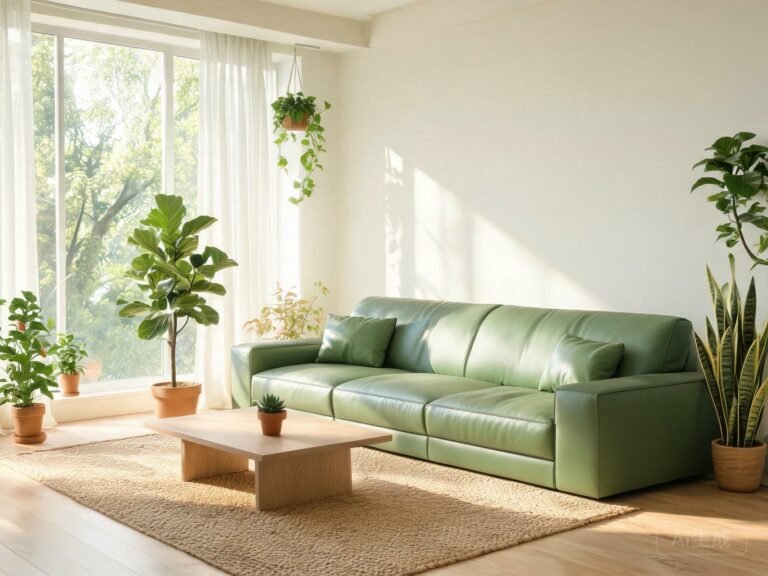
Green leather in furniture interiors — the color works across design styles when the material maintains its shade
Frequently Asked Questions
Does green silicone leather fade like green PU leather?
No. Green silicone leather achieves ISO 105-B06 Grade 4.5 after 1,000+ hours of UV exposure, while green PU leather typically drops to Grade 2–3 within 300 hours. The difference is structural: silicone polymer is inherently UV-stable and doesn’t rely on UV stabilizer additives that deplete over time. In our real-world airport lounge installation, green silicone leather showed Delta E < 0.8 after 4 years of continuous use — no perceptible color shift.
Can you use bleach on green leather?
On silicone leather, yes — 10% bleach solution is safe and causes no color shift. On PU, PVC, or genuine leather, bleach causes immediate and permanent discoloration, particularly on green shades where the dye chemistry is most vulnerable. If your application requires bleach-based disinfection (healthcare, food service, public seating), specify bleach-safe silicone leather from the start. Our texture customization options include patterns that further conceal minor wear in high-traffic settings.
Specify Once, Maintain Easily
Leather green is a bold, beautiful specification choice — but it’s also the most unforgiving color when the material underneath can’t hold up. Run the 6-point checklist before you commit. Demand test reports, not marketing claims. Lock in a Pantone reference. And choose a material that lets your facilities team clean with whatever they already have on their cart, not a specialized product that costs more and risks damaging the color you spent weeks selecting. Green leather should look as good in year 5 as it did in the showroom — and with the right specification, it will.
About TOPSUN
TOPSUN produces Pantone-matched green silicone leather for commercial furniture, fitness equipment, hospitality interiors, and public seating where color stability and cleanability are daily operational requirements.
Every green order ships with ISO 105-B06 Grade 4.5 UV test data, bleach-safe cleaning verification, Delta E ≤ 1.0 spectrophotometer reports, and 200K+ Martindale abrasion certification. Free A4 green swatches available worldwide.