Three forecast decks landed on the same analyst desk this quarter. The first put bio-fabricated leather on a $7.8 billion trajectory. The second crowned mycelium with 48.5% of that young market. The third tracked a quieter number — $1.83 billion of waterproof silicone upholstery already shipping from factories that run three shifts a day. Read together, they define future leather better than any launch video. Not one invention, but five shifts deciding which materials leave the lab, which leave the line, and which leave the catalog by 2030.
Walk the decks the way an analyst would — shift by shift, with the number and the buyer action attached to each. So the next sourcing cycle funds a future instead of a press release.
What Future Leather Means on a 2026 Forecast Sheet
“Future leather” is an umbrella, not a material. Under it sit two routes moving on two different clocks. The lab route — bio-fabricated and mycelium leathers — grows from a $1.3 billion base in 2025 toward $7.8 billion by 2034, a 20% compound rate. It still measures itself in pilot lines and lead times.
The line route — silicone coating technology — is the future that already clocked in. The same forecast family that once called it experimental now books it as the majority of a $1.83 billion waterproof market. The overview of the mature line route is covered in any silicone leather primer. The five shifts below decide how the two routes converge.
The Lab Route: Bio-Fabricated Leather and Its Scaling Problems
Shift 1 is capital. Bio-fabricated luxury leather goods alone are tracked from $1.3 billion in 2025 to $7.8 billion by 2034 at a 20% CAGR, with premium handbags and haute couture components as the entry applications.
Shift 2 is composition: mycelium-based leather holds 48.5% of that 2025 base — the largest single material type. Yet much of what ships blends fungal networks with plastic backings to pass durability tests. The analyst’s rule from every market read applies here too. Read the spec, not the story, and ask what percentage of the finished sheet is actually biology.
The scaling problems are consistent across decks. Per-meter cost and lead time keep lab route volumes in luxury capsules. Long-term service data — the ten-year records that contract buyers demand — barely exists yet. None of this cancels the trajectory; it simply dates it. The lab route’s future is real, and it is later.
The interrogation kit for a lab-route sample is short:
- What is the biological content of the finished sheet?
- What does a thousand meters cost at contract volume?
- What is the documented service life?
- Who signs the durability claim?
Suppliers with clean answers move from story to spec. The rest stay in the capsule-collection lane, which is a legitimate business, but a different one.
The Line Route: The Coating Technology Already Shipping at Scale
Shift 3 is the one happening this quarter. Waterproof silicone leather stood at $1.83 billion in 2025 and is projected to reach $3.23 billion by 2032 at an 8.5% CAGR — with 100% silicone constructions already holding 53.8% of the market and automotive interiors taking 39.8% of it. The five new materials worth specifying in 2026, ranked in our eco-friendly silicone leather assessment, are dominated by exactly this family: near-zero VOC solvent-free lines, hydrolysis-resistant Si-O chemistry and a 10-to-15-year service window that the lab route cannot yet document.

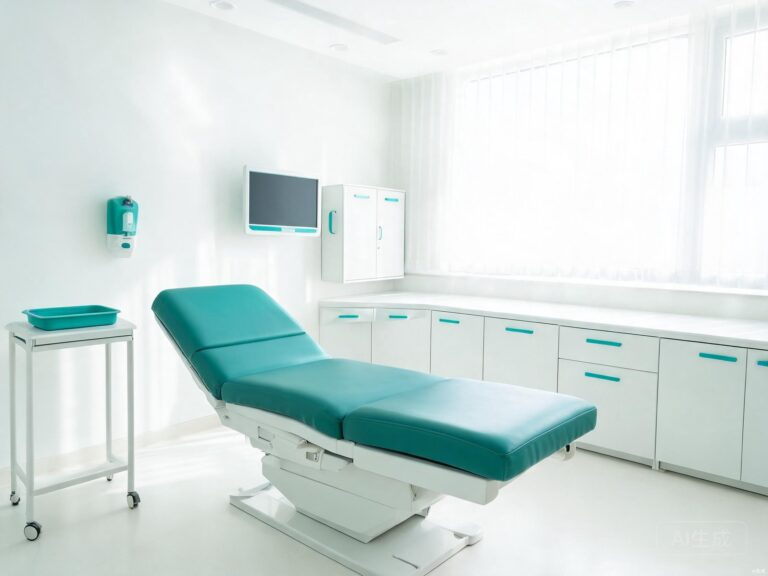
2026 trend scenes: the interiors where next-generation upholstery is already specified.
Shift 4 is texture industrialization. Release-paper coating — the process behind most surface grains — keeps widening the design vocabulary without changing the chemistry. Which is how a material once priced for industrial use entered furniture and fashion showrooms. The factory production walkthrough shows the same line logic: chemistry first, texture second, capacity third.

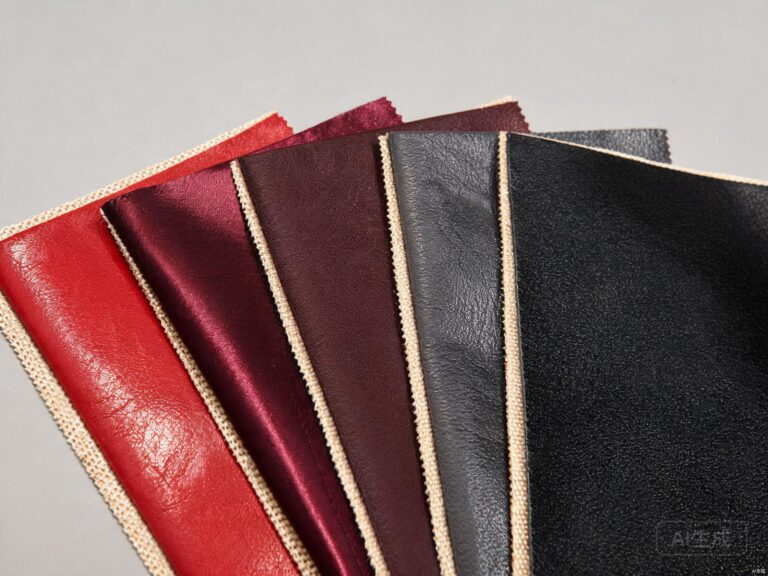
Release-paper coating: where new textures are manufactured — the lab route’s practical cousin.
Shift 5 is the quiet one: certification becomes the product. REACH screening, ISO 16000-6 VOC results and food-contact declarations are moving from annex attachments to headline claims. The buyers driving the 8.5% growth rate are procurement desks that purchase documents before they purchase samples. Durability data — abrasion, flex, scratch — completes the file.
None of this makes the line route the destination; it makes it the vehicle. The $3.23 billion projection assumes the current chemistry keeps absorbing applications — marine, medical, baby products, public transport — that once waited for bio-routes to mature. Buyers who track both routes on one sheet, with the same columns for cost, life and documentation, end the decade with options instead of bets.

Bench proof before forecast faith: durability data separates futures from fads.
R&D capability on camera: the line that turns future-leather concepts into shipped rolls.
Future Leather by 2030: A Judgment Table for Buyers
| If Your Brief Says | The Future That Fits | Spec to Track |
|---|---|---|
| “Marketing wants the bio story” | Bio-fabricated or mycelium capsule line | $/meter, lead time, biological-content disclosure |
| “Fleet or interiors need it now” | Silicone coating route, shipping today | VOC data, hydrolysis record, cycle counts |
| “Compliance owns the brief” | Certified silicone with document stack | REACH, ISO 16000-6, food-contact declaration |
| “Budget owns the brief” | Coated PU interim, silicone upgrade path | Per-year cost math over the service window |
The table reads like the decade it describes: two futures, not one. The lab route compounds at 20% from a small base and owns the story. The line route compounds at 8.5% from a large base and owns the order book. What future leather means by 2030 is the overlap — bio-content where the brief pays for it, silicone chemistry where the program needs proof, and a document set that lets one file serve both.
Request the Future-Materials Briefing Pack
References
1. https://marketintelo.com/report/bio-fabricated-… — Bio-fabricated luxury leather goods market: $1.3 billion in 2025 growing to $7.8 billion by 2034 at a 20.0% CAGR, mycelium-based leather at 48.5% of the 2025 base
2. https://pmarketresearch.com/worldwide-waterproo… — Waterproof silicone leather market: $1.83 billion in 2025 rising to $3.23 billion by 2032 at an 8.5% CAGR, 100% silicone at 53.8% share, automotive interiors at 39.8%