Faux fabric leather is everywhere — and that is precisely the problem for B2B buyers. The term covers everything from a $2/yd PVC-coated vinyl to a $15/yd silicone-coated performance fabric, and suppliers use the same vocabulary for all of them. When a sourcing manager requests “faux fabric leather” samples from three vendors, the three packages that arrive may contain materials with nothing in common except that none of them came from an animal. This guide cuts through that ambiguity.
We map the faux fabric leather landscape by chemistry, application fit, and quality grade — the three dimensions that determine whether a material will perform in your specific product. For designers and specifiers evaluating fashion and sports applications, getting these dimensions right at the specification stage prevents the costly re-qualification cycle that follows a wrong material choice.
Faux Fabric Leather Types: Mapping the Material Landscape
The faux fabric leather category includes four chemistries that behave fundamentally differently. Treating them as interchangeable is the most common specification error in B2B sourcing:
- PVC (polyvinyl chloride) — the oldest and cheapest variant. A plasticized vinyl layer on fabric. Waterproof, stiff, and durable in dry conditions, but brittle in cold and environmentally controversial due to plasticizer and chlorine content.
- PU (polyurethane) — softer and more leather-like than PVC. Better breathability and hand-feel, but susceptible to hydrolysis in humid climates. The dominant faux fabric leather type in mid-market furniture and fashion.
- Microfiber leather — a nonwoven microfiber substrate impregnated with PU resin. Structure mimics the dermal layer of genuine leather more closely than coated fabrics. Higher cost ($8–20/yd) but superior durability and hand-feel.
- Silicone leather — fabric coated with silicone elastomer. The newest entrant. Premium pricing but eliminates the hydrolysis, plasticizer migration, and VOC issues of PU-based alternatives. For a comprehensive overview, see our silicone leather introduction.

Warm-tone lychee texture swatches — the embossed grain pattern is a common finish across all four faux fabric leather chemistries, making chemistry-level identification critical
Application Fit: Where Faux Fabric Leather Works Best
Material selection starts with the end product, not the material spec sheet. Different applications impose different stress profiles — and a faux fabric leather that excels in one context can fail catastrophically in another. Here is how the four types map to common B2B applications:

Faux fabric leather in fashion applications — where hand-feel, drape, and color consistency matter more than extreme abrasion resistance
| Application | Recommended Type | Key Requirement |
|---|---|---|
| Fashion handbags | Microfiber / PU | Hand-feel, drape, color matching |
| Furniture upholstery | PU / Silicone | Abrasion, cleaning tolerance, hydrolysis |
| Automotive interiors | Microfiber / Silicone | Heat resistance, VOC, fire safety |
| Footwear | Microfiber / PU | Flex endurance, tear strength, breathability |
| Healthcare surfaces | Silicone | Disinfectant tolerance, biocompatibility, zero-VOC |
Notice that silicone leather appears in the most demanding applications — healthcare and automotive — while PU and microfiber dominate cost-sensitive segments. That distribution is not accidental. It reflects the cost-performance tradeoff that each chemistry offers.
Quality Grades and Manufacturing Differentiators in Faux Fabric Leather
Within each chemistry type, quality grades vary dramatically. Two PU faux fabric leather samples from different suppliers may carry identical thickness specifications but perform completely differently in the field. The differentiators are in the manufacturing process, not the spec sheet:

Production process flow chart — the manufacturing route determines coating adhesion, consistency, and defect rate more than raw material chemistry alone
- Base fabric density — higher warp/weft count means better dimensional stability and coating adhesion. Budget grades use loose weaves that allow coating migration.
- Coating application method — knife-over-roll vs transfer coating vs direct extrusion. Each produces different surface uniformity and bond strength.
- Curing conditions — temperature and dwell time in the curing oven determine crosslink density. Under-cured coatings feel soft initially but degrade rapidly.
- Quality control protocol — inline inspection vs batch sampling. The difference between 98% and 99.5% first-pass yield is invisible on a spec sheet but very visible in a warranty ledger.
In our experience, the single most overlooked quality factor is coating adhesion — measured as the force required to separate the surface layer from the fabric base. A material can pass every abrasion test on day one and still delaminate in year two if the coating bond was marginal. Always request peel-strength test data (ASTM D751) alongside the standard abrasion numbers.

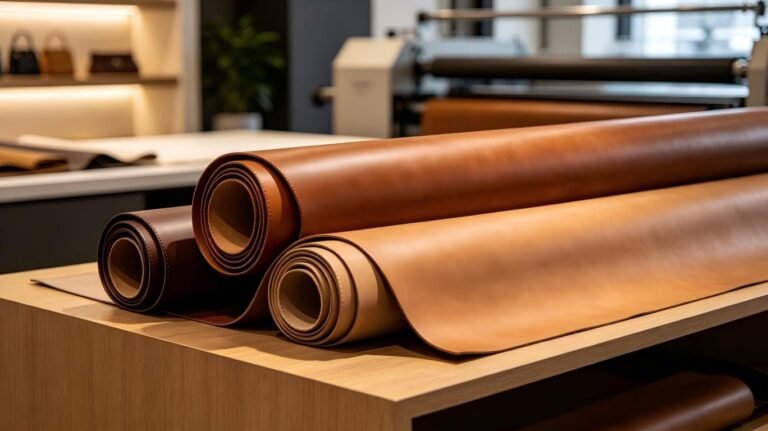
Release paper coating line — the transfer coating process that creates the textured surface finish on premium faux fabric leather
Environmental and Compliance Considerations
The environmental profile of faux fabric leather varies by chemistry more than by any other factor. PVC carries the heaviest burden — chlorine chemistry, phthalate plasticizers, and end-of-life dioxin concerns have led to regulatory restrictions in the EU (REACH) and voluntary phase-outs by major brands. PU is better but still involves solvent chemistry in most formulations. Microfiber leather sits between PU and silicone on environmental metrics.
Compliance checkpoint: For products entering the EU market, REACH SVHC compliance is mandatory. For North American healthcare and education markets, California Section 01350 VOC limits apply. The Textile Exchange provides industry benchmarks for sustainable material sourcing that many B2B buyers now reference in their procurement policies.
Silicone leather offers the strongest environmental profile in the faux fabric leather category: zero solvents in formulation, no plasticizers, no chlorine chemistry, and a curing process that produces no VOC emissions. For brands with published sustainability commitments, eco-friendly silicone leather provides a defensible material story that PU and PVC cannot match.

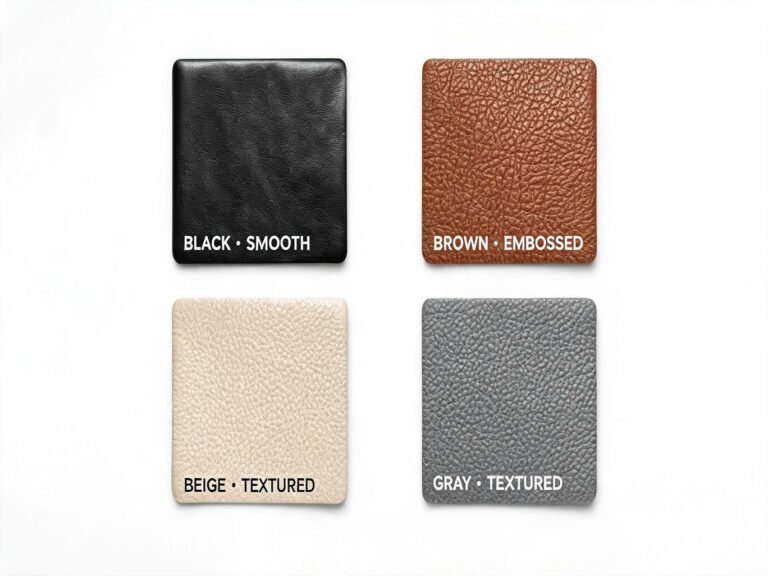
Color swatch range — custom color matching is available across all faux fabric leather types, though minimum order quantities vary by chemistry
Bulk Procurement: Specification Planning for Faux Fabric Leather
Bulk procurement of faux fabric leather fails most often not on price or quality, but on specification ambiguity. When the purchase order says “faux leather, 1.0mm, black” and nothing else, the supplier fills in the gaps with their cheapest interpretation. A complete specification should include:
- Chemistry type — specify PU, PVC, microfiber, or silicone explicitly
- Base fabric specification — fiber type, weight (g/m²), and weave structure
- Performance requirements — Martindale cycles, peel strength, hydrolysis test (if applicable), VOC class
- Surface finish — embossing pattern, gloss level, hand-feel descriptor
- Color reference — Pantone or physical master swatch, with delta-E tolerance
- Compliance certifications — REACH, RoHS, California 01350, or application-specific standards

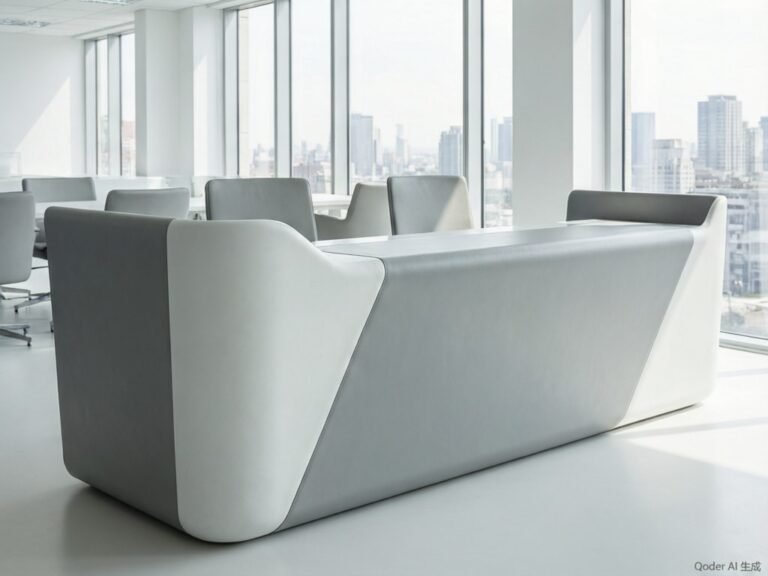
Faux fabric leather furniture upholstery — the application where specification clarity matters most, as warranty exposure is highest
One of our clients — a furniture manufacturer supplying a Nordic retail chain — learned this lesson the hard way. Their original specification called only for “PU faux leather, grey.” The supplier delivered a solvent-based PU that failed the retailer’s indoor air quality audit. After re-specifying with chemistry type, VOC class, and test data requirements, the re-qualified material passed on the first submission. The re-qualification process cost six weeks of production delay. For a more thorough overview, the faux leather guide on our site covers the specification framework in detail.
Texture variety showcase — see the embossing patterns, surface finishes, and hand-feel options available across faux fabric leather types
Request a Specification Consultation
Frequently Asked Questions
What is the difference between faux fabric leather and vegan leather?
“Vegan leather” is a marketing term indicating the material contains no animal-derived components. “Faux fabric leather” is a technical term describing the material structure — a fabric base with a synthetic coating. All vegan leather is faux fabric leather, but not all faux fabric leather is marketed as vegan. The distinction matters in procurement because “vegan leather” claims do not specify chemistry, performance, or compliance — you still need the full technical specification regardless of the marketing label.
How do I identify the chemistry type of an unmarked faux fabric leather sample?
The simplest field test is the burn test: PVC produces a sharp, acidic smell and leaves a hard, black residue. PU burns with a mild, slightly sweet odor and leaves a sticky residue. Microfiber leather burns similarly to PU but leaves a fibrous ash. Silicone does not burn in a standard flame — it chars without flaming and produces a white silica ash. For definitive identification, request an FTIR analysis from a third-party testing laboratory. The faux leather fundamentals guide provides additional identification methods.
Specifying Faux Fabric Leather With Precision
The faux fabric leather category is broad enough to cover everything from disposable promotional items to decade-performance commercial upholstery. Success in B2B sourcing comes down to specificity: knowing which chemistry fits your application, which quality grade your warranty exposure demands, and which compliance certifications your market requires. The material itself is rarely the problem — the specification is. Write the spec tightly, request test data, qualify the supplier against the spec, and the faux fabric leather you receive will perform the way you expect.
About TOPSUN
TOPSUN produces silicone-based faux fabric leather for B2B buyers who need the look and feel of traditional faux leather without the hydrolysis, VOC, and plasticizer liabilities of PU and PVC formulations.
Our material is available in lychee, pebble, smooth, and custom embossing patterns — with REACH compliance, zero-solvent certification, and minimum order quantities starting at 500 yards for standard colors and 2,000 yards for custom shades.