Walk into any furniture store, browse any accessories marketplace, or read any apparel tag, and you’ll see them: fake leather goes by more names than a spy in a thriller. Faux leather. Vegan leather. PU leather. Pleather. Leatherette. Synthetic leather. Artificial leather. And that’s before you get to brand names like Naugahyde, Skai, and Koroyd.
Here’s the problem from a procurement standpoint: these names aren’t interchangeable. A product labeled “vegan leather” could be made from cheap PU that peels in six months, or it could be high-grade silicone leather that lasts five years-plus. The name on the tag tells you almost nothing about what’s actually inside — or how long it will last.
This guide breaks down every common fake leather name, what material it actually refers to, and how to tell whether you’re getting a premium product or something that will fall apart before the warranty expires.
Silicone vs PU Leather: See the Real Difference
The 12 Most Common Fake Leather Names (and What They Really Mean)
Let’s start with the terminology. These are the names you’ll encounter most often in product descriptions, tags, and supplier catalogs — and what each one actually means from a materials perspective.

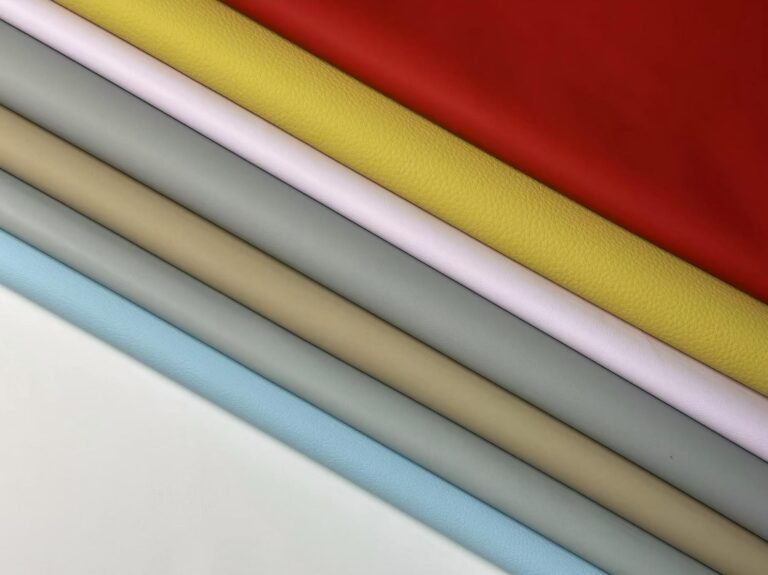
With so many names for non-animal leather materials, it’s hard to know what you’re actually getting
| Name | Actual Material | Typical Use | Quality Tier |
|---|---|---|---|
| Faux Leather | Umbrella term — any leather imitation | Everything | Varies (unknown) |
| PU Leather | Polyurethane coating on fabric backing | Upholstery, accessories, apparel | Low to mid |
| Vegan Leather | Marketing term — usually PU, sometimes cork/apple/mushroom | Fashion, accessories, marketing | Varies (unknown) |
| Synthetic Leather | Umbrella term — PU, PVC, or other plastic-based | Industrial, upholstery | Varies (unknown) |
| Artificial Leather | Same as synthetic leather | General use | Varies (unknown) |
| Pleather | Slang — plastic leather (PVC or cheap PU) | Apparel, budget goods | Low |
| Leatherette | PVC or PU, often with felt backing | Book binding, boxes, automotive | Low to mid |
| Vinyl / PVC Leather | Polyvinyl chloride coating | Marine, automotive, budget | Low |
| Naugahyde | Brand name — PVC/vinyl leather | Upholstery (US classic) | Low to mid |
| Microfiber Leather | Microfiber base + PU coating | Automotive, electronics | Mid to high |
| Silicone Leather | Silicone coating on woven fabric base | Premium upholstery, 3C, medical | High |
| Bio-Leather / Mushroom / Piñatex | Mycelium, pineapple leaf, cork, etc. | Fashion, luxury (emerging) | Premium niche |
The most important takeaway from this table: names like “faux leather,” “vegan leather,” and “synthetic leather” tell you absolutely nothing about quality. They’re umbrella terms that cover everything from $2-per-yard vinyl to $30-per-yard high-performance silicone. If you’re sourcing based on the name on the tag, you’re flying blind.
Engineering rule: Never specify a material by its marketing name. Always specify by composition: “polyurethane leather,” “silicone-coated synthetic leather,” etc. The name on the box doesn’t determine performance — the chemistry does.
Why So Many Names? Marketing vs. Material Science
There’s a reason fake leather has so many names — and it has nothing to do with material science. It’s about marketing positioning.

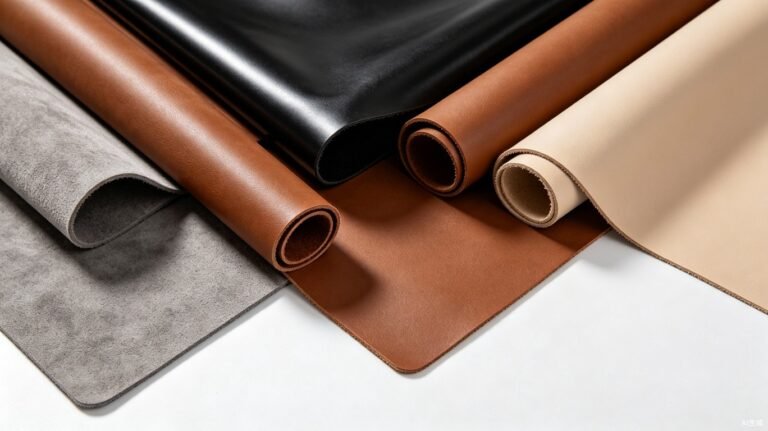
The same material can be marketed under multiple names depending on the target audience and price point
Here’s how the naming game works. The exact same PU leather material might be labeled:
- “Faux leather” when it’s sold to budget furniture buyers — “faux” sounds like a reasonable alternative
- “Vegan leather” when it’s sold to eco-conscious consumers — “vegan” sounds ethical and premium
- “PU leather” when it’s sold to technical buyers — “PU” sounds specific and honest
- “Synthetic leather” when it’s sold in industrial catalogs — “synthetic” sounds technical and functional
- “Artificial leather” when it’s sold in certain geographic markets — translation preferences
Same material. Same chemical composition. Same durability profile. Five different names, each designed to appeal to a different buyer psychology. And none of them tell you anything about how the material will perform in your application.
This is why “vegan leather” is such a problematic term from a procurement perspective. It’s not a material specification — it’s a marketing claim about what the material isn’t (not animal-derived). It tells you nothing about what the material is, how it’s made, or how long it will last. A $10 PU phone case and a $200 mushroom leather handbag can both legitimately call themselves “vegan leather,” despite having almost nothing in common.
The Performance Gap: Not All Fake Leather Is Equal
If you only remember one thing from this guide, remember this: the performance difference between the best and worst fake leather materials is enormous. It’s not a 20% difference — it’s a 5x to 10x difference in lifespan, stain resistance, and overall quality.

Lab testing reveals the real performance differences between materials that all call themselves “leather”
| Material Type | Abrasion Resistance | Hydrolysis Resistance | Expected Lifespan |
|---|---|---|---|
| Vinyl / PVC Leather | 10,000–30,000 cycles | Poor — plasticizers migrate out | 1–3 years |
| Standard PU Leather | 15,000–40,000 cycles | Poor — hydrolysis in 1–2 years | 1–2 years |
| Microfiber PU Leather | 50,000–80,000 cycles | Moderate — 2–4 years | 3–5 years |
| Silicone Leather | 80,000–120,000+ cycles | Excellent — inherently resistant | 5–10+ years |
Let that sink in. The cheapest fake leather (PVC/vinyl) lasts 1–3 years. High-grade silicone leather lasts 5–10+ years. That’s a 3–5x difference in lifespan — but the price difference is only 2–3x. On a total-cost-of-ownership basis, the better material is usually cheaper, even though it costs more upfront.
Learn About Silicone Leather Technology
See how silicone leather durability compares to other synthetic leather materials
How to Specify Fake Leather Properly for B2B Sourcing
If you’re sourcing synthetic leather for products or upholstery, don’t let suppliers dictate the terminology. Specify what you actually need, using real material parameters. Here’s the correct way to write a material spec:
- State the coating chemistry — “silicone-coated,” “polyurethane (PU) coated,” “polyvinyl chloride (PVC) coated.” Never just “faux leather” or “vegan leather.”
- Specify the substrate — “woven polyester backing,” “microfiber nonwoven base,” “knitted fabric.” The backing affects drape, stretch, and tear strength.
- Require performance test data — Martindale abrasion cycles, hydrolysis resistance rating, color fastness to light, tensile strength. If a supplier can’t provide test data, walk away.
- Define thickness and weight — 0.8mm ± 0.05mm, 320 g/m² ± 15 g/m². Vague thickness specs lead to quality variance.
- Get a physical sample — Nothing beats touching, bending, and testing the material yourself. Order samples from multiple suppliers and compare side by side.
Look Past the Name, Spec the Material
The world of fake leather names is deliberately confusing. “Faux,” “vegan,” “synthetic,” “PU,” “pleather,” “leatherette” — these names exist to sell products, not to describe materials accurately. For B2B buyers, that confusion is expensive.
The solution is straightforward: stop buying by the name and start buying by the specification. Define what you need in terms of chemistry, performance, and testing. Demand data from suppliers. Compare samples side by side. The material that calls itself “vegan leather” might be cheap PU — or it might be high-grade silicone. You won’t know until you look past the marketing name and check what’s actually underneath.
If you’re evaluating silicone leather as a high-performance alternative to PU or PVC in your products, the fastest way to understand the difference is to get samples in hand. Run your own tests. See how it feels, how it bends, how it handles stains. The results might surprise you.
Order Silicone Leather Material Samples
About TOPSUN
TOPSUN manufactures high-performance silicone leather — a premium synthetic leather alternative that outlasts PU, PVC, and microfiber on abrasion, hydrolysis, and stain resistance, with zero VOC emissions.
100K+ Martindale cycles verified · Inherently hydrolysis resistant · Stain & water proof · Zero VOC · REACH & RoHS compliant · Full OEM/ODM capability