A mid-size furniture brand received a sustainability mandate from their largest retail partner: switch all upholstery to eco friendly vegan leather within 18 months or lose shelf space. The procurement team did what most would — they sourced “vegan leather” from three suppliers, each carrying a PETA-Approved Vegan label. Twelve months later, an independent audit revealed that all three materials were petroleum-based PU, none were recyclable, and one failed the VOC threshold the retailer had set as non-negotiable. The “vegan” label was accurate. The “eco friendly” part was marketing.
This scenario plays out across industries — automotive, fashion, furniture, consumer electronics. The gap between “vegan” and “eco friendly” is where most sourcing decisions go wrong. Vegan only certifies the absence of animal products. Eco friendly requires proof of low toxicity, recyclability, and minimal lifecycle impact. The two terms aren’t synonyms, and treating them as such is how brands end up with petroleum-based materials marketed as sustainable.
Why Most Vegan Leather Isn’t Actually Eco Friendly
The carbon footprint numbers tell the story clearly. Traditional PU leather carries 10–15 kg CO₂e per square meter. PVC leather sits at 15–20 kg. Water-based PU improves to 8–12 kg. These figures come from a comprehensive lifecycle analysis by Mush Mycel’s vegan leather guide, which compared 11 material types across carbon, water, and biodegradability metrics. The data shows that “vegan” doesn’t mean “low impact” — it just means “no animal.”
PVC is arguably the worst offender. It contains 57% chlorine by weight, releases toxic dioxins during production and incineration, and requires phthalate plasticizers that leach into products over time (Hoplok Leather). A PVC sofa labeled “vegan” technically avoids animal products — but it off-gases plasticizers into your living room and never biodegrades. PU is better (chlorine-free, no phthalates), but its solvent-based manufacturing process still generates VOC emissions, and the finished material has limited recyclability due to its multilayer structure.
See Eco-Friendly Silicone Leather Specs
What Truly Eco Friendly Vegan Leather Looks Like
An eco friendly vegan leather needs to clear four hurdles, not just one:
- Zero or near-zero VOC emissions — verified under ISO 16000-6, not self-declared. PU contains solvents; PVC contains plasticizers. Silicone leather registers zero VOC because its manufacturing uses a solvent-free dry coating process.
- Full recyclability — the material can be reprocessed into new products at end of life. PU has limited recyclability due to fabric-polymer bonding. PVC is not recyclable. Silicone leather is 100% recyclable.
- Long service life — a material that lasts 10 years has half the per-year environmental impact of one lasting 5 years. Silicone leather’s 10+ year lifespan against PU’s 3–5 years means less replacement, less waste, less manufacturing energy over the product’s lifecycle.
- No harmful chemical inputs — PVC-free, phthalate-free, BPA-free, formaldehyde-free, DMF-free. These aren’t marketing terms — they’re testable properties verified by REACH, RoHS, and OEKO-TEX Standard 100.

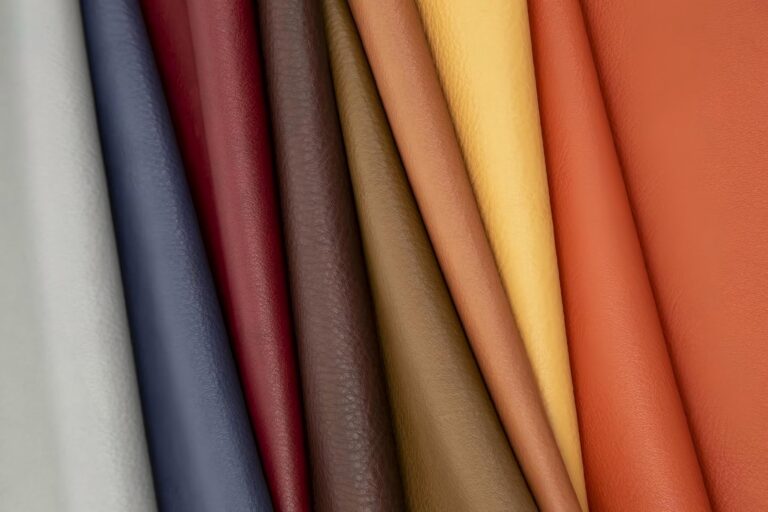
Finished silicone leather rolls — a solvent-free manufacturing process means zero VOC from production through end-of-life
In our production facility, the difference is visible at the coating line. PU leather manufacturing requires solvent-based wet coating — you can smell it. Silicone leather uses a dry coating process with no solvents, no DMF, no formaldehyde. The factory floor air quality is indistinguishable from office air. That’s not an anecdote — it’s ISO 16000-6 test data confirming zero VOC emissions from the finished material.
The Certification Reality Check
Here’s what most buyers miss about vegan leather certifications:
PETA-Approved Vegan is a company self-declaration, not a third-party audit. It confirms no animal ingredients or testing — but says nothing about toxicity, microplastic shedding, or carbon footprint. A PVC sheet can earn this certification. So can a silicone-coated fabric. The label doesn’t distinguish between them.
GRS (Global Recycled Standard) verifies minimum recycled content (≥20% for the “recycled” label, ≥50% for “high recycled”) and chain-of-custody. This is a real audit, but it measures recycled content, not overall environmental impact. A PU leather made with 20% recycled polyester still has solvent-based coating and limited recyclability.
REACH compliance (EC 1907/2006) is the EU’s enforceable chemical regulation. It restricts harmful substances and is independently verified. This is the certification that actually catches greenwashing — if a material passes REACH, RoHS, and OEKO-TEX, it’s been tested for real toxicological thresholds, not just ethical sourcing.

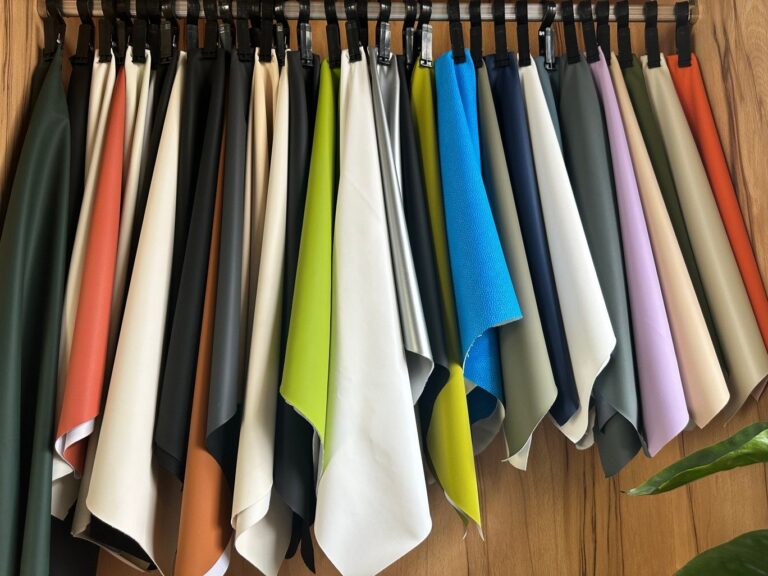
Lifecycle display — from raw silicone to finished recyclable material, every stage is solvent-free
When a retailer or regulator demands a sustainability audit, they ask for REACH and RoHS test reports, not PETA certificates. Our vegan leather sustainability analysis covers the documentation trail that passes these audits.

Waterproof texture of silicone vegan leather — non-porous surface means no chemical treatments needed for stain resistance
Bottom line: Only silicone leather simultaneously clears all four eco hurdles — zero VOC, 100% recyclable, 10+ year lifespan, and no harmful chemical inputs. PU clears one (no animal products). PVC clears zero beyond the vegan label. The circular economy case for silicone leather is built on these four properties, not on marketing claims.
Decision Guide: Which Eco Friendly Vegan Leather for Your Application?
If your priority is passing a VOC audit → choose silicone leather (zero VOC verified under ISO 16000-6). PU and PVC both emit.
If your priority is end-of-life recyclability → choose silicone leather (100% recyclable) or bio-based with verified biodegradability. PU has limited recyclability; PVC has none.
If your priority is lowest upfront cost → PU leather (30–40% cheaper per meter) but expect 3–5 year replacement cycles and potential audit failures.
If your priority is hydrolysis resistance in humid environments → choose silicone leather. PU degrades in humidity; hydrolysis-resistant silicone leather maintains structural integrity indefinitely.
If your priority is food-contact or medical safety → only silicone leather carries FDA 21 CFR 177.2600 and ISO 10993 biocompatibility certifications among vegan options.
The right eco friendly vegan leather depends on which audit your product needs to pass — but if you want a material that clears all four hurdles simultaneously, silicone is the only option that does.
Request Eco-Certification Documents
About TOPSUN
TOPSUN produces silicone leather using a solvent-free dry coating process, delivering zero-VOC, 100% recyclable materials for brands facing tightening ESG and sustainability mandates.
REACH + RoHS + FDA + ISO 10993 certified · LEED and EU Ecolabel compatible · Zero VOC under ISO 16000-6 · 100% recyclable · PVC-free, phthalate-free, BPA-free