When I sourced desk mats for a 200-person office last year, the spec sheet said “premium leather.” Twelve months later, half the mats showed edge peeling and ink stains that wouldn’t clean off. The real cost of leather for desk top surfaces isn’t the unit price—it’s how often you replace them. Here’s a total cost of ownership breakdown across three material types that changed our procurement strategy entirely.
Leather for Desk Top: 3 Materials, 3 Very Different Lifespans
Three materials dominate the desk surface market, and their performance gaps are wider than most procurement teams realize. PU leather—the cheapest option—typically lasts 6 to 18 months before surface cracking appears at the wrist contact zone. Genuine leather survives 5 to 10 years but absorbs 12–18% of its weight in moisture, making it a mold risk in humid offices. Silicone leather combines the waterproof advantage of PU with the longevity of genuine leather—10+ years with zero moisture absorption.
| Material | Lifespan | Liquid Resistance | Stain Cleanability | 5-Year Cost/100 Units |
|---|---|---|---|---|
| PU Leather | 6–18 months | Waterproof (until cracked) | Poor after cracking | ~$4,800 (5× replacement) |
| Genuine Leather | 5–10 years | Absorbs 12–18% moisture | Requires conditioning | ~$3,500 + maintenance |
| Silicone Leather | 10+ years | Non-porous, zero absorption | Bleach-safe, alcohol-safe | ~$2,500 (1× purchase) |

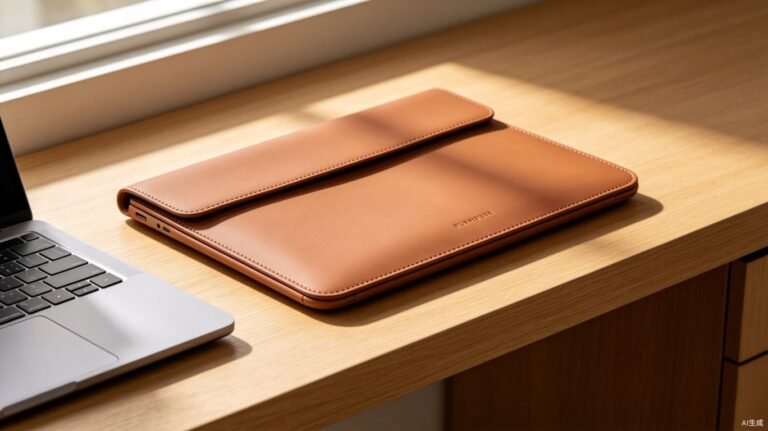
Folded leather sample showing surface flexibility — critical for desk mat edges that resist cracking
Why PU Desk Mats Crack Within 18 Months
PU leather desk mat durability has a hard ceiling. The polyurethane coating contains plasticizers that keep the surface flexible—and those plasticizers evaporate. In an air-conditioned office with moderate daily use, visible cracking typically appears at the wrist contact zone within 6 to 18 months. Once the surface cracks, the porous base fabric absorbs ink, coffee, and hand oils that no cleaning can remove. When you compare silicone vs PU performance, the structural difference is clear: silicone flexibility is intrinsic to the polymer, while PU depends on additives that disappear.
That’s not just a replacement cost. Cracking PU also releases volatile organic compounds into the workspace. According to the EPA’s indoor air quality guidelines, office materials that off-gas contribute to what building managers call “sick building syndrome”—headaches, fatigue, and respiratory irritation among occupants.

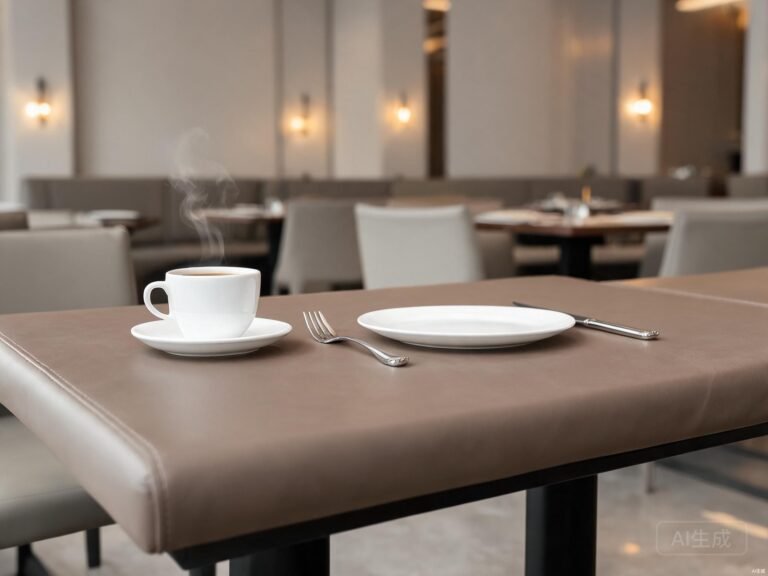
Office workspace material texture — the surface your hands contact 8 hours daily determines both comfort and longevity
Leather for Desk Top: The Genuine Leather Moisture Problem
Genuine leather feels like the safe premium choice—until you read the care manual. Full-grain cowhide absorbs 12–18% of its weight in moisture. In a humid office, that means your desk pad is slowly drinking ambient humidity, sweat, and spilled coffee. Over time, this moisture causes dimensional warping, mildew odor, and eventually mold growth underneath the pad.
Maintenance is another hidden cost. Genuine leather desk surfaces require conditioning every 3–6 months with leather cream to prevent cracking—a recurring expense that procurement rarely budgets for. Our cleaning and maintenance guide shows how silicone leather eliminates this entirely: a non-porous surface that repels liquids, survives bleach disinfection, and never needs conditioning.

Color swatch options for desk surface leather — Pantone-matched for corporate brand consistency
What Actually Matters: 5 Specs to Check Before Ordering
Before signing a desk accessory purchase order, verify these five specifications. In my experience auditing supplier samples for 3C accessories and desk surface applications, suppliers who can’t answer these questions are selling coated fabric—not engineered material:
- Stain resistance protocol: Ask for test data on ink, coffee, and permanent marker removal. If the supplier can’t produce it, the surface isn’t sealed.
- Liquid contact angle: A non-porous surface should show a contact angle of 90° or higher. Anything lower means the material absorbs liquid over time.
- Cleaning chemical compatibility: Confirm the material survives 70% alcohol, bleach solution, and commercial disinfectants—standard in post-pandemic offices.
- Abrasion resistance (Martindale): PU mats typically rate 20,000–30,000 cycles. For commercial desk surfaces, 100,000+ is the minimum.
- VOC emission certificate: Request ISO 16000-6 or VDA 277 test data. Zero-VOC materials exist—don’t accept “low VOC” as a substitute.
For a deeper look at how desk top leather compares to table-top applications, the substrate and coating requirements are nearly identical—both demand non-porous surfaces that resist daily spills and repeated cleaning.

Co-working space desk surface — high-traffic environments demand materials that survive daily spills and cleaning
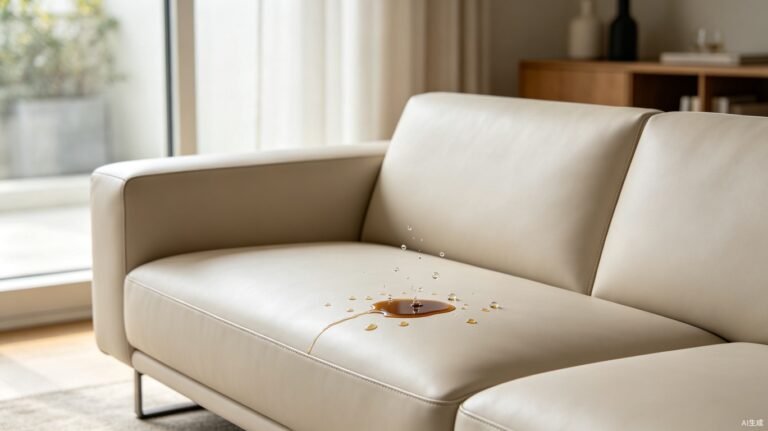
Watch silicone leather resist ink, coffee, and permanent marker — then compare with how PU handles the same stains
Frequently Asked Questions
What’s the best leather for desk top surfaces in a high-traffic office?
Silicone-coated leather offers the best combination of stain resistance, cleanability, and longevity for high-traffic office desk surfaces. It survives repeated cleaning with alcohol and bleach, resists ink and coffee stains permanently, and maintains surface integrity for 10+ years—versus 6–18 months for PU and 5 years for genuine leather with conditioning.
Can desk top leather be cleaned with alcohol disinfectant?
It depends on the coating. PU leather degrades with repeated alcohol exposure—plasticizers break down, accelerating cracking. Genuine leather dries out and requires reconditioning after alcohol cleaning. Silicone leather is fully alcohol-compatible and can be disinfected daily without surface damage or degradation.
Stop Buying Desk Mats Every 18 Months
Leather for desk top procurement decisions shouldn’t be made on unit price alone. A PU mat that costs $8 and lasts 12 months is more expensive over five years than a silicone mat that costs $25 and lasts a decade. When you factor in replacement labor, cleaning chemical costs, and the productivity drag of stained, peeling desk surfaces, the TCO gap widens further. For mouse pad and desk surface leather applications, specifying the right material once saves recurring procurement headaches for years.
About TOPSUN
TOPSUN supplies silicone leather for desk top surfaces, writing pads, and workspace accessories where stain resistance and daily cleanability are non-negotiable.
Our materials pass bleach-safe cleaning tests, resist ink and coffee stains permanently, and maintain surface integrity for 10+ years — with 500m MOQ and 7–15 day lead times.