The crossbody bag is the workhorse of the accessories industry. It’s the style every brand offers, the category customers reach for every single day, and the product that can make or break a collection’s profitability. And nothing determines a crossbody bag’s positioning, price point, and customer satisfaction more than the leather it’s made from.
But here’s what most brands get wrong: they choose leather based on what’s familiar or what the factory recommends, not based on a clear understanding of how each material type maps to price point, durability, return rates, and brand positioning. In this guide, we break down the six most common crossbody bag leather materials, how they compare on cost and performance, and how to match the right material to your brand’s target market.
Explore Fashion Leather Materials
6 Crossbody Bag Leather Materials Compared
From entry-level fast fashion to luxury heritage brands, crossbody bags are made from a surprisingly wide range of leather and leather-like materials. Here’s how the six most common options stack up on the metrics that matter for B2B buyers.
| Material | Cost (per sq ft) | Expected Life | Price Point |
|---|---|---|---|
| Full-Grain Cowhide | $8–$15 | 10–20+ yrs | Luxury ($200+) |
| Top-Grain Cowhide | $5–$10 | 5–10 yrs | Premium ($100–$250) |
| Goatskin | $6–$12 | 5–8 yrs | Premium ($120–$280) |
| Genuine (Split) Leather | $2–$5 | 1–3 yrs | Mid-Range ($50–$120) |
| PU Leather (Faux) | $1–$3 | 1–3 yrs | Entry ($25–$80) |
| Silicone-Coated | $4–$8 | 8–12 yrs | Premium ($120–$250) |
The key insight here is that material cost and product lifespan don’t move in lockstep. Full-grain leather costs about 3x more than top-grain per square foot, but it lasts 2x longer — so the cost-per-year is actually pretty close. PU leather is the cheapest upfront, but it doesn’t last long enough to justify the savings for brands that care about quality reputation.

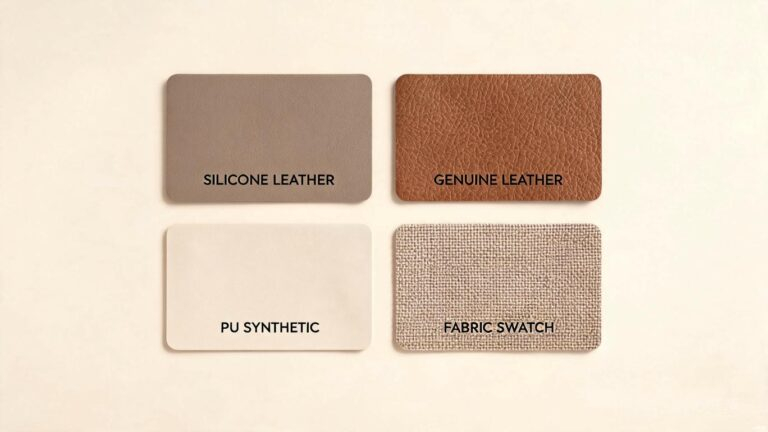
Material samples for bag manufacturing — the leather you choose defines everything from price point to return rates.
Designer tip: Material cost represents 40–55% of a bag’s total manufacturing cost. A $2/sq ft material upgrade adds roughly $5–$8 to the COGS of a typical crossbody — but can justify a $30–$50 retail price increase.
Which Leather Is Right for Your Crossbody Bag Line?
The “best” crossbody bag leather depends entirely on who your customer is and what you’re selling. Let’s walk through the most common brand positioning scenarios.
Fast fashion / entry-level ($25–$80)
If your customer is buying based on trend and price, PU leather is the right call — but don’t go for the cheapest PU you can find. A $2–$3/sq ft water-based PU with a 0.3mm topcoat and polyester backing will look decent and hold up for 1–2 years of occasional use. The $1/sq ft stuff will crack and peel within months, and your return rates will eat into your margin. Spend a little more on the material; save a lot on returns.
Mid-range contemporary ($50–$150)
This is the trickiest price point because customers expect “real leather” at this price but don’t want to pay top-grain prices. The most common approach is to use genuine (split) leather with a good quality coating — it’s technically real leather, and the coating gives it a nice finish. But be honest about what it is; don’t call it “top-grain” if it’s not. An increasingly popular alternative at this price point is silicone-coated microfiber — it has a premium feel, excellent durability, and it’s vegan, which adds a marketing angle.
Premium contemporary ($100–$250)
At this price point, top-grain cowhide is the standard expectation. Customers are paying for real leather quality, and they know the difference. Pebbled top-grain is a great choice for everyday crossbodies because the texture hides scratches and scuffs — a big plus for a bag that gets thrown around daily. Goatskin is another option at this level; it’s lighter and more flexible than cowhide, with a distinctive grain that reads as “designer.” For brands targeting the modern minimalist consumer, silicone leather vs PU is worth comparing — silicone’s stain resistance and durability are strong selling points at this price.
Luxury / heritage ($250+)
Full-grain leather is non-negotiable at the luxury level. Your customer is paying for the material, the craftsmanship, and the knowledge that the bag will develop a beautiful patina over years of use. The specific leather depends on your aesthetic: Togo and other pebbled full-grains for structured bags with scratch resistance; Epsom or embossed grains for crisp, formal silhouettes; veau or box calf for sleek, dressy styles. Vegetable-tanned full-grain is the choice for heritage brands that emphasize craftsmanship and natural aging.

Color and texture sample hangers — matching the right leather to your brand’s aesthetic is half the design battle.
Crossbody Bag Specifics: Thickness, Weight, and Strap Durability
Crossbody bags have unique material requirements that other bag styles don’t. The strap, in particular, takes a huge amount of abuse — it’s constantly rubbing against clothing, being adjusted, and bearing the full weight of the bag’s contents. Get the strap material wrong, and it will be your #1 warranty claim.
Here’s what to specify for crossbody bags:
- Body thickness: 1.0–1.4mm (2.5–3.5 oz). Thick enough to hold its shape, thin enough to be lightweight. Any thicker and the bag feels heavy when empty; any thinner and it loses structure.
- Strap thickness: 1.2–1.6mm (3–4 oz). The strap needs to be slightly thicker than the body for durability, especially at the attachment points. Reinforce strap attachments with extra layers or rivets — this is where most bag failures happen.
- Weight matters more than you think. A crossbody bag that weighs 1.5 lbs empty feels heavy after a few hours of wear. Cowhide is the heaviest option; goatskin and silicone-coated microfiber are lighter. If your brand targets all-day wear, weight should be a design priority.
- Edge finishing is visible quality. The edges of a crossbody bag strap are what the customer sees and touches constantly. Painted edges (on leather) or sealed edges (on synthetic) should be smooth and uniform. Rough, uneven edges read as “cheap” even if the material is good quality.
Read Our Leather Goods Sourcing Guide

Fashion leather materials — from full-grain to silicone-coated, the right choice depends on your brand’s price point and target customer.
See how premium silicone leather elevates bag design — the look and feel of top-grain with stain resistance that PU can’t match.
The Rise of Silicone Leather in Crossbody Bag Design
One trend we’re watching closely is the growing use of silicone-coated materials in premium crossbody bags. It’s not a full replacement for leather — luxury brands will always want genuine leather’s natural feel and patina — but for contemporary and premium contemporary brands, silicone leather checks a lot of boxes that traditional leather doesn’t.
Why are bag brands switching to silicone leather?
- Stain-proof — Coffee, red wine, makeup, hand sanitizer — everything wipes off with a damp cloth. For a white or light-colored crossbody bag, this is a game-changer. Stains are the #1 reason customers return light-colored leather bags.
- Vegan positioning — More and more contemporary brands are moving to animal-free materials as a core brand value. Silicone leather lets you offer a premium vegan option without sacrificing the look, feel, or durability that customers expect at the $100+ price point.
- Color consistency — Because silicone leather is manufactured rather than grown, the color is perfectly consistent from batch to batch. No hide-to-hide variation, no dye lot surprises. This is huge for brands that need matching product across seasons and reorders.
- Lightweight — Silicone-coated microfiber is lighter than cowhide leather, which makes it ideal for crossbody bags that are worn for hours at a time. Less weight = more comfort = more wear = happier customers.
- Custom texture and color — Want a unique grain pattern that’s exclusive to your brand? Silicone leather can be embossed with custom textures and matched to any Pantone color. Genuine leather is limited by what nature provides.
That said, silicone leather won’t develop a patina the way full-grain leather does — and for heritage brands, that patina is the whole point. But for contemporary brands targeting younger, design-focused consumers, the combination of style, practicality, and vegan positioning is compelling. For a deeper look at how silicone leather performs in fashion applications, check out our fashion and sports applications page.
Market signal: Premium vegan bag sales grew 22% in 2025, outpacing overall bag category growth of 8%. Silicone leather is the fastest-growing material in this segment.
Frequently Asked Questions
What thickness of leather is best for crossbody bags?
For most crossbody bag designs, 1.0–1.4mm (2.5–3.5 oz) leather is ideal for the bag body, and 1.2–1.6mm (3–4 oz) for straps. Thinner leather looks elegant but won’t hold its shape or stand up to daily wear. Thicker leather is more durable but makes the bag heavy and stiff — especially problematic for a style that’s supposed to be worn all day. If you’re using a synthetic material like silicone leather, you can go slightly thinner (0.8–1.2mm) because the coating adds structural strength.
Is pebbled leather or smooth leather better for crossbody bags?
It depends on your customer and aesthetic, but pebbled leather generally performs better for everyday crossbody bags. The textured surface hides scratches, scuffs, and minor imperfections — which matter a lot for a bag that gets thrown on the ground, rubbed against clothing, and banged into things. Smooth leather looks more elegant and dressy, but it shows every mark. If you’re going with smooth leather, make sure it has a good protective topcoat, or consider silicone leather which is naturally scratch-resistant even with a smooth finish.
Choosing the Right Leather for Your Crossbody Line
The crossbody bag is the most competitive category in accessories, and the material you choose is one of your biggest differentiators. It determines your price point, your customer perception, your return rates, and your brand positioning all at once.
Don’t just default to the leather your factory always uses. Think about who’s buying your bag, how they’ll use it, and what they’re willing to pay for. Then match the material to the customer — not the other way around. And don’t sleep on silicone leather as an option; for a growing number of contemporary brands, it’s the sweet spot between leather’s premium feel and synthetic leather’s practicality.
Sample Bag Leather Materials for Your Line
About TOPSUN
TOPSUN supplies premium silicone leather for crossbody bag and fashion accessory brands looking for a material that combines top-grain aesthetics with stain-proof durability and vegan positioning.
We offer 50+ stock colors, custom Pantone matching, exclusive texture embossing, and low minimums for emerging brands — with REACH-compliant and OEKO-TEX certified production.