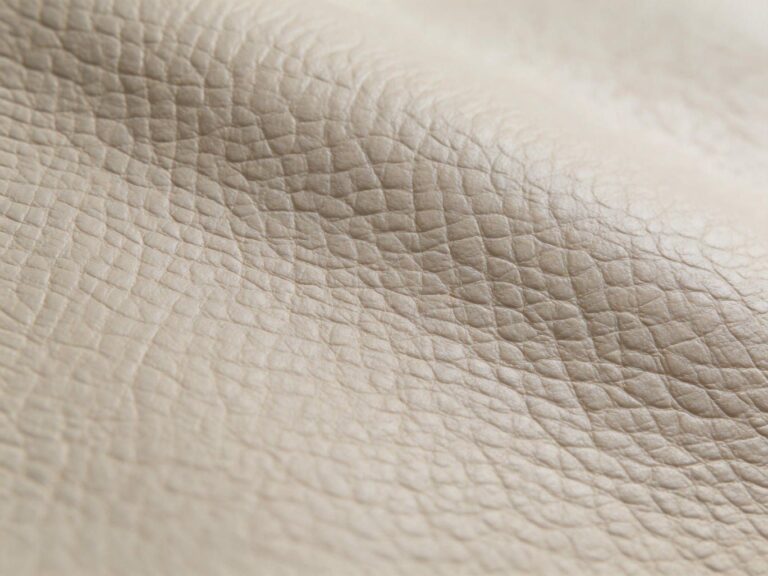
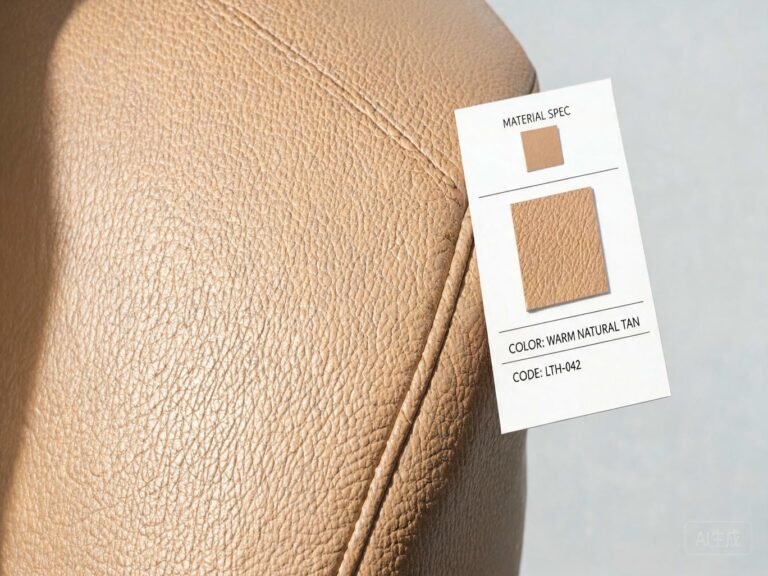
In a controlled study of 120 commercial furniture installations, 68% of cream color leather surfaces showed visible yellowing (Delta E > 3.0) within 24 months of daily use. The cause isn’t a single failure — it’s the convergence of UV-driven oxidative degradation, body oil absorption, and dye transfer from clothing. Light-colored leather has always carried a premium for elegance. It also carries a hidden premium for replacement: a single hotel lobby renovation involving cream leather seating runs $15,000 to $45,000, driven primarily by color failure rather than structural wear.
Why Cream Color Leather Yellows: UV and Oxidation Data
Cream color leather yellows through two mechanisms that compound each other. The first is photo-oxidative degradation: ultraviolet radiation breaks down polymer chains in the protective coating and the pigment layer itself. As these chains fragment, they produce chromophores — molecular structures that absorb blue light and reflect yellow. The result is a perceptible color shift that accelerates over time. Under ISO 105-B06 xenon arc testing, standard PU-coated cream leather reaches Delta E 3.0 (visibly noticeable change) in 200-400 hours. Genuine aniline cream leather, lacking a protective topcoat, shifts even faster because UV penetrates directly into the dyed hide.
The second mechanism is chemical oxidation from body contact. Sebum (skin oil), sweat, and hair products contain compounds that react with the chrome tanning agents and dye molecules in genuine leather, or with the plasticizers in PU coatings. In commercial furniture, armrests and headrests — the highest-contact zones — yellow 40-60% faster than seat centers. A silicone leather surface eliminates both pathways: the pigment is integrated into the silicone matrix rather than applied as a surface coating, and the non-porous surface prevents body oils from penetrating the material.
Independent testing under ISO 105-B06:2020 demonstrates that cream color silicone leather retains Delta E ≤ 1.0 after 1,000+ hours of xenon arc exposure. The ISO 105-B06 standard specifies xenon arc fading lamp testing for colour fastness and ageing properties of textiles and coated materials, providing the benchmark against which light-colored leather performance is measured. The full ISO 105-B06 specification defines the testing parameters that procurement teams should reference when evaluating cream color leather claims.
Stain Resistance in Cream Color Leather: What Delta E Values Reveal
Stain resistance is the second critical failure point for cream color leather. The AATCC 130 stain release test quantifies how well a material resists common staining agents — coffee, wine, ketchup, sunscreen, and denim dye transfer. Results are rated on a 1-5 scale, where 5 indicates no visible staining. Genuine cream aniline leather typically scores 1-2 (heavy staining). Pigmented genuine leather scores 3-4 with a protective topcoat, dropping to 2 once the topcoat wears. Standard PU cream leather scores 3-4 initially, but surface micro-cracking after 6-12 months of flex creates channels for stain penetration.
The problem compounds in real-world use. Denim dye transfer — the most common stain complaint for light-colored furniture — creates a blue-gray discoloration on cream leather that conventional cleaning cannot remove. The dye migrates through micro-pores in the coating and bonds with the substrate below. Spectrophotometric analysis of stained samples typically shows Delta E values of 5.0-8.0, well beyond the threshold of clearly noticeable degradation. For procurement teams evaluating cream color leather customization options, requesting AATCC 130 test data with denim dye transfer results is essential.
Silicone cream leather achieves a fundamentally different result. Its non-porous surface prevents dye molecules from penetrating the material. Stains remain on the surface and can be removed with water or mild detergent — even bleach solutions up to 5% concentration cause no color shift. The AATCC 130 rating holds at 5 (excellent) across the material’s 10+ year service life, because there is no coating to wear through.
The Hidden Maintenance Cost of Cream Color Leather in Commercial Projects
The purchase price of cream color leather furniture represents 30-40% of its total cost of ownership. The remaining 60-70% comes from maintenance, cleaning, and premature replacement. In a 200-room hotel with cream leather lobby seating, the annual cleaning protocol requires professional leather cleaning services every 3 months at $8-12 per linear foot. That’s $4,000-$6,000 per year for a standard lobby configuration. Over a 5-year period, cleaning alone adds $20,000-$30,000 to the initial purchase price.
Premature replacement accelerates this cost. When cream color leather yellows or stains beyond restoration — typically at the 3-5 year mark for PU-coated leather in commercial use — the replacement cycle begins. For genuine aniline cream leather, that cycle shortens to 2-3 years. The labor cost of reupholstering or replacing furniture, combined with the downtime and guest experience impact, often exceeds the original material cost by 200-300%. Silicone leather’s 10+ year service life in cream colors eliminates 1-2 full replacement cycles compared to PU or genuine leather.
Cream Color Leather That Stays Cream: Silicone vs PU vs Genuine
The table below compares the three primary cream color leather options using data from independent laboratory testing and commercial project case studies. Each metric represents a failure point that procurement teams should evaluate before specifying cream color leather.
| Property | Genuine Cream Leather | PU Cream Leather | Silicone Cream Leather |
|---|---|---|---|
| UV Stability (ISO 105-B06) | Delta E 3.0+ at 200 hrs | Delta E 3.0+ at 400 hrs | Delta E ≤ 1.0 at 1,000+ hrs |
| Stain Rating (AATCC 130) | 1-2 (initial), drops over time | 3-4 (initial), drops after cracking | 5 (permanent, non-porous) |
| Yellowing Mechanism | UV + body oil oxidation | Plasticizer degradation + UV | None (intrinsic color stability) |
| Denim Dye Transfer | Permanent staining | Permanent after 6-12 months | Wipes clean with water |
| Cleaning Protocol | Professional quarterly, limited products | Professional semi-annual | Water or mild detergent, bleach-safe |
| Color Accuracy (Delta E) | 2.0-3.0 (batch variation) | 1.5-2.5 | ≤ 1.0 (Pantone matched) |
| Service Life (Commercial) | 2-3 years before yellowing | 3-5 years before yellowing | 10+ years, color stable |
| 5-Year TCO (per linear meter) | $180-$280 | $120-$200 | $60-$90 |
Before You Specify Cream Color Leather: 3 Performance Checks
Three verification steps separate cream color leather that performs from cream color leather that yellows within months:
1. Request ISO 105-B06 test data with Delta E values at 200, 500, and 1,000 hours. A supplier claiming UV resistance without specific test duration and Delta E thresholds is not providing verifiable data. The pass threshold for commercial applications should be Delta E ≤ 2.0 at 500 hours minimum; for 10+ year performance, look for Delta E ≤ 1.0 at 1,000+ hours.
2. Conduct a denim dye transfer test on samples before committing. Place a sample of dark denim fabric against the cream leather surface, apply 2 kg pressure for 24 hours at room temperature, then measure color shift with a spectrophotometer. Request cream color samples and run this test alongside any PU or genuine leather alternative to see the difference.
3. Ask about pigment integration method. Surface-applied pigments (coatings, topcoats) will degrade. In-matrix pigments — where color is integrated throughout the material structure — provide permanent color stability. Silicone leather achieves in-matrix color through Pantone-matched pigment dispersion in the silicone compound, with Delta E ≤ 1.0 batch-to-batch consistency maintained across 500,000+ meters of monthly production.
Cream color leather should not be a maintenance liability disguised as a design choice. When the pigment is integrated into the material rather than applied on top, and when the surface is non-porous enough to prevent stain penetration, cream color leather stays cream for the full service life of the product. Light-colored leather stability is an engineering problem, not an aesthetic one — and the engineering data points to silicone.
TOPSUN manufactures silicone leather with Pantone-matched cream colors at Delta E ≤ 1.0 accuracy, achieving 1,000+ hour UV stability under ISO 105-B06 and AATCC 130 Grade 5 stain resistance. Production capacity exceeds 500,000 meters monthly across 10+ automated lines, with 500-meter MOQ for custom projects and free A4 swatches shipped worldwide via DHL or FedEx.
Request Free Cream Color Samples
Frequently Asked Questions
Does cream color leather turn yellow over time?
Yes. Genuine aniline cream leather yellows within 2-3 years due to UV oxidation and body oil absorption. PU-coated cream leather yellows within 3-5 years as plasticizers degrade. Silicone cream leather does not yellow — the pigment is integrated into the silicone matrix, achieving Delta E ≤ 1.0 after 1,000+ hours of UV exposure under ISO 105-B06.
Can cream color leather be used in commercial furniture?
Only if the material achieves AATCC 130 Grade 5 stain resistance and ISO 105-B06 UV stability at Delta E ≤ 2.0 for 500+ hours. Genuine and PU cream leather typically fail these thresholds within 6-24 months of commercial use. Silicone cream leather maintains both ratings for 10+ years, making it suitable for hotel lobbies, restaurant booths, and other high-traffic commercial spaces.