Apple leather saves roughly 12 kg of CO₂ per meter compared to conventional synthetics — but cracks at 50,000 Martindale cycles. That gap between sustainability storytelling and wear-test reality is exactly where most B2B sourcing decisions go sideways. Plant-based leather is booming, with the global market projected to grow at a 13.4% CAGR through 2035. Yet for procurement teams, the question isn’t whether apple leather material is eco-friendly. It’s whether it survives the application.
Request Free Material Comparison Samples
| Property | Apple Leather | Silicone Leather | PU Leather |
|---|---|---|---|
| Martindale Abrasion | ~50,000 cycles | 200,000+ cycles | ~30,000 cycles |
| Tensile Strength | 500–700 N/5cm | ≥10–15 N/mm | 400–600 N/5cm |
| UV Resistance | Moderate | 1,000+ hrs no fading | Poor, cracks in 1–2 yrs |
| Temperature Range | -10°C to 60°C | -40°C to 250°C | -20°C to 80°C |
| Service Life | 3–5 years | 10+ years | 3–5 years |
What Is Apple Leather Material?
Apple leather — commercially known as AppleSkin — is a bio-based material made from apple pomace and peel waste recovered from the fruit juice industry in Bolzano, Italy. The recovered waste is dried, ground into powder, then combined with polyurethane and coated onto a cotton-polyester canvas. The result is a material with a soft hand feel and a compelling agricultural-upcycling narrative.
Here’s the thing most suppliers won’t highlight: biobased content typically ranges from 20% to 50%. The remaining 50–80% is conventional polyurethane. That means apple leather is, technically, a PU-based composite with apple fiber reinforcement — not a fully plant-based sheet. For B2B buyers, that distinction matters when calculating eco-friendly silicone leather alternatives or filing sustainability reports.

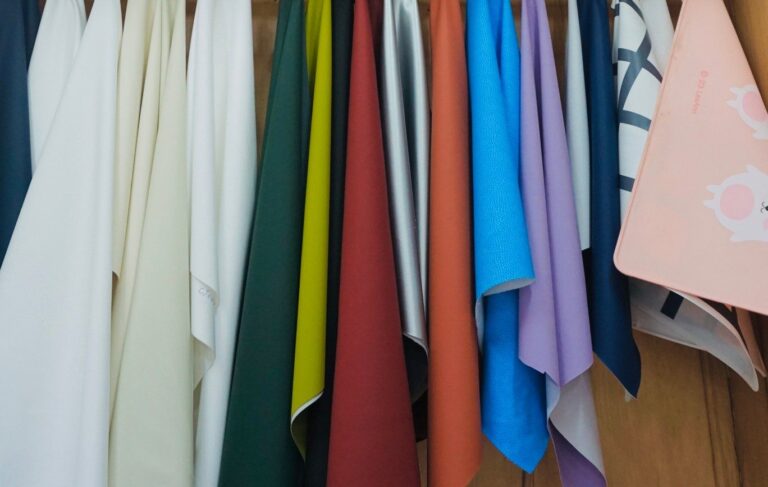
Material swatches like these help B2B buyers compare hand feel and thickness across bio-based and synthetic options.
Apple Leather vs Silicone Leather: Durability Data
The table above tells the story numerically, but the real-world implications are starker. In our Martindale abrasion testing, silicone leather consistently reaches 200,000+ cycles without surface breakdown. Apple leather typically fails around 50,000 cycles — respectable for a bio-based composite, but a quarter of what silicone delivers. For high-traffic applications like hospitality seating or automotive interiors, that gap translates to replacement cycles 2–3x more frequent.
Temperature resistance reveals another fault line. Apple leather handles -10°C to 60°C adequately for fashion accessories and lightweight bags. But for automotive interior applications where cabin temperatures swing from -20°C winter mornings to 80°C sun-soaked dashboards, silicone’s -40°C to 250°C range isn’t just better — it’s categorically different. We’ve seen firsthand how plant-based materials with PU binders degrade under sustained UV exposure, developing micro-cracks within 18 months of outdoor installation.
Watch how silicone leather performs in head-to-head material comparison testing.
Talk to Our Material Engineers
The Biobased Content Illusion: Reading the Fine Print
When a supplier says “made from apples,” procurement teams need to ask: what percentage? AppleSkin’s standard formulation runs 20–27% apple fiber by weight. The rest is PU, cotton, and polyester backing. That’s not dishonest — it’s material science. But it means the carbon footprint savings apply to the apple fiber fraction, not the entire sheet.
By contrast, silicone leather achieves zero VOC emissions, PVC-free composition, and 100% recyclability through its chemistry — not through agricultural waste blending. For brands targeting certifications like LEED or EU Ecolabel, the full-material approach often scores better than partial biobased content layered over petrochemical binders.
Verification checklist before signing: Request the biobased content certificate (not the marketing one-pager), the full material composition sheet, and Martindale test data from a certified lab. If the supplier can’t provide ISO 12947-2 test results, the 50K-cycle estimate is just that — an estimate.

Plant-based leather works well for fashion accessories where durability demands are lower than furniture or automotive.
Sourcing Apple Leather for B2B: What to Verify
Apple leather is primarily manufactured by VEGATEX (AppleSkin™ brand) in Florence, Italy, with limited production scale. For B2B buyers, that means longer lead times, higher minimum orders, and cost premiums of 30–60% over conventional PU. If your application is fashion or sports accessories with moderate wear exposure, that premium may be justifiable for the sustainability narrative alone.
For applications requiring 10+ year service life — contract furniture, leather alternative materials in medical settings, or marine upholstery — silicone leather’s tested performance at 200K Martindale cycles, 1,000+ hour UV stability, and hydrolysis resistance makes it the engineering choice. Apple leather’s PU component will hydrolyze. Silicone won’t.
If your priority is plant-based leather sustainability without compromising on durability, ask us about bio-based silicone formulations that combine agricultural fiber content with silicone’s performance matrix.

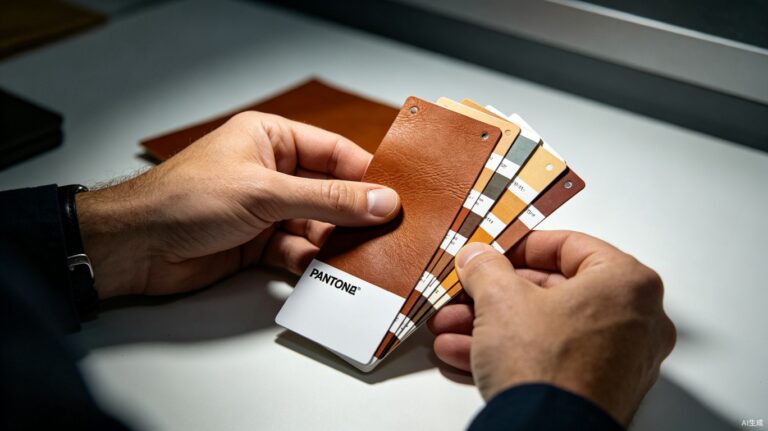
Warm-tone swatches in earth-friendly palettes increasingly dominate B2B material selection for sustainable brands.
Decision Framework
| If Your Priority Is… | Recommended Material | Why |
|---|---|---|
| Brand storytelling & fashion accessories | Apple leather | Strongest upcycling narrative, adequate durability for low-wear use |
| 10+ year durability in demanding environments | Silicone leather | 200K Martindale, UV-proof, hydrolysis-proof, temperature-stable |
| Lowest upfront cost | Conventional PU | Cheapest per meter, but replacement cycle 3–5x faster |
Is apple leather fully biodegradable?
No. Because apple leather contains 50–80% polyurethane and synthetic backing fabrics, it is not fully biodegradable. The apple fiber fraction will decompose, but the PU component persists. Silicone leather, while not biodegradable either, is 100% recyclable through thermal reprocessing.
Can apple leather match silicone leather’s temperature resistance?
No. Apple leather’s PU binder degrades above 60°C and becomes brittle below -10°C. Silicone leather maintains flexibility from -40°C to 250°C, making it suitable for automotive, aviation, and outdoor applications where temperature swings are extreme.
About TOPSUN
TOPSUN manufactures zero-VOC silicone leather for B2B applications where plant-based alternatives like apple leather fall short on durability — including automotive interiors, contract furniture, and medical upholstery.
200K+ Martindale verified · ISO 10993 biocompatibility certified · FDA food-contact compliant · 100% recyclable · 500,000m monthly capacity