Struggling to choose between faux leather and real leather for your furniture, automotive, fashion or commercial projects? Most buyers face unavoidable trade-offs: real leather offers premium texture but comes with high costs, heavy maintenance and environmental drawbacks, while traditional faux leather is affordable yet prone to damage and poor sustainability. This guide breaks down 10 critical differences between faux leather and real leather in practical, actionable dimensions. Most importantly, it proves that TOPSUN silicone leather serves as a game-changing intermediate solution, combining the premium merits of genuine leather and the practical advantages of synthetic leather with zero compromises.
Not Sure Which Material Fits Your Project?
Get free faux leather swatches and expert guidance from TOPSUN’s material specialists.
What Is Faux Leather? Understanding Synthetic Alternatives
Faux leather, also referred to as synthetic leather, vegan leather or pleather, is a man-made material engineered to replicate the visual and tactile qualities of genuine leather without utilizing animal hides. The three most common types of faux leather on the market are as follows:
- PU Leather (Polyurethane): Manufactured by coating a fabric base with a polyurethane layer. It features better air permeability and a softer hand feel than conventional PVC leather.
- PVC Leather (Polyvinyl Chloride): Produced by applying a PVC coating to fabric backing. It boasts high durability and waterproof performance but ranks low in environmental friendliness.
- Silicone Leather: The latest-generation synthetic leather made of silicone polymers bonded to premium substrates, delivering all-round superior performance over traditional PU and PVC leather.
In contrast, real leather is crafted from tanned animal hides (primarily cowhide) through professional finishing processes. For centuries, it has been widely favored for its natural grain, excellent breathability, and unique patina that develops over time with use.
The core difference between leather and faux leather lies in their raw material sources: real leather is a natural organic material, while faux leather is artificially engineered. Nevertheless, modern advanced synthetic materials, especially silicone leather, have largely narrowed the performance gap with genuine leather.

Durability: How Long Does Each Material Last?
Durability is a core decisive factor when comparing faux leather vs real leather. Below is a comprehensive performance comparison of different leather materials:
- Real Leather: High-quality genuine leather can serve 10–25 years with proper maintenance. It resists punctures and tears effectively but is susceptible to water damage, UV aging and dry cracking.
- PU Leather: Has a service life of only 2–5 years. It easily peels, cracks and undergoes hydrolysis, especially in humid and high-temperature environments.
- PVC Leather: More durable than PU leather with a 5–7 year lifespan, yet it tends to harden and crack after long-term use.
- Silicone Leather: Scientifically engineered for a 10+ year service life. It features outstanding resistance to hydrolysis, UV degradation and extreme temperatures ranging from -40°C to 250°C.
TOPSUN’s premium silicone leather has passed strict industry tests with 200,000+ Martindale abrasion cycles, making it perfectly suitable for high-traffic scenarios such as furniture upholstery and automotive interiors.
Need Material That Outlasts Traditional Options?
Download our Technical Data Sheet to see full performance metrics.
Cost Analysis: Price vs. Value Over Time
When evaluating faux leather vs real leather from a commercial perspective, the one-time upfront cost cannot represent the overall value. Long-term service life and maintenance costs are equally critical for project procurement:
| Material | Upfront Cost | Lifespan | Cost Per Year |
|---|---|---|---|
| Real Leather | High ($$$) | 10–25 years | Moderate |
| PU Leather | Low ($) | 2–5 years | Higher (frequent replacement) |
| PVC Leather | Low–Medium ($$) | 5–7 years | Moderate |
| Silicone Leather | Medium ($$) | 10+ years | Lowest (best long-term value) |
Silicone leather delivers the optimal long-term economic value. Though its initial investment is slightly higher than basic PU and PVC leather, its ultra-long service life and zero-cost daily maintenance greatly reduce replacement and after-sales costs, making it the most cost-effective leather material for commercial and high-end projects.
Environmental Impact: Sustainability Matters
The environmental difference between real leather and faux leather is intricate and often misunderstood by industry buyers. Here is an objective and professional comparison:
- Real Leather: The leather tanning process consumes massive water resources and uses chromium and other chemical additives, causing water pollution. Additionally, livestock breeding for leather production generates substantial greenhouse gas emissions. On the positive side, genuine leather is a renewable byproduct of the meat industry and fully biodegradable.
- PU Leather: Made from petroleum-based polyurethane and toxic solvents. It is non-biodegradable and releases microplastics during daily use and disposal, causing persistent environmental pollution.
- PVC Leather: The most environmentally harmful leather material. Its production involves toxic chlorine and plasticizers, with no recyclable or biodegradable properties.
- Silicone Leather: Completely free of PVC, phthalates, plasticizers and heavy metals. It is 100% recyclable and produces near-zero VOC emissions during production and use. TOPSUN’s silicone leather fully complies with REACH and RoHS international environmental standards.
For global brands committed to green and sustainable development, TOPSUN eco-friendly silicone leather is the ideal sustainable material choice without performance compromises.

Maintenance & Care Requirements
Maintenance difficulty is one of the most practical differences between leather and faux leather, directly affecting user experience and later operating costs:
- Real Leather: Requires regular professional conditioning, strict sun avoidance and dedicated leather cleaners. Water stains and long-term UV exposure will cause irreversible damage, bringing high daily maintenance costs.
- PU/PVC Leather: Easier to clean than real leather with just a damp cloth. However, once peeling, cracking or aging occurs, the damage is irreparable with no repair solution.
- Silicone Leather: Boasts the lowest maintenance cost among all leather materials. Its non-porous compact surface repels all liquids and stains. Daily cleaning only requires a soft cloth and clean water with no special detergents. It is also resistant to various medical disinfectants, perfectly fitting medical and healthcare scenario requirements.
For systematic material maintenance guidelines, check our professional guide on synthetic leather cleaning and maintenance tips.
Appearance & Texture: Can You Tell the Difference?
With the upgrading of synthetic leather manufacturing technology, high-end faux leather has achieved a texture close to genuine leather, making visual distinction difficult for untrained eyes:
- Real Leather: Features unique natural grain, irregular pores and subtle imperfections, with a warm tactile feel. It forms a vintage patina over time, adding unique ornamental value.
- PU Leather: Can simulate leather appearance but presents a uniform and rigid embossed grain, with a cold plastic touch that is easy to distinguish.
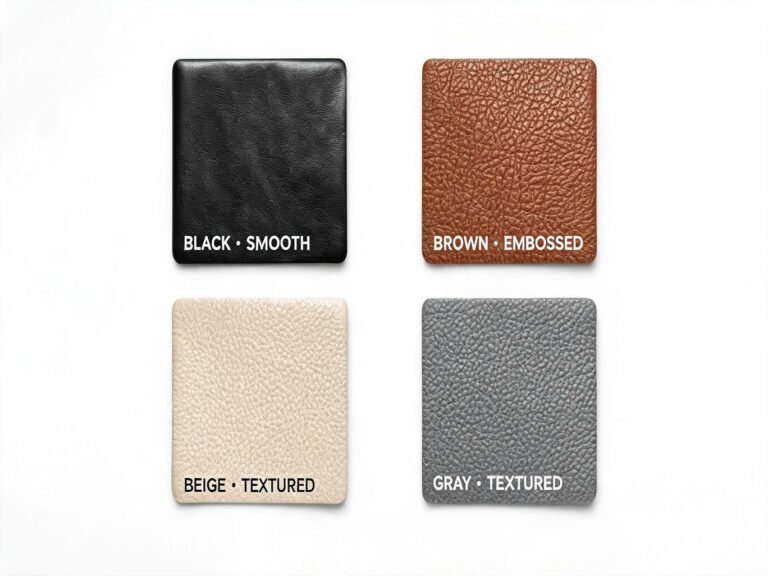
- Silicone Leather: Possesses the most realistic leather-like texture among all synthetic materials. It delivers a warm, soft and delicate hand feel identical to genuine leather. TOPSUN supports custom texture and color design to meet personalized aesthetic and brand customization needs.

Why Silicone Leather Bridges the Gap
After comparing the difference between faux leather and real leather across 10 core dimensions, silicone leather stands out as the only all-round high-performance material that solves the inherent defects of traditional leather materials. Here is how TOPSUN’s silicone leather bridges the performance and experience gap:
- Dual Advantages of Durability & Stability: Inherits the 10+ year ultra-long lifespan of real leather while maintaining uniform batch quality free of natural defects.
- Premium Texture & Cost-Effectiveness: Delivers genuine leather-level premium tactile experience at a fraction of the cost of high-end top-grain leather.
- Green & Safe Manufacturing: Near-zero VOC emissions, 100% recyclable and free of any harmful chemical additives.
- Cross-Industry Versatility: Adaptable to diverse scenarios from 3C electronic accessories to marine and outdoor environments.
- Global Authoritative Certification: Approved by FDA food-contact standards, ISO 10993-5 biocompatibility certification and EU REACH compliance, ensuring universal safety for global applications.

Applications: Where Each Material Excels
Clarifying the difference between real leather and faux leather helps match the most suitable material for different project scenarios, maximizing material value and user experience:
| Application | Best Material | Why |
|---|---|---|
| Luxury Fashion | Real Leather / Silicone | Prioritize premium prestige and delicate tactile feel |
| Automotive Interiors | Silicone Leather | Excellent UV resistance, ultra-low VOC and long-term durability |
| Healthcare Furniture | Silicone Leather | Antibacterial, disinfectant-resistant and hypoallergenic |
| Baby & Kids Products | Silicone Leather | FDA-certified, toxin-free and skin-friendly |
| Marine & Outdoor | Silicone Leather | 100% waterproof, salt-spray and mildew resistant |
How to Choose the Right Material for Your Project
When selecting between faux leather and real leather for your project, evaluate the following 5 core factors to make an optimal decision:
- Budget Planning: PU leather is suitable for short-term low-budget projects; silicone leather is the best choice for long-term commercial projects pursuing high cost performance.
- Durability Requirements: High-traffic, outdoor and marine scenarios require silicone leather’s superior aging and wear resistance.
- Sustainability Goals: Silicone leather is the top eco-friendly option for brands focusing on green production and carbon neutrality.
- Industry Compliance: Medical, automotive and baby product industries have strict safety certification standards, which only silicone leather fully meets.
- Aesthetic Customization: Synthetic leather (especially silicone leather) supports personalized color and texture customization more flexibly than real leather.
For in-depth material selection guidance, refer to our industry article: What Is Faux Leather? Types, Materials & Why Silicone Leather Wins.
TOPSUN: Your Trusted Silicone Leather Manufacturer
Founded in 2018, TOPSUN is a professional manufacturer specializing in R&D and production of high-performance silicone leather, leading the global sustainable silicone coating technology industry. With 3 production bases across China and an annual production capacity of 6 million meters, we provide customized material solutions for 100+ global clients covering over 30 countries.
- Authoritative Certifications: ISO 9001, IATF 16949, FDA, ISO 10993-5, REACH, PAHs
- Production Capacity: 6 million meters of silicone leather annually
- Professional R&D Team: 12+ dedicated engineers focusing on silicone material innovation and application upgrading
- Full Customization Service: Custom thickness, Pantone/RAL color matching, exclusive texture design and brand-specific solutions
Learn more about our factory strength and product advantages via our company profile.
Ready to Upgrade Your Material?
Join leading brands worldwide choosing TOPSUN silicone leather. Get a customized quote for your project.
Frequently Asked Questions
Is faux leather real leather?
No. Faux leather is a 100% animal-free synthetic material designed to simulate the appearance and feel of real leather. The fundamental difference between faux leather and real leather is that real leather is made of tanned animal hides, while faux leather is artificially engineered vegan material.
Does faux leather last as long as real leather?
Traditional PU and PVC faux leather cannot match the lifespan of high-quality real leather. However, premium silicone leather achieves a 10+ year service life, which is equivalent to or even longer than genuine leather with better anti-aging performance.
Is silicone leather better than PU leather?
Absolutely yes. Silicone leather outperforms traditional PU leather in all core indicators: it resists peeling, cracking and hydrolysis, features ultra-low VOC, extreme temperature resistance and zero harmful substances, with far easier daily maintenance.
Can silicone leather be used for automotive interiors?
Definitely. TOPSUN’s silicone leather passes IATF 16949 automotive quality system certification, with professional UV resistance, low fogging and low VOC performance, fully meeting the strict material standards of global automotive OEMs and Tier 1 suppliers.
Is faux leather vegan?
All faux leather is vegan and cruelty-free with no animal-derived ingredients. As a new-generation synthetic leather, TOPSUN silicone leather is 100% vegan, eco-friendly and compliant with global ethical and sustainable consumption trends.
Conclusion
The difference between faux leather and real leather involves comprehensive trade-offs in durability, cost, sustainability, maintenance and aesthetics. Real leather has natural texture advantages but is limited by high cost, cumbersome maintenance and environmental pressure. Traditional faux leather is affordable but suffers from poor durability and low sustainability.
TOPSUN silicone leather completely eliminates the shortcomings of traditional leather materials. It integrates the premium durability and tactile feel of real leather, the cost-effectiveness and batch stability of synthetic leather, and the eco-friendly attributes required by the modern market. Whether for furniture, automotive, medical or fashion applications, it is the ideal bridging material for modern high-end leather procurement.
Sources: This article references authoritative industry data from the Leather Working Group, SGS official testing reports, and TOPSUN internal technical documents. For the latest complete certifications and test data, please visit our Tech & Certifications page.