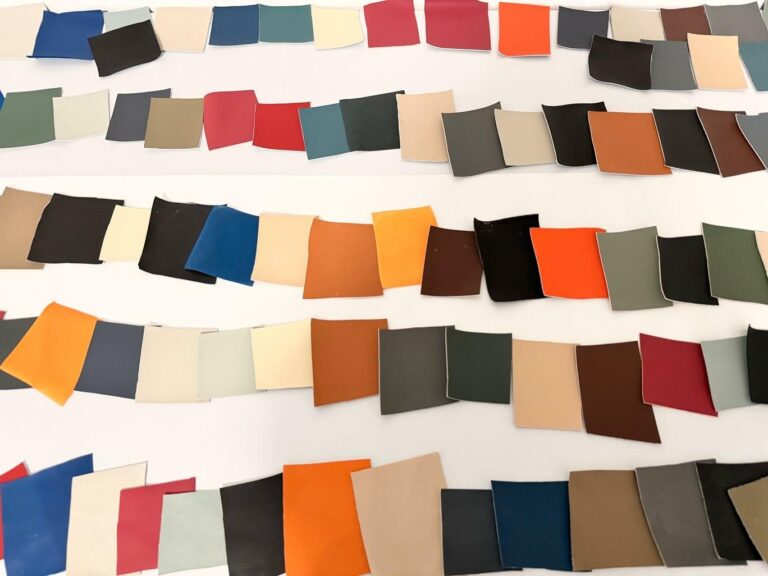
Why does one vinyl boat seat survive a decade of salt spray while its twin splits open in three seasons? The answer rarely sits in the embossed grain. It sits in the recipe. A PVC coated leather is an engineered system, and the plasticizer load inside the coating decides how long the system holds together.
This article walks through the construction, the migration mechanism behind most vinyl failures, the environments where the material genuinely earns its spec, and the compliance file a buyer should demand. The short version: PVC coated leather wins on water, chemicals, and price. Its lifespan is a formula decision, not a luck decision.
What a PVC Coating Actually Is: Plastisol, Fusion, and the 30 Percent
PVC is a rigid polymer by nature. To turn it into upholstery, producers blend PVC resin with plasticizers into a paste called plastisol, spread it onto a fabric base, and fuse the whole sandwich in an oven. Heat makes the resin absorb the plasticizer and gel into a flexible film. For upholstery grades, that additive load can reach thirty percent of the coating by weight.
That number explains the whole personality of the material. More plasticizer means softer hand and deeper embossing, but also more molecules that can leave over time. Less plasticizer means a harder, longer-lived film that feels like a truck tarp. The embossing roller and the surface topcoat matter. The formula between them matters more.

Fusion quality at the cooling section locks in how the film will age.
The Migration Mechanism: Failure From the Inside
Plasticizers are not chemically bound to the PVC chain. They sit between the polymer strands, held by weak physical forces. Heat pushes them toward the surface. Compression from seating does the same. Cleaners, sweat, and saltwater extract them directly. The industry calls this plasticizer migration, and it is the dominant failure path for vinyl upholstery.
The progression is predictable. First the surface turns tacky in warm weather. Interiors notice it as odor and, in enclosed cabins, as windshield fogging from volatilized additives. Then the film stiffens as the load drops. Micro-cracks open along fold lines and welts. On a boat, saltwater enters those cracks, attacks the fabric backing, and drives delamination. A coating that fails this way looks fine right up until it does not.

Complete fusion in the oven is step one of migration resistance.
Where PVC Coated Leather Genuinely Wins
The failure mechanism does not make PVC a bad material. It makes it a specialized one. The film is fully waterproof, wipes clean with neutral soap, and shrugs off dilute acids, alkalis, and salt. Flame retardant formulations pass contract and marine flammability tests at a modest cost. Per meter, nothing in the flexible coated fabric family undercuts it.
Those strengths map to specific rooms. Medical waiting rooms and clinics value wipeability and low cost over a ten-year hand. Industrial machine guards, gym pads, and boat exterior cushions see water and sunlight more than flexing. Budget contract seating accepts a shorter replacement cycle as part of the plan. In these settings, vinyl coated fabric is not a compromise. It is the correct answer. Review the full range on our applications overview.
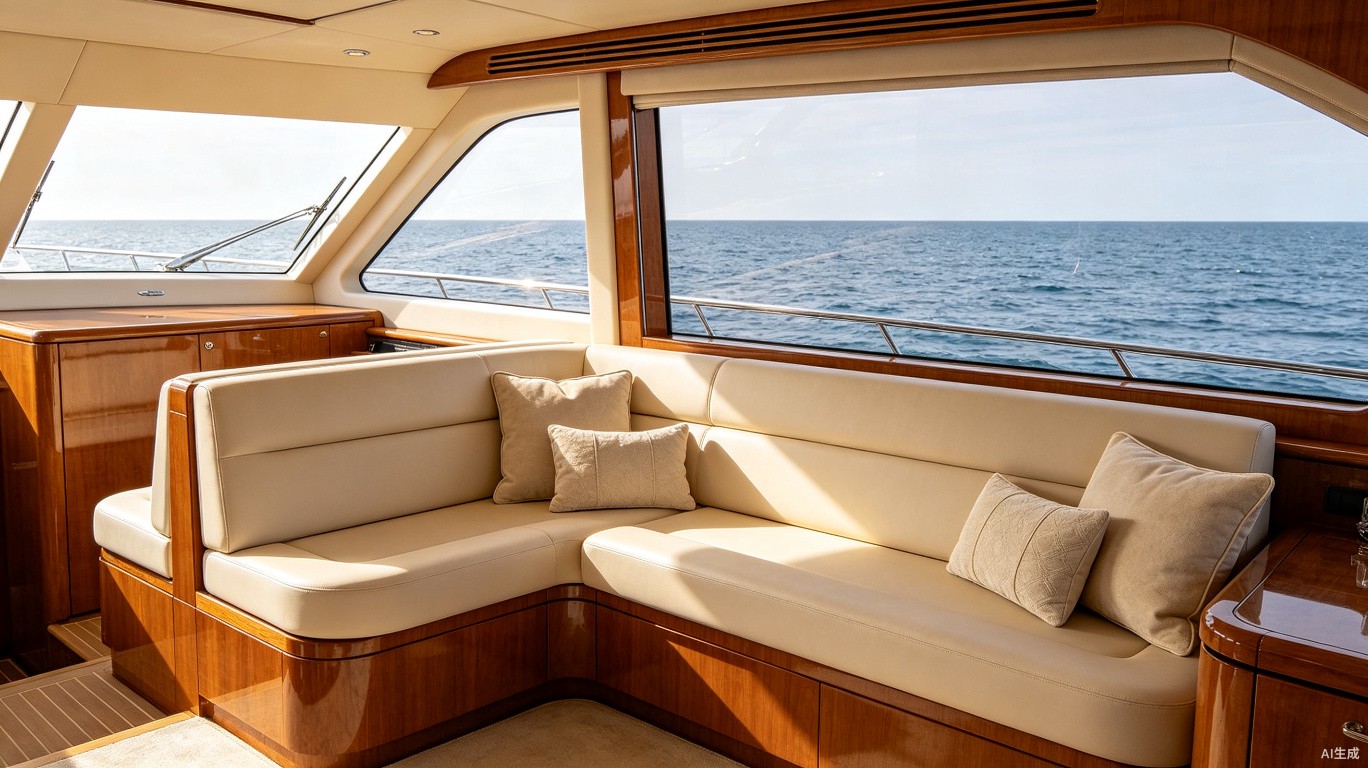
Salt, sun, and spray: the marine environment is the toughest vinyl audit there is.
The Compliance File: REACH Phthalate Limits
Older vinyl formulas leaned on ortho-phthalate plasticizers, and regulators have answered. EU REACH restricts four of them, DEHP, DBP, DIBP, and BBP, to 1,000 milligrams per kilogram in consumer articles. Modern upholstery grades ship on phthalate-free plasticizer systems as standard, and automotive programs add VDA 278 VOC limits for enclosed cabins.
Paperwork is part of the purchase. Ask the supplier for a REACH compliance declaration that names the four restricted phthalates explicitly, plus RoHS where electronics contact applies. A supplier who sends a certificate without chemistry data is selling you a signature, not a formulation. This is the same disclosure discipline we apply to every roll we ship.

Compliance documents should arrive with the sample card, not after the claim.
The Pre-Order Checklist for PVC Coated Leather
Five lines on the purchase order keep a vinyl program honest:
- Plasticizer type in writing. Phthalate-free is the baseline; ask which system replaced it.
- Aging data, not promises. Oven aging or migration testing predicts the tacky-surface year before it arrives.
- REACH declaration naming DEHP, DBP, DIBP, and BBP against the 1,000 mg/kg limit.
- Flame retardancy certificates matched to your end market, marine and contract standards differ.
- Flex and peel numbers on the exact composite, film plus backing, not a generic coupon.
When a program demands a soft hand, long flex life, and no plasticizer chemistry at all, the upgrade path is silicone. The silicone versus PU comparison on our site shows how a plasticizer-free film changes the aging curve. Match the chemistry to the room, demand the file, and vinyl serves where it belongs.
Ask Our Coating Team a Question
Request Vinyl-Comparison Sample Sets
References
1. https://wandaoleather.com/blog/why-pvc-leather-… — Plasticizers are not covalently bound and leave by volatilization or extraction; migration drives progressive embrittlement and cracking
2. https://bastone-plastics.com/plasticizers-for-p… — Thermal stress and compression force plasticizer to the surface, causing tacky upholstery and VOC fogging in cabins
3. https://www.kothea.com/tag/marine-upholstery/ — REACH restricts DEHP, DBP, DIBP, and BBP to 1,000 mg per kg in consumer textiles; request a compliance declaration