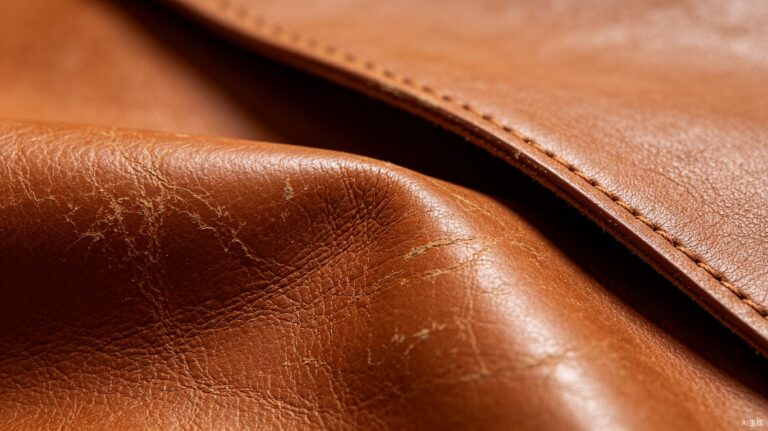
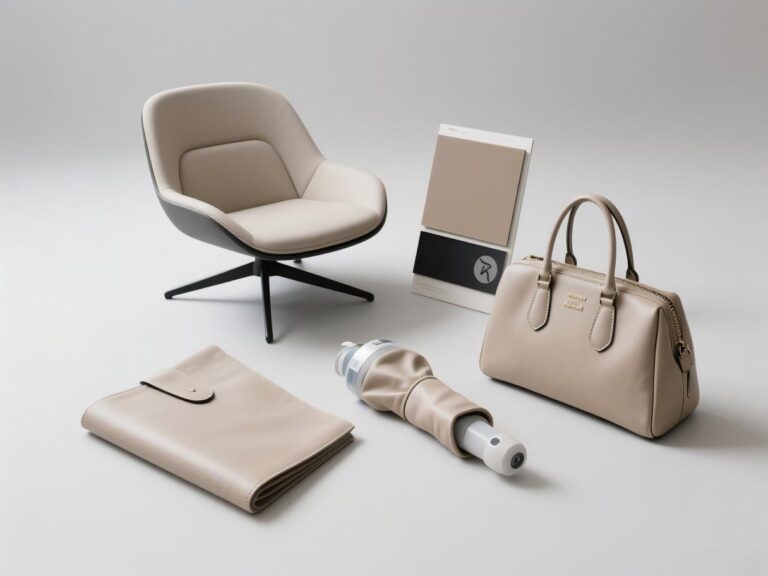
Imagine two pallets arriving at your dock on the same morning. Both are labeled “leather-look upholstery.” One still looks new in year five; the other starts flaking at the seams by year two. The different outcomes were decided before either roll was coated: by which type of fake leather sits inside the construction.
We run incoming inspection at a coating plant, so we think about fake leather types by their failure signatures. Every type has one. Know the signature, and you know which questions to ask before the purchase order.
1. The Six Types of Fake Leather, and How Each One Fails
“Fake leather” is an umbrella over several very different constructions. Here is the field version of the taxonomy:
- PU leather. Polyurethane coating on woven fabric. Fails by hydrolysis: the coating absorbs moisture, loses adhesion, and peels from the edges.
- PVC leather. Plasticized vinyl coating. Fails by plasticizer migration and cold cracking; the surface stays tough but stiffens over years.
- Bonded leather. Hide fibers bound with adhesives. Fails by delamination and surface bubbling, often within two years.
- Bicast leather. A leather split laminated under a PU or vinyl finish. Fails where the finish cracks away from the split.
- Microfiber leather. Sub-1-denier fiber core with coating. The core is strong; the coating system decides the lifespan.
- Silicone leather. Silicone coating on fabric. The coating itself resists hydrolysis; bonding quality becomes the main risk.

Same family, six constructions: each fake leather type carries its own failure mode.
2. PU vs PVC: The Two You’ll Quote Most Often
Most quotations in this category come down to these two. PVC wins on surface toughness; it shrugs off busy environments and wipes clean without staining much. PU wins on hand-feel; it drapes softer and reads closer to hide, which is why consumer seating favors it.
Each also carries a distinct liability. PU’s hydrolysis problem shortens service life in humid climates. PVC’s chemistry is the concern: plasticizers keep the sheet flexible, and formulations vary widely in what they contain. For projects with strict chemical compliance requirements, ask for the formulation statement early, not after the sample approval.

PVC: the toughest surface in the category, with formulation questions to clear early.
3. Bonded and Bicast: Fake Leather’s Label Games
These two types exist because they contain real leather, which makes them legally quotable as “leather products” in many markets. Bonded leather composites ground hide fibers with adhesive, usually 10-20% leather content by weight. Bicast laminates a PU or vinyl film over a leather split. Both deliver the phrase “genuine leather” on a spec sheet at the lowest price in the industry.
The failure record is why we flag them at incoming inspection. Adhesive-rich constructions bubble and peel when humidity cycles, and the thin finish on bicast cracks along flex lines. Neither failure is visible in a fresh swatch. If your product line needs “contains real leather” for marketing, quote bonded or bicast with open eyes and a short replacement plan. Otherwise, roll samples tell the truth faster than labels: inspect the back of the roll, and the construction gives itself away.
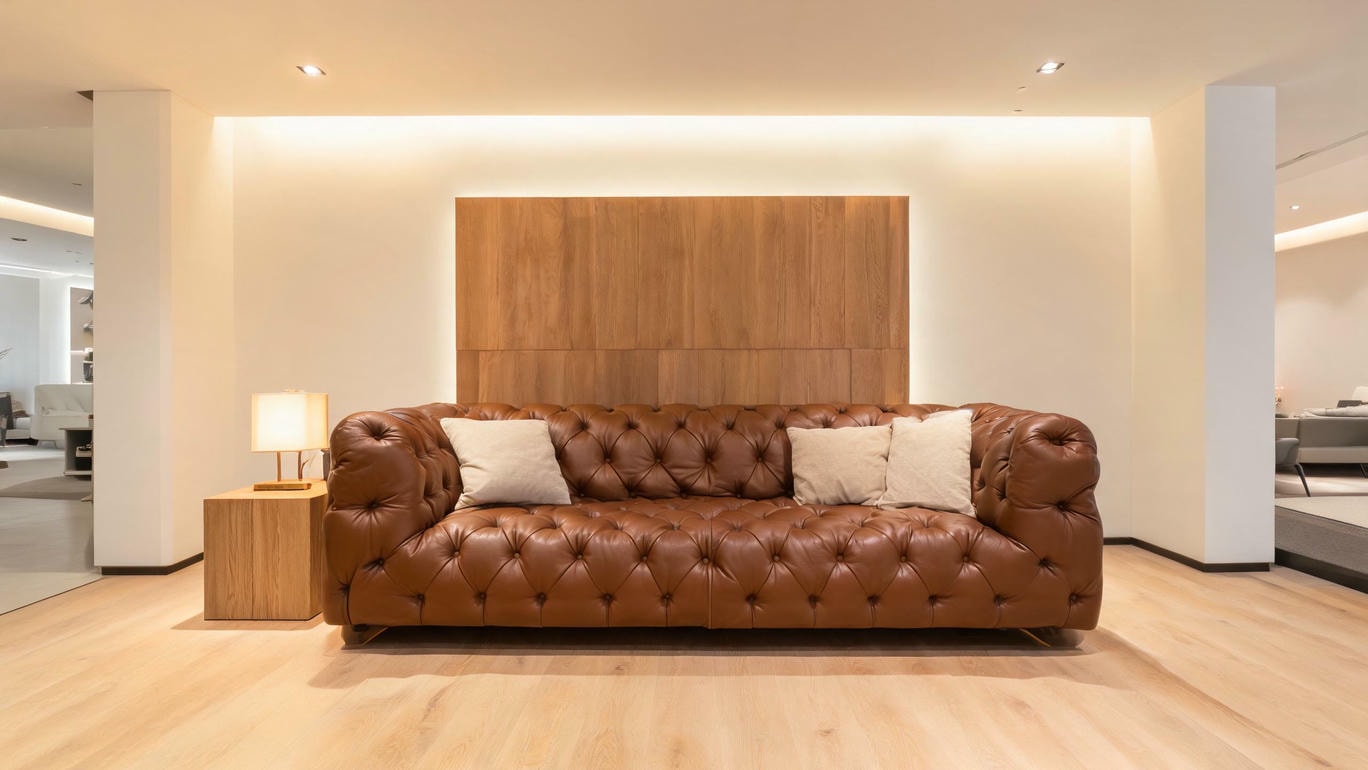
Check the back of the roll: backing construction reveals the type faster than the label.
4. Microfiber and Silicone: Engineered Fake Leather Upgrades
Microfiber leather rebuilds the substrate. Its non-woven core of sub-1-denier fibers performs like hide collagen, with supplier testing citing tear strength above 50 N/cm (ISO 3377) and flex endurance beyond 100,000 cycles. The upgrade is real, and so is the price gap versus PU.
Silicone leather changes the coating instead. Silicone polymer contains no plasticizers to migrate and nothing for moisture to hydrolyze, which removes the two dominant failure modes in this category in one step. Our silicone leather overview covers the chemistry; the production sequence behind it is visible in our eco-friendly silicone leather line, where REACH compliance comes standard rather than as an upcharge.

From base fabric to finished roll: the coating system, not the grain pattern, defines the type.
5. Which Type Belongs in Your Order?
Walk the branches:
- If the product is disposable or short-life by design → PU keeps the cost floor.
- If the surface must survive hard daily wiping and the compliance file is light → PVC holds up.
- If marketing requires “contains real leather” and the budget is fixed → bonded or bicast, with a written replacement cycle.
- If the application is abrasion-heavy and premium-feeling → microfiber earns its price.
- If service life is 10+ years, hygiene is daily, and the market is compliance-strict → silicone leather.
Every fake leather type was engineered for a reason. The expensive mistakes happen when a type built for one job gets quoted for another.
Is bicast leather real leather?
Partly. Bicast uses a genuine leather split as the core, but the wearing surface is a PU or vinyl film. The film, not the hide, takes the abrasion. That is why bicast ages like a coated synthetic rather than like hide.
Which fake leather type suits kids’ products?
Prioritize formulations without plasticizers and with skin-contact certification. Silicone coating and REACH-compliant PU are the usual safe answers; our baby and kids applications follow that rule with FDA food-contact and REACH documentation per batch.
Request a Type-Comparison Sample Set
About TOPSUN
TOPSUN manufactures silicone-coated leather for buyers who want the durability column of the fake-leather taxonomy without PVC chemistry or PU hydrolysis risk.
EN 13773 Class 4 flame retardancy, REACH + PAHs compliance, FDA food-contact grade options, and third-party inspection from SGS, BV, or TÜV welcomed on every order.
References
1. https://szoneierleather.com/custom-leather-fabr… — Microfiber construction: tear strength ISO 3377 ≥ 50 N/cm, flex endurance >100k cycles