Can one factory honestly say it runs vegan leather production? After years on coating lines, my answer is that it runs two. The synthetic line and the plant-based line share a building, a QC lab, and often the same base fabric. Yet almost everything between the first coat and the finished roll differs. Buyers who understand both lines read spec sheets differently, and they catch problems the rest miss.
This guide walks each line from backing fabric to finished goods. It covers where the chemistries diverge, what the plant-based route adds, and how production choices surface in the roll you receive.
Vegan Leather Production at a Glance: The Two Lines
The table below compresses both routes into the stages a roll passes through. Use it as a map for the sections that follow.
| Stage | Synthetic PU line | Plant-based line |
|---|---|---|
| Base fabric | Woven polyester or cotton | Canvas, cotton, or fiber mat |
| Surface material | PU resin (or PVC) | Apple, cactus, or fiber powder + binder |
| Application | Knife or transfer coating | Spread coating of the blend |
| Curing | Heat or UV set | Drying, then PU top layer |
| Finishing | Emboss, topcoat, inspect | Emboss, topcoat, inspect |
Stage 1-2: Base Fabric and Surface Formulation
Every line starts with a backing fabric, usually woven polyester or cotton. This layer carries the structural load, because a surface coating alone would tear. On the synthetic line, the surface begins as petrochemical slurry. Polyols and isocyanates meet to form the PU that will become the grain surface. On the plant-based line, the surface starts in agriculture instead.
Apple-based production is the clearest example. Italian maker Frumat gathers apples left over from juice production, dries them, and grinds them into powder. That powder is mixed with pigments and a binder, then spread onto canvas until it forms a leather-like sheet. The blend must contain at least 50% apple fiber to carry the claim. It still receives a polyurethane top layer for wear resistance.

Both lines meet here: whatever the surface chemistry, the base fabric sets the strength.
Stage 3: Coating, Where the Lines Truly Split
Synthetic PU production runs by one of two routes. In wet-process manufacturing, the resin is dissolved in the solvent DMF and coated onto the substrate, which then passes through water baths. The water pulls the solvent out and coagulates the PU into a soft, microporous layer that gives the material its hand feel. In dry-process manufacturing, the resin is spread directly or onto release paper and cured by heat instead.
The solvent is the environmental hinge of the whole line. Modern closed-loop plants recover and reuse DMF; older facilities vent it. Buyers who care about the footprint should ask which system a supplier runs. The same PU grade can differ sharply in process emissions. Plant-based lines sidestep the solvent question at the coating stage, though their PU topcoat still deserves the same question.
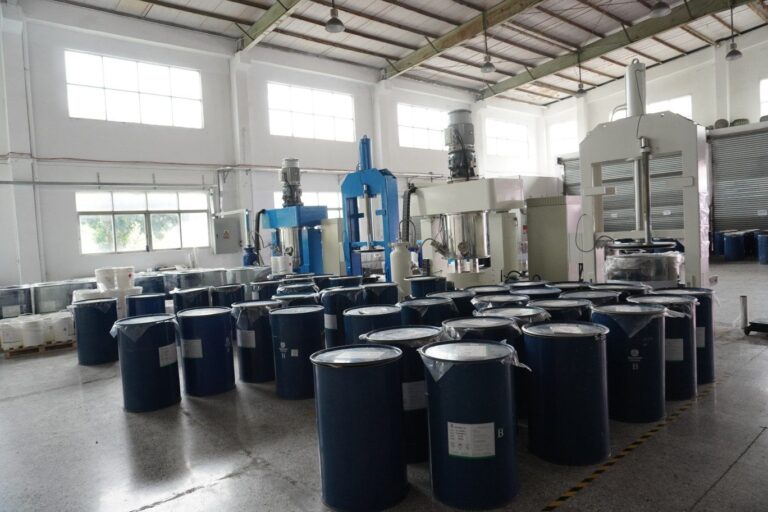
Release-paper coating in action: the step where grain, gloss, and thickness are all decided.
Stage 4: Curing and the Plant-Based Top Layer
Curing sets the surface. On the synthetic line, heat or UV light fixes the resin and its finish in one pass. On the plant-based line, the fiber sheet must first dry thoroughly, because trapped moisture ruins adhesion. Only then does the polyurethane top layer go on, giving the sheet its scuff resistance and sealing the fibers against dirt.
This hybrid reality surprises many buyers. Plant-based does not mean PU-free. Independent reviews put cactus leather at roughly 30-65% polyurethane by weight depending on the source. The claim to verify is honest labeling of the blend, not the absence of polymer altogether.

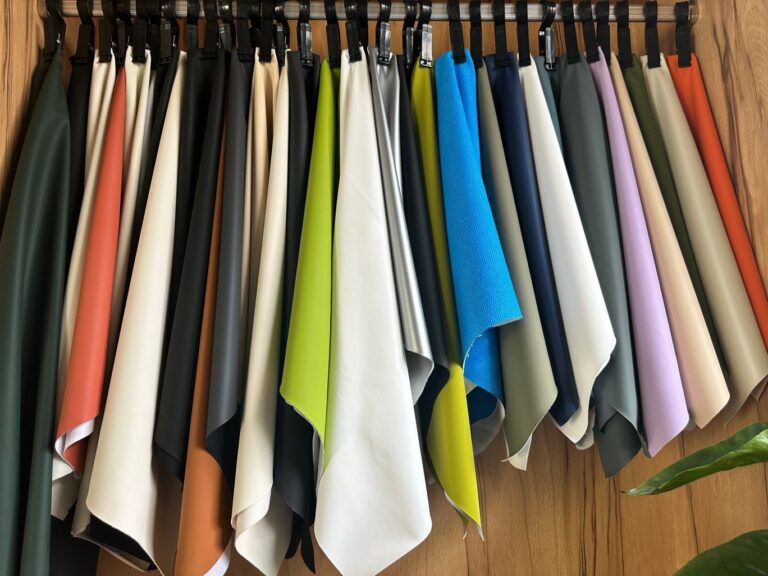
Finished plant-based goods: agriculture upstream, polymer downstream, and both on the label.
Stage 5: Embossing, Topcoat, and Inspection
The last stage is the only one where the two lines genuinely run as one. Both pass through embossing rollers that press the grain pattern in, and both receive a topcoat for surface performance. Then both face the same inspection bench. Coating weights are checked against target, thickness is scanned across the width, and adhesion tests pull the surface away from the base.
From the supervisor’s chair, this is where a buyer should focus audit time. Chemistry failures take years to appear, but process failures show up in the first meter. A line that logs coating weight, cure temperature, and adhesion results roll by roll earns trust. That kind of line can run either chemistry safely. Our own factory production walkthrough documents these checkpoints for the silicone line we run.
Where Production Choices Show Up in the Roll
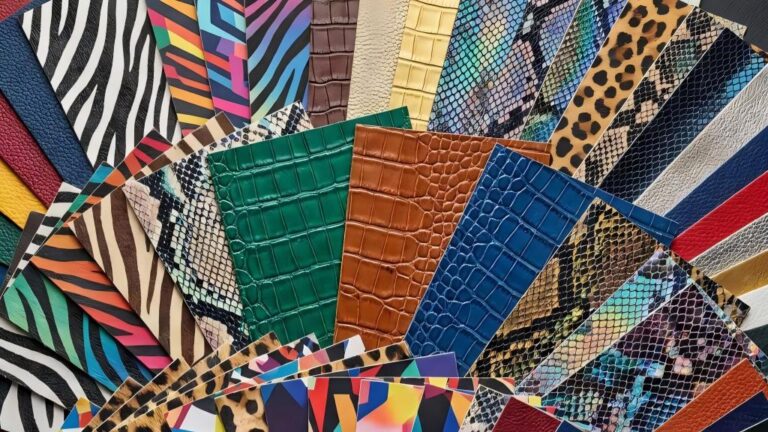
Production decisions have long shadows. A wet-process roll carries microporous softness but inherits the solvent history of its plant. A dry-process roll trades a little drape for a cleaner process and a denser surface. Plant-based rolls bring the agricultural story and a lower polymer share. Their lifespan depends heavily on the quality of that PU top layer. One bacterial-cellulose maker can claim up to 8 years of service, while lesser blends fail in months.
The market context matters too. Analysts valued the synthetic leather market at $46 billion in 2025. By 2030 they expect nearly $67 billion, and new lines keep arriving every season. Volume rewards the producers who can hold process discipline at scale, whatever their surface chemistry. Buyers comparing green claims against line reality will find a useful counterpoint in our eco-friendly silicone leather guide.
The DMF Question and the Shift to Cleaner Lines
DMF deserves its own section, because it is the line’s biggest environmental lever. In a closed-loop plant, recovery towers pull the solvent back out of the wash water. The recovered DMF returns to the coating head, and fresh solvent purchases drop sharply. In an open plant, the same chemistry ends up in the air or the effluent. The rolls from both plants can look identical in your hand.
The industry is moving, though unevenly. New wet-process lines in major producing regions increasingly ship with recovery as standard. Some makers skip DMF entirely and run water-based or solvent-free PU systems instead. Our silicone line was built solvent-free from day one, so the question never arises. When you audit a vegan leather supplier, ask for one number: the recovery rate.
Inside Vegan Leather Production: What the Inspection Bench Measures
Inspection is where both lines earn or lose a customer. On our bench, every roll faces the same gauntlet. Coating weight is weighed against the target in grams per square meter. Thickness is scanned at intervals across the full width. Adhesion is tested by peeling the surface from the base fabric. Color is read under a standardized light box, not by eye alone.
Durability numbers close the file. We rate surface wear on the Martindale scale, and our silicone grades hold past 200,000 cycles. Independent SGS reports back those figures for export buyers. A plant-based roll should face the same bench, not just the brand story. If a supplier cannot share test reports, treat every lifespan claim as marketing.

The inspection bench: coating weight, thickness, adhesion, and color, roll by roll.
Vegan Leather Production Capacity: A 2025 Reality Check
Not every chemistry scales, and 2025 proved it painfully. MycoWorks, the heavily funded mycelium leather maker, shut its South Carolina plant in October 2025. It later entered bankruptcy protection. The technology worked in the lab. The economics did not survive the climb to industrial volume. Buyers who had built programs on that supply had to re-source almost overnight.
The lesson is not that plant-based fails. It is that capacity claims deserve the same scrutiny as hand feel. Ask how many meters a line produces per month, and since when. A pilot line and a production line are different promises. Depth of supply matters most when your program succeeds and volumes triple.
How Line Capacity Shapes Lead Time and MOQ
Capacity numbers translate directly into your order terms. A mature synthetic line can run hundreds of thousands of meters a month. Our own lines are rated at 500,000 meters monthly across grades. That headroom is why standard lead times hold at 7 to 15 days. It also keeps minimums workable at around 500 meters per color.
Younger plant-based lines cannot make the same promise yet. Batch agricultural inputs and slower drying curves limit throughput. Expect longer lead times and higher minimums until their capacity matures. Neither point makes the chemistry worse. It just means your planning calendar must respect the line’s reality.
How should a buyer plan around this gap? Split programs by urgency. Put fast-moving, high-volume basics on a mature synthetic line. Reserve plant-based materials for capsule collections where the story earns a premium. Confirm lead times in writing before you commit a launch date. Ask what happens when your repeat order doubles. Suppliers with real headroom answer with a date. Suppliers without it answer with conditions. An honest answer about capacity is worth more than any brochure. Plans built this way survive contact with real launch calendars.
Which Line Fits Your Program?
| If your priority is… | Choose | Why |
|---|---|---|
| Volume, consistency, cost control | Synthetic PU, dry process | Mature line, no solvent bath, tight tolerance |
| Softness and breathability | Synthetic PU, wet process | Microporous layer gives the hand feel |
| Plant-forward brand story | Plant-based with disclosed PU share | Real fiber content, honest labeling |
| Harsh-service durability | Silicone line | No hydrolysis clock, solvent-free by design |
Vegan leather production is two disciplines wearing one name. The synthetic line is a story of polymer chemistry held in tight tolerance. The plant-based line is a story of agriculture finished with polymer. Ask which line, ask which stage, and ask for the roll log. The suppliers who answer all three are the ones worth visiting.
References
- https://www.veganbrief.com/guides/how-vegan-lea… — wet-process PU uses DMF solvent and water-bath coagulation into microporous layer; closed-loop plants recover DMF; cactus leather ≈30-65% PU by weight; bacterial-cellulose Malai up to 8 years lifespan per maker
- https://www.fashionindex.com/blog/plant-based-l… — Frumat apple process: juice byproduct apples dried, powdered, mixed with pigments and binder, spread on canvas, ≥50% apple fiber plus PU top layer; synthetic leather market $46B (2025) to ~$67B (2030)