Which of the main types of artificial leather should you actually specify? Ask three suppliers and you will get three different answers, usually favoring whatever they stock. The honest way to decide is by structure and test data, not by touch alone. Four materials dominate the market: PVC, PU, microfiber, and silicone. Each one carries a distinct chemistry, and each one fails in a different way. This comparison puts all four side by side, using published Martindale ranges, fire behavior, and the wear patterns we see in our own lab.
| Type | Surface chemistry | Typical Martindale | Fire behavior | Realistic lifespan |
|---|---|---|---|---|
| PVC (vinyl) | Plasticized PVC film on fabric | High-spec grades 100,000+; budget grades far lower | Can reach Crib 5 inherently | 2-5 years |
| PU | Polyurethane coating, wet or dry process | Standard 30,000-80,000 | Needs FR additive or back-coating | 3-5 years |
| Microfiber | PU on dense microfiber nonwoven | 100,000+ | FR grades available | 8-10+ years |
| Silicone | Solvent-free silicone elastomer on textile | 100,000+ | Inherently flame resistant | 10-15 years |
The Four Main Types of Artificial Leather
All four are coated fabrics: a textile backing carrying a polymer face. What changes is the polymer and how it is built. PVC starts as resin mixed with plasticizers, calendered into a film. PU is coated as a liquid and cured, wet or dry. Microfiber pairs a fine-fiber nonwoven, often under 0.3 denier, with a PU surface, which is why it feels closest to split leather. Silicone coats a cured elastomer straight onto the textile with no plasticizer and no solvent.
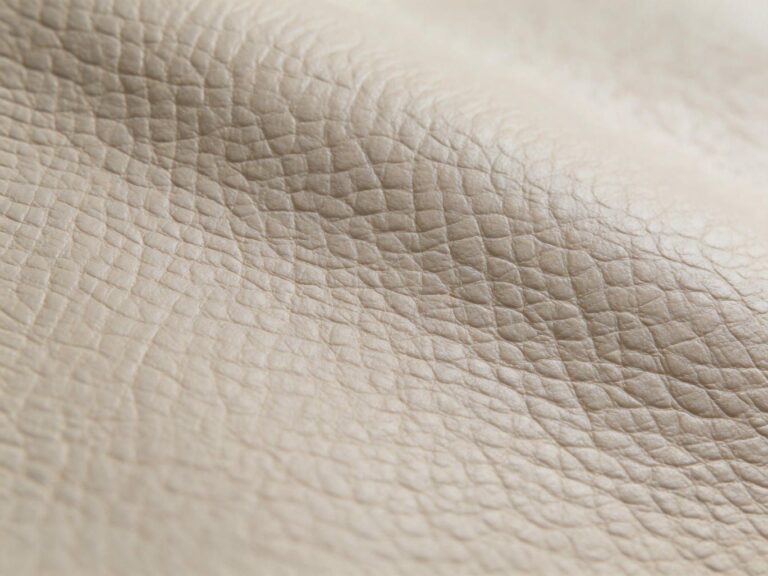
Construction details matter as much as chemistry. A full-silicone coat behaves differently from a partially silicone-blended one, and buyers routinely get them confused. We break down that difference on our full vs semi silicone comparison page. The surface below shows why grain depth and coating build deserve attention before any purchase order.

Embossed grain patterns imitate split leather; depth of grain affects flex life.
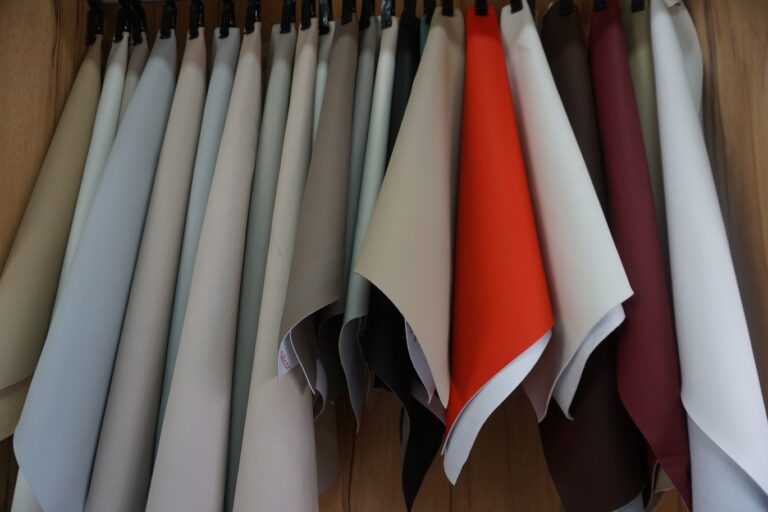
Labels on quotes rarely spell any of this out. Faux leather, leatherette, vegan leather, and eco-leather are marketing names, not material definitions. Any of them can describe PVC, PU, or even a bonded composite made from scrap fibers. Always ask a supplier for the surface polymer and the backing type in writing. Those two facts predict performance better than any label on a sample card.
Durability Across the Types of Artificial Leather
Abrasion testing is where marketing meets reality. Published contract-sector ranges tell the story in numbers. High-spec PVC reaches 100,000 Martindale cycles or more. Standard PU lands between 30,000 and 80,000. Microfiber and silicone both clear 100,000. Numbers alone, though, hide the failure mode. PVC can score well on the bench yet still crack in the cold as plasticizers migrate away. PU can pass abrasion yet lose the hydrolysis race in humid climates.
A hotel group we serve ran booth seating in standard PU for years. Their coastal properties replaced covers every three seasons because humidity accelerated hydrolysis at the seams. After switching to a silicone grade, the same seats passed two full inspection cycles with only routine cleaning. Fewer re-upholstery visits covered the higher material price inside four years. Their maintenance team now specs the same grade for bar seating and headboards.
In our abrasion lab, we track cycle counts and post-test surface condition together. A swatch can survive 100,000 cycles yet show micro-cracking at the fold line. That material is not durable enough for a recliner seat. Silicone’s advantage shows up exactly there: after equivalent cycling, the surface stays supple because nothing inside it is evaporating. For humid-region projects, we also run 85°C/85% RH chamber trials, where silicone holds structure for the full 14 weeks while polyester-based PU typically delaminates.

Martindale benches separate real durability from sample-card promises.
Side-by-side material behavior under stain, flex, and abrasion stress.
Flame Ratings and Compliance by Material
Fire performance splits the four types cleanly. PVC can reach Crib 5 classification inherently, which is one reason it persists in contract furniture. PU usually needs a flame-retardant additive or a back-coating to hit the same bar, adding cost and sometimes stiffness. Microfiber reaches FR targets through treated grades. Silicone is inherently flame resistant. Our Super Flame Retardant line carries EN 13773 Class 4, with FMVSS 302 available for automotive programs.
For procurement teams, the practical takeaway is simple. Ask which fire standard your market requires, then ask the supplier to name the test report. A material that meets the requirement without additives removes an entire failure layer, because the flame property is in the polymer itself, not a treatment that can wear off.
Testing paperwork is part of the product. Ask for the certificate number, the issuing lab, and the construction the rating applies to. A rating does not transfer automatically across thicknesses or backing changes. A certificate for a different build is not evidence for yours.
Weathering, Chemicals, and Temperature Extremes
Three environments expose gaps that a sample card never will. The first is sunlight. We test color fastness on every batch, and our silicone grades stay UV-stable past 1,500 hours of exposure without visible fading. Standard PU outer layers chalk and pale much sooner under the same load, which is why budget furniture near a window ages so fast.
The second is chemical contact. Hospital and food-service seating sees alcohol wipes, chlorine cleaners, and body oils every day. Silicone holds stain-resistance level 5 through that abuse and stays alcohol-safe. PVC resists some chemicals but sweats plasticizers that attract dirt, and PU topcoats can gloss over where solvents touch them.
Third comes temperature. Silicone handles -40°C to 200°C across our standard lines, and our rigid-substrate grades reach 250°C. PU softens near 80°C in a parked car. That single number decides many automotive and outdoor contracts on its own.
Salt air is the harshest judge of all. Our marine-grade material clears ASTM B117 salt-spray testing at 1,000 hours and beyond. That rating matters for yacht seating, waterfront restaurants, and pool furniture, where coated fabrics usually blister long before their structural life ends. You can see the environments we build for on the marine and outdoor applications page.

Color-fastness and weathering benches reveal what sunlight and cleaners will do over years.
Cost, Comfort, and Where Each Type Fits
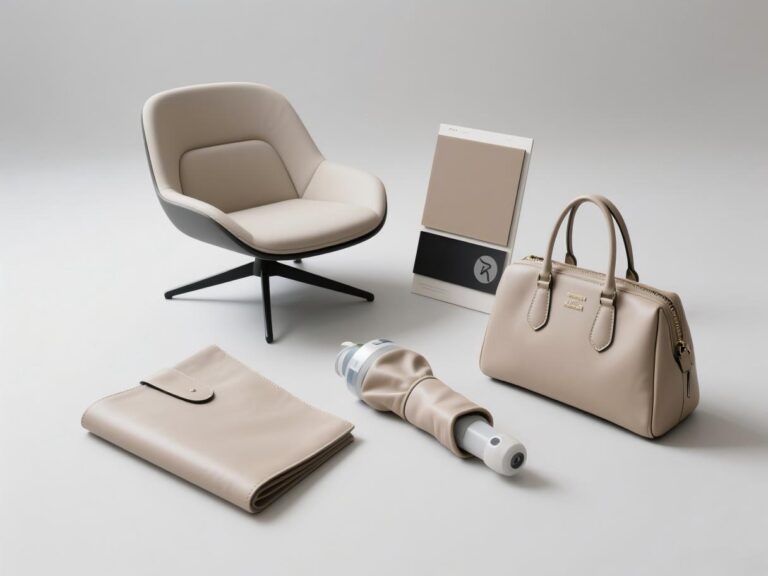
PVC remains the cheapest route and suits short-cycle products: promotional furniture, budget bags, mat covers. PU costs roughly 30-50% more, drapes better, and dominates mid-range footwear, handbags, and furniture. Microfiber sits in the premium tier, chosen when hand feel and strength must approach genuine leather. Silicone carries a higher upfront price. It wins the total-cost conversation in harsh settings: marine cockpits, hospital seating, outdoor cushions, and anywhere disinfectants are used daily.

Application context, not appearance, should drive the material decision.
Comfort follows structure. PU breathes better than PVC. Microfiber manages moisture best of the plastic-based options. Silicone feels cool in heat and stays flexible in cold, down to -40°C in our rigid-substrate grades. That matters for outdoor and transport seating. Buyers sourcing premium bag and upholstery programs can review construction options on our silicone microfiber leather product page.
Which Type Should You Choose? A Decision Table
Every one of the types of artificial leather earns its keep somewhere. The judgment is about matching chemistry to application life, cleaning regime, and fire code. Use this table as a starting shortlist:
| If your program needs… | Choose | Why |
|---|---|---|
| Lowest upfront cost, short lifecycle | PVC | Cheapest chemistry, inherent Crib 5 possible |
| Soft hand, fashion and mid-range furniture | PU | Best drape per dollar, wide finish choice |
| Genuine-leather feel without leather cost | Microfiber | Dense nonwoven structure, 100K+ Martindale |
| 10+ year service, disinfection, marine or outdoor | Silicone | No plasticizers, inherent FR, -40°C flexibility |
One more filter helps when two types look equal on paper: ask who will clean the product and how often. High-traffic public seating justifies silicone for its disinfectant tolerance. A seasonal retail bag does not need that overhead, and PVC or PU serves it well at a lower cost.
Volume buyers should also confirm production consistency before committing. Ask how the supplier monitors coating thickness across a full roll and what Delta E tolerance they guarantee between batches. Two orders of the same color can drift apart visibly if the factory relies on eyeballing instead of spectrophotometers. A confident manufacturer will share those records with your order.
Which artificial leather type is easiest to keep clean?
Silicone tops the list for cleaning resilience. It tolerates alcohol-based disinfectants at stain-resistance level 5, while PVC and PU surfaces can dull or tack under repeated solvent cleaning.
Is microfiber leather better than standard PU?
For strength and feel, yes. The microfiber base gives it higher tensile performance and a denser, leather-like hand. It costs more, so programs usually justify it for products meant to last years rather than seasons.
Choosing among the types of artificial leather gets much easier once you sort applications properly. Rank by lifespan and fire code first, price second. PVC serves short cycles, PU serves fashion, microfiber serves premium feel, and silicone serves the decade-long assignments.
References
- https://www.kothea.com/tag/crib-5-faux-leather/ — Martindale ranges by material (PVC 100,000+, PU 30,000-80,000, silicone 100,000+) and inherent vs additive fire behavior
- https://lerega.com/blog/types-of-faux-leather-v… — silicone upholstery advantages: no plasticizers, no classic PU hydrolysis, humidity and dye-transfer resistance