Synthetic vegan leather sounds like a single material. It is not. The label covers PVC, polyurethane, bio-based sheets, and silicone, and the four behave nothing alike once they leave the warehouse. Buyers who treat the tag as a spec sheet usually discover the difference through peeling surfaces and returned goods.
Here is the core conclusion up front: “vegan” only means no animal content. It says nothing about plastic content, chemical safety, or lifespan. The sections below compare the four chemistries on durability, compliance, and cost, then close with a decision table you can apply to your next program.
Synthetic Vegan Leather: Four Materials, Four Chemistries
The synthetic leather market was valued at $46 billion in 2025 and is expected to reach roughly $67 billion by 2030. Growth at that scale attracts every chemistry in the book. Before comparing performance, buyers need to know what each material actually is.
| Material | Base Chemistry | Known Weak Point | Plasticizer / Solvent Load |
|---|---|---|---|
| PVC leather | Polyvinyl chloride + phthalate plasticizers | Stiffens and cracks in cold | High |
| PU leather | Ester-bonded polyurethane coating | Hydrolysis in 3-5 years | Medium; DMF in wet processing |
| Bio-based sheets | Plant fiber, often with PU binder | Binder still ages like PU | Varies by binder |
| Silicone leather | Platinum-cured silicone on fabric base | Higher upfront cost | Zero: solvent-free process |

Chemistry decisions made at the mixing stage follow the material for its entire service life.
Durability: Where Synthetic Vegan Materials Fail First
Failure modes differ more than failure timing. PVC loses plasticizer and goes brittle. PU absorbs moisture and hydrolyzes: the ester bonds break, the surface flakes, and the backing separates. We have opened warranty returns where the PU coating wiped off like powder.
Silicone has no ester bonds to break. In our 85°C / 85% RH chamber runs, full-silicone material holds through 14 weeks with no delamination or strength loss. Abrasion is the other half of the story: our High Performance line is rated to 200,000+ Martindale cycles under ISO 12947. Bio-based sheets land somewhere in between, and their lifespan depends almost entirely on how much PU binder the manufacturer used.
Compliance: VOC, Plasticizers, and the Tests That Matter
“Cruelty free does not always equal chemical free” is a line we quote often, because it is precisely true. A material can carry a vegan tag and still ship with phthalates, DMF residue, or measurable VOC emissions. Retail audits increasingly check for all three.
We run FTIR spectroscopy on incoming coatings. Full-silicone shows PDMS peaks only: Si-CH3 at 1,260 cm-1 and Si-O-Si at 1,020 cm-1, with no PU carbonyl peaks. VOC output tests as non-detect under ISO 16000-6. Certifications on file include REACH, RoHS, ISO 10993 biocompatibility, and FDA food-contact. When a supplier cannot produce test reports at this level, the vegan label is doing more work than the chemistry.
Request Silicone Vegan Leather Samples

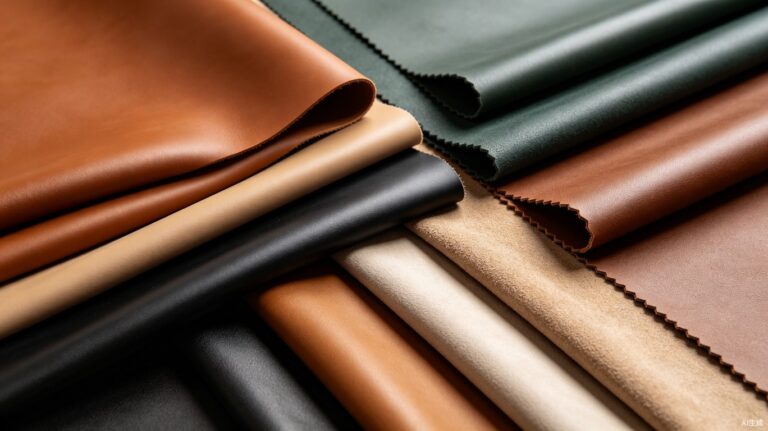
Grain depth at macro scale: surface quality is visible before any test report is opened.
Cost: The Full Service Life Math
Per-meter pricing is where most comparisons stop. It is also where they mislead. A PU sheet can cost 40% less up front and still lose money over a five-year window once replacements, warranty labor, and brand damage enter the ledger.
One hospitality client we work with replaced PU booth seating on a three-year replacement cycle. Switching to silicone doubled the upfront material cost and stretched the cycle past seven years. Their facilities team now budgets less per year, not more. Silicone vs PU leather comparison data follows the same pattern across furniture, marine, and automotive programs.

Bio-based materials are improving fast, but the PU binder inside many sheets still sets their lifespan.
Plant-based vegan leather is a real and growing category: the market is projected to expand from $1.41 billion in 2025 to $5.72 billion by 2035. We watch it closely and consider several bio-based options viable for fashion programs. For high-humidity or high-abrasion settings, though, the binder question remains unresolved. Eco-friendly silicone leather offers a different sustainability profile: sand-derived polymer, no plasticizers, and a substrate that can use recycled PET.
Eco certifications reviewed on camera: what each document actually covers, and what it does not.
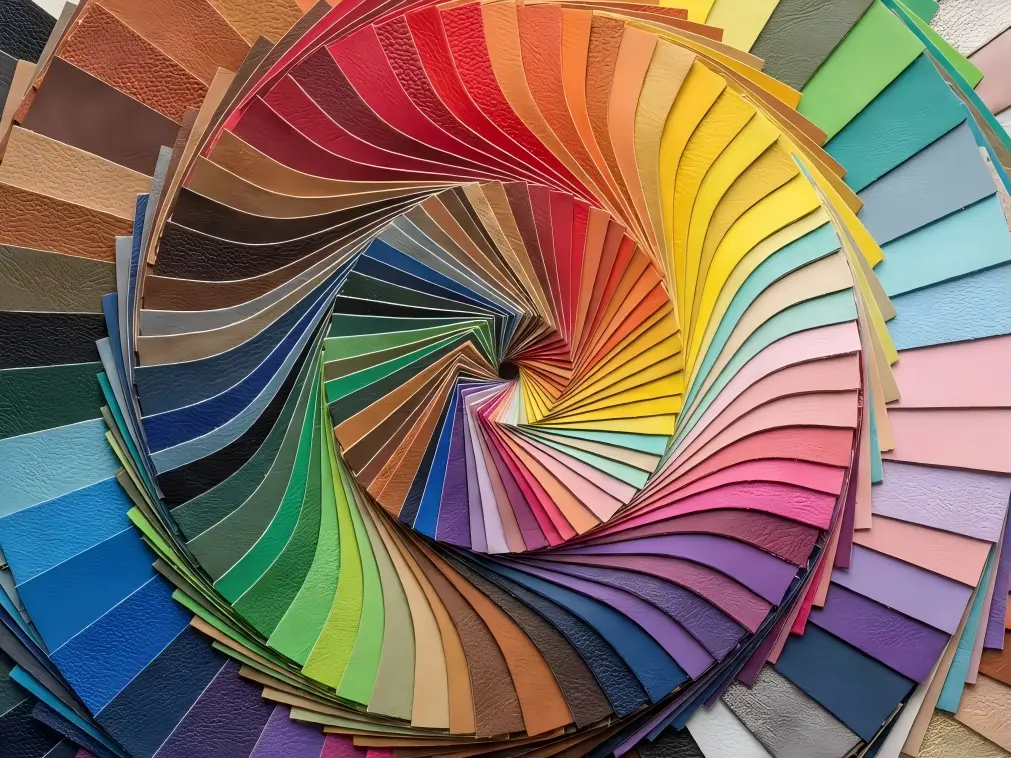
Color range across the silicone line: specification no longer requires a compromise on palette.
Match the Material to the Program
No single material wins every application. Use this table to route your decision.
| If Your Program Needs | Best Fit | Why |
|---|---|---|
| Lowest possible unit cost, short lifecycle product | PU | Cheapest entry, acceptable for 2-3 year goods |
| Humidity, heat, or 7-10 year service life | Silicone | No hydrolysis, 10-15 year track record |
| Marketing-led bio story, low-abrasion use | Bio-based sheet | Strong narrative; verify the binder |
| Strict chemical compliance from day one | Silicone | Near-zero VOC, plasticizer-free, certified |
Synthetic vegan is a claim about animals, not about performance. Ask what is inside the coating, request the chamber data, and match the chemistry to the service life your product actually needs. Talk to Our Material Engineers
About TOPSUN
TOPSUN manufactures plasticizer-free silicone leather for buyers replacing PVC and PU across furniture, automotive, and fashion programs.
Every batch ships with SGS reports; REACH, RoHS, and ISO 10993 certifications are on file; third-party inspection is welcome.