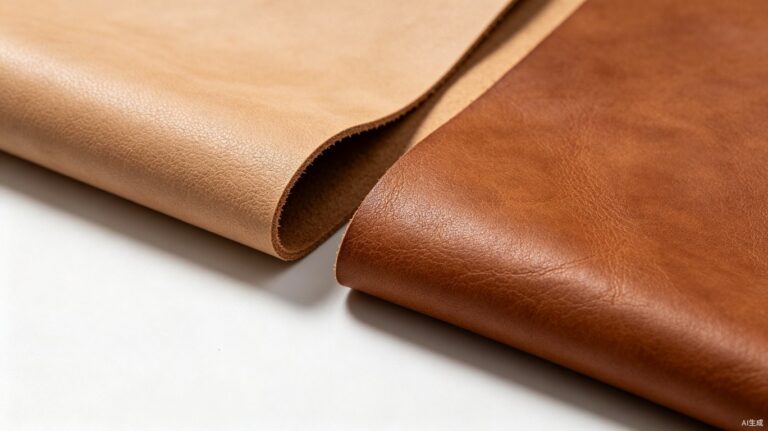
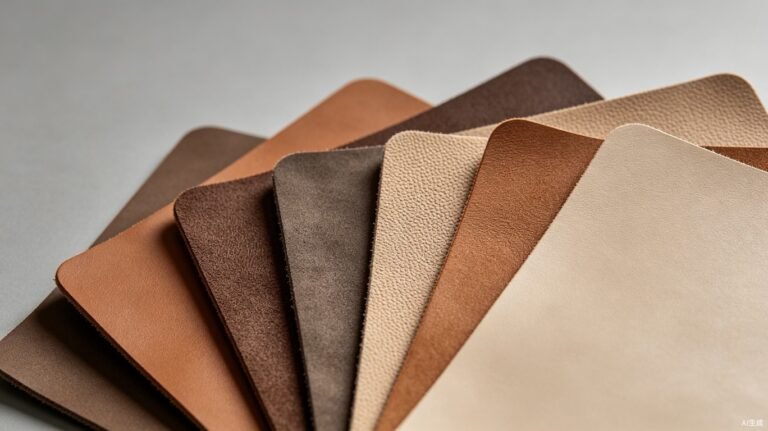
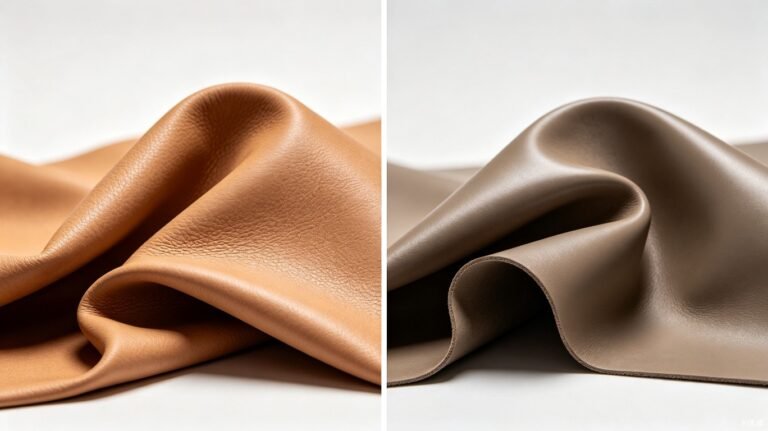
The swatch arrives in a plain envelope with one line of text: synthetic leather, premium grade. Two hours later a second envelope lands, marked PU leather at the same price. My bench gets these pairs every week, and the difference between pu leather and synthetic leather is the first thing I untangle before any test makes sense. Every PU leather is a synthetic leather, yet the label tells you almost nothing about chemistry. This guide sorts the terms like a lab, then hands you the checks that settle real orders.
Two Labels, One Family Tree
Synthetic leather is the umbrella term for any leather-look material made without animal hide. PU leather, PVC leather, microfiber leather, and silicone leather all live under it. In everyday sourcing language, “synthetic” often means one of two things. Sellers use it for a PU coating on a conventional textile, or they use it for microfiber, where ultrafine fibers form a dense base of their own. The market behind these labels is large and growing, at 48.84 billion US dollars in 2026 on the way to 71.86 billion by 2031.
That is why the comparison feels confusing. You are not comparing two materials. You are comparing a category name with one member of that category, and sellers blur it on purpose.
Chemistry: Coating on Fabric vs Resin in Fiber
The structural difference is easier to see than to explain from a spec sheet. PU leather, as commonly sold, is a polyurethane layer sitting on top of a knitted, woven, or nonwoven fabric. The coating carries the look. The fabric carries the strength. Buyer comparisons describe microfiber synthetic leather differently: a non-woven ultrafine-fiber base, usually polyester and polyamide, impregnated with PU resin so the polymer fills the matrix instead of covering it.
One construction has a bond line. The other has a continuum. Every failure pattern I see on the bench traces back to that single distinction.

How Each Construction Fails on the Bench
A coating on fabric fails at the bond line first. Flex the panel enough times and the PU separates, blisters, and peels in sheets. A resin-filled matrix fails more gradually. Edge fray, fuzzing, and gradual stiffness show up before any delamination. Hydrolysis eventually touches both, because both rely on polyester-based PU chemistry. Humidity above 60 percent and heat above 25 degrees Celsius speed that clock up.

Term by Term: What Sellers Say vs What Tests Show
Most listing disputes dissolve once each term is pinned to a measurable claim. This is the table I send back with every test report.
| Label on the Listing | What the Seller Means | What the Lab Shows |
|---|---|---|
| Synthetic leather | Any animal-free leather look | Families differ widely in lifespan |
| PU leather | PU coating on fabric | Bond-line peel is the weak point |
| Microfiber leather | PU-filled ultrafine fiber base | Higher tear and flex endurance |
| Premium grade | Unregulated marketing phrase | No test correlates with the label |
The Checks That Settle a Real Purchase
Two panels with the same price can land years apart in service life. A bend test shows it in minutes. Fold each swatch tightly, rub the crease fifty times, and watch which surface whitens first. A edge fray check separates microfiber from coated fabric on sight. Neither check needs a lab contract, and both expose a “premium grade” claim instantly.

For programs that live in humid rooms, ask the supplier for hydrolysis data before price talks. The hydrolysis-resistant silicone leather page shows what a defensible aging report contains. Daily-care demands belong in the same conversation, and the cleaning and maintenance guide lists which cleaners strip which coatings.
Numbers beat labels in every negotiation I have sat in. Request Swatches With Batch Test Data
Frequently Asked Questions
Is PU leather worse than other synthetic leather?
Not inherently. A thick PU coating on a good base outlasts a cheap microfiber sheet. Construction quality moves the outcome more than the family name does.
Why do sellers use both terms for one product?
Because both are technically true. PU leather is synthetic leather, so a listing can carry both phrases without lying. Precision has to come from the spec sheet, not the title.
Before Your Next Sample Order
Run this short list on every envelope that arrives, and the term confusion stops costing money.
- Name the construction. Coating on fabric, resin in fiber, or silicone. One sentence, in writing.
- Bend and rub the crease. Fifty folds expose whitening, blistering, or peel on the spot.
- Ask for the hydrolysis report. Hours at temperature and humidity, per batch, not per catalog.
- Price the failure mode. Bond-line peel and matrix fray carry different warranty costs.
If a supplier clears all four, the material is worth piloting. Start from the silicone leather introduction to see where a longer-life chemistry fits, or Send Us Your Spec Sheet for Review