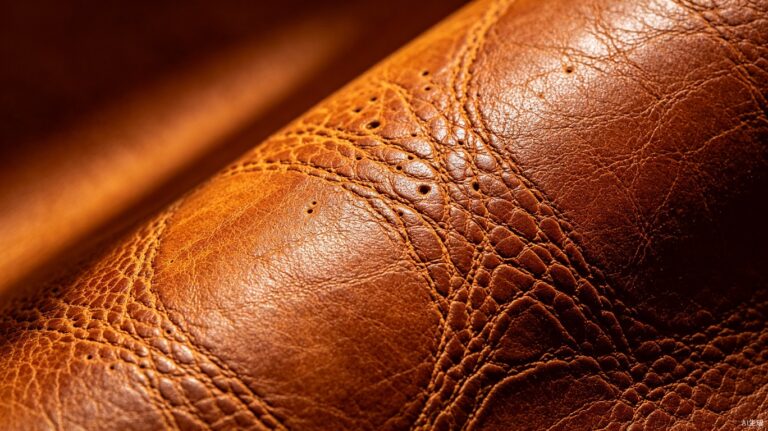
Where is the difference between faux leather and vegan leather? Your marketing team, your supplier, and your retail auditor may each give a different answer. All three are describing the same shelf of animal-free materials. Yet the two labels carry different promises: one is about appearance. The other is about content claims that regulators and consumers now verify.
The confusion costs money. It shows up as returned goods when a “vegan” tag sits on hydrolyzing PU. It shows up as failed audits when content claims outpace documentation. This piece maps the terms, the buyer data behind them, and the five differences we see in sample testing.
The Difference Between Faux Leather and Vegan Leather, Term by Term
The labels grew up in different rooms. Faux leather is the older trade term, born in fashion, and it describes imitation hide regardless of chemistry. Vegan leather is the newer claim, born in ethics marketing, and it certifies what the material does not contain. In practice the shelves overlap almost completely. That is why the distinction matters at the spec stage rather than the naming stage.
| Term | What It Usually Means | Watch-Out |
|---|---|---|
| Faux leather | Umbrella trade term for imitation hide, usually PU or PVC | Says nothing about chemicals or age |
| Vegan leather | Content claim: no animal-derived material | Can still be plastic-heavy PU |
| Pleather | Slang for “plastic leather,” typically PVC | Lowest durability tier |
| Eco-leather | Often real hide with reduced-impact tanning | Not vegan at all |
| Plant-based / silicone | Newer chemistries competing on lower plastic content | Verify binder and test data |

Softness and fold behavior differ by chemistry long before the label tells you anything.
Consumer Demand: Why the Vegan Label Now Moves Units
The vegan claim carries commercial weight that faux never had. A 2023 survey found 73% of Gen Z consumers willing to pay more for sustainable products. Analysts project this generation will account for roughly 27% of global consumer spending by 2030. A 2024 Bain luxury study points the same way: 58% of luxury consumers would pay a premium for provably sustainable materials.
“Provably” is the operating word. The plant-based leather market is forecast to grow from $649.6 million in 2026 to $1.44 billion by 2033. Alongside that growth, retailers are auditing cruelty-free claims as carefully as flame ratings. In our sample program, requests now arrive with compliance checklists attached. That was rare three years ago. Eco-friendly silicone leather entered our conversations through exactly this door: buyers wanted a plasticizer-free story with paperwork behind it.

Sample racks now double as compliance reviews: every swatch carries a test file.
Five Differences Between Faux Leather and Vegan Leather Specs
On paper the labels overlap. Under testing they separate quickly. These are the five gaps our inspection logs surface most often when a buyer compares a faux-tagged sample against a vegan-tagged one.
- Chemistry disclosure: faux specs often stop at “PU leather”; vegan programs increasingly name the polymer and demand supporting reports
- Lifespan claims: conventional faux materials track 3-5 years of service, while real hide runs 10-20; silicone programs target 10-15 with chamber data
- Compliance files: vegan claims invite content audits, so phthalate, REACH, and VOC documentation moves from optional to expected
- Failure accountability: a peeling faux sofa is a product problem; a peeling vegan sofa becomes a brand story, and not the good kind
- Hand-feel consistency: claim-driven programs batch-match color and grain more tightly, because the marketing promises a uniform experience

Grain and fold lines at close range: the details that separate a consistent batch from a drifting one.
Material properties overview: the test behaviors behind both labels.
Choosing by Program: A Decision Path
Term selection is really program selection. The decision branches we walk through with clients look like this. If the product is a short-cycle fashion item where price dominates, a well-specified faux PU with honest labeling is a defensible call. If the program makes a vegan or sustainability claim on the packaging, move the budget into materials with documentation.
Silicone and verified plant-based options sit in that second branch. Hydrolysis-resistant silicone leather fits programs in furniture, automotive, and marine settings, where humidity punishes ordinary PU. Furniture and sofa upholstery programs belong on this branch: constant body contact and ambient moisture accelerate PU aging faster than almost any other use.

Two labels, one shelf: the material file behind each tag is where programs differ.
Is faux leather always vegan?
Almost always, but not by definition. Faux leather means imitation hide, and nearly all PU and PVC versions contain no animal material. Edge cases exist, such as blended or bonded materials that mix in leather fibers. If vegan status matters to your claim, require it in writing from the material supplier.
Does vegan leather last as long as real leather?
Conventional PU and PVC versions do not: they typically serve 3-5 years against 10-20 for hide. Newer chemistries close the gap. Silicone leather carries a 10-15 year service expectation with hydrolysis chamber evidence behind it, which changes the replacement math entirely.
Match the Label to the File, Not the Other Way Round
If your claim is appearance, specify faux leather with a chemistry name and a test report. If your claim is ethics, specify a material whose documentation survives an audit. Either way, the file behind the tag is the product. Review Material Files With Our Team