Type synthesized leather into a marketplace search bar and you will meet a word that lives mostly in listings, not in labs. So what is it, really? The short answer: synthesized leather is not a separate material. It is the wording many sellers use for synthetic leather, meaning a polymer coating bonded to a fabric base. This piece unpacks the term, follows the price story behind it, and ends with a three-way comparison that shows where the word earns its keep.
Synthesized Leather: The Term and Its Family
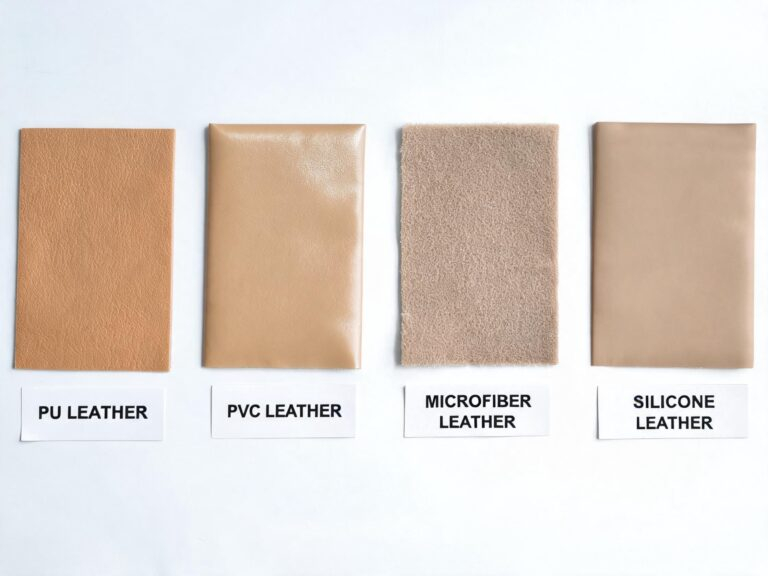
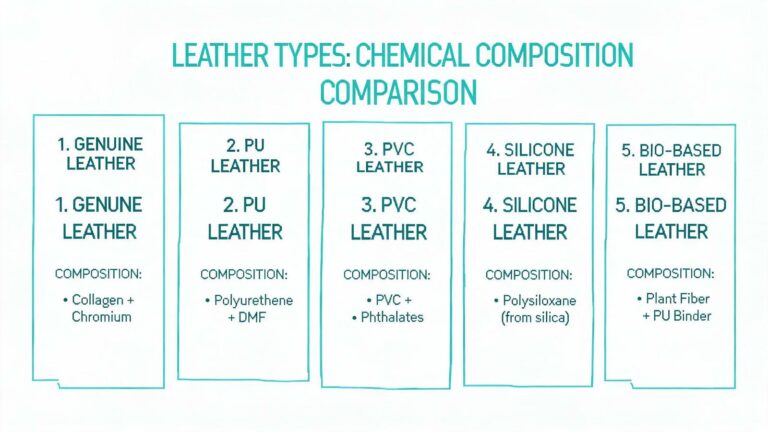
Search results for the phrase come from two places: gadget cases and bag catalogs. A tablet case listing describes its cover as PU synthesized leather that feels just like the genuine article. A handbag catalog defines synthesized leather as artificial leather, also called vegan leather. In other words, the phrase is a marketplace synonym. It sits in the same family as leatherette, imitation leather, faux leather, and PU. None of these names points to a different chemistry. They all point to one construction: a plastic surface on cloth.

Same family, many names: swatch racks sort the clan faster than any glossary.
Why does the variant exist at all? Listings borrow laboratory-sounding words to signal quality. Synthesized suggests engineering, which reads better than fake in a product title. Buyers searching either spelling find the same goods, so the words behave as synonyms in practice. The lesson for buyers is simple: read the spec sheet, not the adjective.
The One-Third Price Story Behind the Word
The economics explain the word’s popularity. Industry reporting from the Material Innovation Initiative notes that leather synthesized from petrochemicals sells at wholesale for roughly one-third the price of the animal leather equivalent. The gap comes from process. A hide needs farming, tanning, and finishing across months. A synthesized sheet needs polymer chemistry, a fabric base, and a coating line that runs by the kilometer.

Release film in motion: the coating line is where the price gap is made.
That price is only half the pitch. The coated sheet is uniform from head to tail, resists water, and wipes clean with a damp cloth. Real hide varies between animals and even within one hide. For price-driven programs, the one-third wholesale ratio is the whole business case. For premium programs, the feel of natural grain still wins, which is why the comparison below matters.

Uniform rolls, batch after batch: consistency is the quiet half of the value story.
Synthesized Leather vs Real Leather vs Silicone
Three materials, three briefs. The table puts them side by side on the criteria that decide most orders.
| Criterion | Synthesized (PU/PVC) | Real Leather | Silicone Leather |
|---|---|---|---|
| Origin | Polymer coating on fabric base | Animal hide, tanned | Silicone coating on fabric base |
| Wholesale price | Lowest, near one-third of hide | Highest | Mid to high |
| Care | Wipe clean, water resistant | Needs conditioning | Wipe clean, highly inert |
| Typical lifespan | 2-5 years | 10+ years with care | 10-15 years, hydrolysis resistant |
| Best fit | Budget programs, high turnover | Premium goods, patina lovers | Harsh duty: auto, marine, medical |

The benchmark itself: natural grain is what every synthesized surface imitates.
The silicone column is where our own work sits. Silicone coating shrugs off the heat, UV, and hydrolysis that end PU programs early, and our silicone vs PU comparison lays the chemistry out in detail. Choose synthesized PU when budget leads the brief. Choose hide when heritage does. Choose silicone when the product must survive sun, salt, or sanitizer.
One line to keep: synthesized leather is a listing word for synthetic leather, and it buys real value at one-third the price as long as you spec the grade behind it. Our samples center ships graded panels with test data attached, or contact our team to match the right surface to your brief and budget.
Material properties on camera: what the coating actually delivers.