What does “vegan” guarantee about a synthetic leather? Almost nothing about its chemistry. The tag promises no animal content. It says nothing about plastic content, microplastic shedding, or how the material will age. That gap confuses even experienced sourcing teams. Most vegan synthetic leather sold today is petroleum plastic in disguise. A smaller share blends plants with polymers. A tiny fraction avoids plastic entirely. This guide maps the whole spectrum, with real composition numbers, so your next vegan claim survives scrutiny.
Vegan Synthetic Leather: Where the Label Starts and Stops
Start with definitions, because the terms overlap badly. Vegan leather is any non-animal material styled to look and perform like hide. Synthetic leather is the polymer-based family inside that group: PU, PVC, microfiber, and silicone. The two circles overlap almost completely in practice. When a brand sells “vegan leather,” the odds are overwhelming that it is selling synthetic leather, and specifically the PU or PVC end of it.
The industry used to call this material pleather. Around 2015, marketing teams rebranded it. The chemistry did not change with the name. So the honest way to buy vegan is to stop reading the animal claim and start reading the composition claim. Three tiers cover everything on the market today.

Coating over textile: the layered build shared by nearly all synthetic vegan leather.
Tier One: The Plastic Majority
PU and PVC coatings over polyester backings make up the bulk of the vegan leather market. Both are 100% synthetic polymer with zero bio-content. PU wins on softness and breathability. PVC wins on stain and scuff resistance. Both age the same way: they delaminate and crack within a few years of regular use, because plasticizers migrate and coatings fatigue.
Two problems shadow this tier. First, conventional PU can retain residual dimethylformamide (DMF) from solvent-based production, a solvent with its own regulatory attention. Second, microplastics. As PU or PVC surfaces age and rub against daily use, they flake into tiny plastic particles that wash into the environment. Consumer guides now flag this shedding directly. None of it contradicts the vegan claim. All of it complicates the sustainability story that usually sells alongside it.
Cost separates the tiers just as sharply. Tier-one PU remains the price baseline of the whole market, which is why it dominates by volume. Bio-blend composites typically command a multiple of that baseline, because plant feedstock adds processing steps at lower scales. Plastic-free materials price higher still, with thickness options and supply continuity as extra constraints. The pattern to remember: the greener the tier, the thinner the availability, and the more the schedule matters in planning.

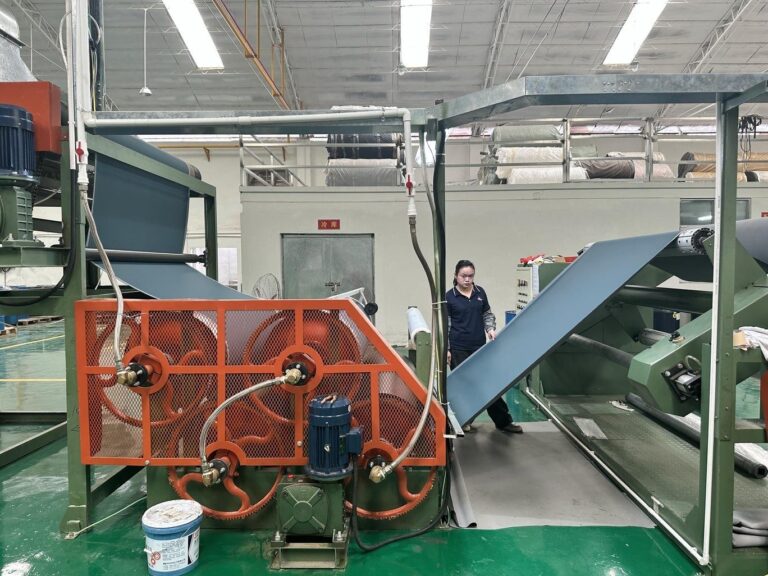
The coating head is where the plastic enters; solvent-free lines run differently.
Tier Two: The Bio-Blend Middle
Plant-based composites sit between plastic and plant. Cactus leather from Mexico is the flagship. Its nopal feedstock sounds fully botanical, but published figures put its polyurethane content at roughly 30% to 65% by weight depending on the source cited. Apple, grape, and cork composites follow the same pattern: plant flakes or powder bound in a polymer matrix, usually PU.
These materials cut virgin plastic use, and the agricultural-waste stories behind them are real. Buyers should still read them with two questions. How much of the weight is polymer? And is that polymer solvent-based or water-based? A 60% PU composite sheds microplastics like any other PU. “Plant-based” on a hang tag does not answer either question, so ask for the composition breakdown in writing.
Tier Three: The Plastic-Free Edge
A small group of materials genuinely exits the plastic economy. Mirum builds leather-look sheets from plant oils and fillers with no synthetic polymer binder. Mycelium composites grow fungal networks on agricultural byproducts; some versions mature in 7 to 9 days and compost at the end of their lives. Bacterial cellulose grown on fruit waste, marketed as Celium, has reached industrial scale and attracted brands like GANNI.
The honest caveat is capacity. These materials remain expensive, available in limited thicknesses, and unproven in high-abrasion contract settings. They suit capsule fashion, accessories, and brand storytelling programs. Few of them survive a hotel lobby or an airline seat. Treat tier three as a premium statement tier, not a replacement for upholstery-grade material.
Sourcing lead times follow the same logic. Commodity PU ships from stock in days. Bio-blends run on campaign schedules, producing when feedstock arrives. Plastic-free materials often require early reservation with minimum commitments. Build these lead times into the launch calendar, not the marketing story.
The Spectrum on One Page
Lined up together, the three tiers separate cleanly on the specs that matter to buyers:
| Tier | Examples | Plastic content | Microplastic risk | Typical use |
|---|---|---|---|---|
| Plastic majority | PU, PVC, microfiber | ~100% | Yes, at wear | Fashion, upholstery, bags |
| Bio-blend | Cactus, apple, grape | 30-65% | Yes, reduced | Accessories, footwear |
| Plastic-free | Mirum, mycelium, Celium | ~0% | No | Capsule fashion, storytelling |
| Silicone route | Silicone elastomer | 0% PU/PVC | Minimal | Contract, auto, medical |
The silicone row is the pragmatic fourth option. Silicone is a synthetic polymer, so it is vegan but not plastic-free. It contains no PU or PVC, no plasticizers, and no ester bonds to hydrolyze. For buyers who need vegan credentials plus a decade of service, our eco-friendly silicone leather page documents the full claim set. Recycled-content programs can layer on top through our silicone PET leather, which pairs a silicone surface with recycled polyester backing.

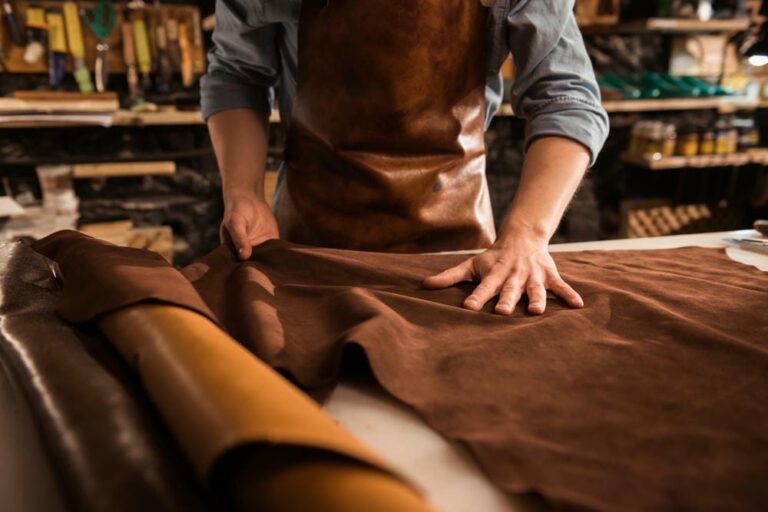
Plant-based leathers shine in fashion programs where abrasion demands stay modest.
What Certifications Can and Cannot Prove
Certification questions follow every vegan sourcing conversation, so set expectations early. Chemical safety marks such as OEKO-TEX and REACH declarations prove what the material does not contain: restricted substances above set limits. That matters, and our industry takes it seriously. What no chemical certificate proves is how much plastic a composite contains. A cactus composite can carry full chemical compliance at 60% polyurethane by weight.
Tannery-side schemes tell a different story. The Leather Working Group replaced its old protocol with a new sustainability system in 2026, but it audits hide processing, which most vegan materials never touch. So the certificate stack for vegan synthetic leather is thinner than buyers expect. The workable approach is documentary, not logo-based. Request the composition breakdown by weight. Ask whether the polymer layer is solvent-based or water-based. Ask for the solvent statement in writing. Two emails settle what a hang tag never will.
Durability Is a Sustainability Metric Too
Composition is not the whole environmental story. Lifespan belongs in the same calculation. A plastic-free material replaced every two years can cost more, in carbon and cash, than a longer-lived polymer replaced once a decade. Fashion commentary makes this point about vegan leather generally: most of it delaminates within a few years, and the replacement cycle quietly multiplies its footprint.
We advise brands to weigh three questions together. How long does the program need the material to last? What chemistry carries the vegan claim? And what happens at end of life? A tier-one PU that lasts the full program life may beat a tier-two composite that fails halfway. Match the tier to the service expectation before matching it to the marketing plan. For fashion and sportswear programs balancing both, our fashion and sports applications page shows the material pairings we recommend.
Replacement math is easy to run. Take the program’s expected service years and divide by each material’s realistic lifespan. A three-year composite needs three purchases across a nine-year program, plus three rounds of installation labor and disposal. The longer-lived option prices out once. Its chemical stability also keeps appearance consistent from year one to year nine. Run that division before comparing unit prices, because unit price never carries this arithmetic alone.
Choosing Vegan Synthetic Leather by Program
Walk the decision tree in order. Each step narrows the field until one tier remains:
- Does the program face abrasion, disinfection, or humidity stress? Yes → silicone route or tier-one PU with solvent-free production. No → continue.
- Must the claim say “plastic-free” in writing? Yes → tier three, and budget for it. No → continue.
- Is the marketing story built on agricultural waste? Yes → tier two, with a written composition breakdown. No → continue.
- Is cost the deciding constraint at volume? Yes → tier one from a solvent-free line. Otherwise → revisit the silicone row.
The verdict on vegan synthetic leather: vegan is an animal claim, not a chemistry claim. The market spreads across a plastic spectrum, from near-100% polymer to genuinely plastic-free newcomers. Read composition the way you read price, and the label stops being a gamble.
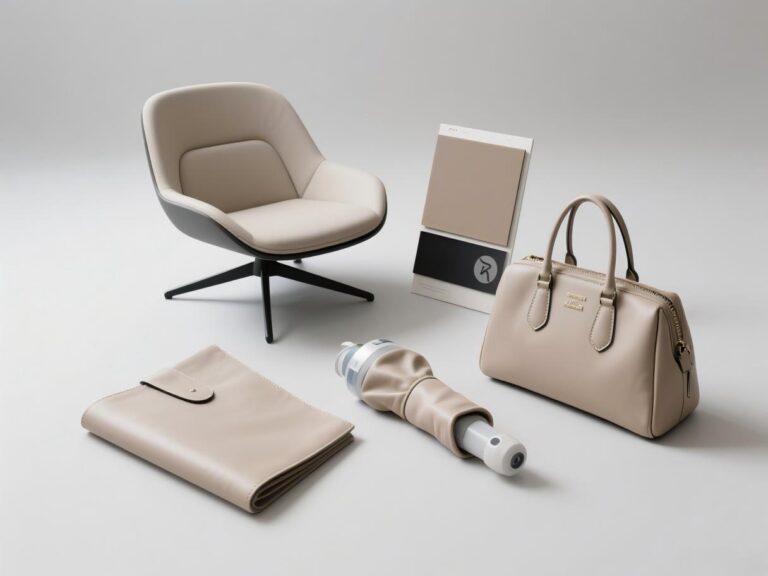
Next-generation materials: where silicone fits in the post-PU landscape.
TOPSUN silicone leather is 100% vegan, built on a sand-derived silicone polymer with no BPA, phthalates, or heavy metals.
Production is 100% solvent-free with non-detect VOC (ISO 16000-6), and every order ships with SGS test reports.
References
- https://www.veganbrief.com/guides/how-vegan-lea… — PU/PVC majority; Desserto cactus leather 30-65% PU by weight; pleather rebranding circa 2015 (2026)
- https://plasticfreeeverything.org/the-plant-bas… — PU/PVC vegan leather sheds microplastics through wear friction (2026)