Two rolls arrived at a client’s warehouse last month from the same mill, same week, same texture code. One went into a cinema chain’s seating program. The other was rejected at receiving. The difference was not visible on the floor. It lived in four lab numbers, and in how the coating peeled when a technician pulled it. This is the gap between marketing and synthetic leather quality, and market data makes the stakes plain: synthetic handbags last one to five years, with low-grade material failing inside twelve months. The ladder below grades that gap, rung by rung.
Synthetic Leather Quality: The Four Lab Numbers
Forget adjectives. A roll earns its grade from four measurable properties, and manufacturers publish ranges for each. Weight spans 200 to 600 g/m² across the serious market, with microfiber-PU constructions at the top. Martindale abrasion spans 30,000 to 100,000 cycles depending on class. Color fastness should reach Grade 4 under ISO 105. Tear strength should clear 25 newtons in both warp and weft under ISO 13937. National supervision programs now check the same core items, with China’s GB/T 8949-2025 listing tensile load and elongation among its inspection points.

Bending testers find cracks that hands find only after the warranty ends.
Match the number to the seat, not to the brochure. Furniture upholstery works from roughly 25,000 Martindale cycles. Automotive seating expects 40,000 and up. High-traffic public seating, like cinemas and airports, starts at 60,000. A roll that clears 100,000 is premium stock, and it is wasted in a decorative accent chair. Grade is fit for purpose, not a trophy number on a datasheet.
Hands still earn a place in the protocol. Run a palm across the roll and feel for coating looseness, a crackle that hints at weak bonding. Fold a corner sharply and watch the crease: a clean recovery is normal, while a white line that stays signals a brittle film. These checks do not replace the lab. They triage which rolls deserve the lab’s time.
Three Peel Signs That Read Like a Diagnosis
Peel testing is where composite quality confesses. Pull the coating from the backing and watch how it fails, because each failure mode names its own culprit.
- Coating lifts cleanly off the backing: weak adhesive or a poor lamination process.
- Backing fibers tear away with the coating: adhesion is stronger than the fabric, so upgrade the base.
- Blisters after heat and humidity: a curing or hydrolysis problem, and it will not stay in the lab.
The third sign is the expensive one. Blistering predicts field failure in warm, humid markets with unsettling accuracy. Cinema recliners, medical chairs, and airport rows all live in exactly those conditions, which is why our full vs semi silicone comparison treats hydrolysis resistance as the first sorting question, not the last.
Shelf life makes the ladder commercial rather than academic. A grade A roll can anchor a five-year warranty with real confidence. Grade B supports standard two to three-year terms. Grade C should ship with no warranty language at all, because its price never assumed one. Set the warranty after the grade, never before.

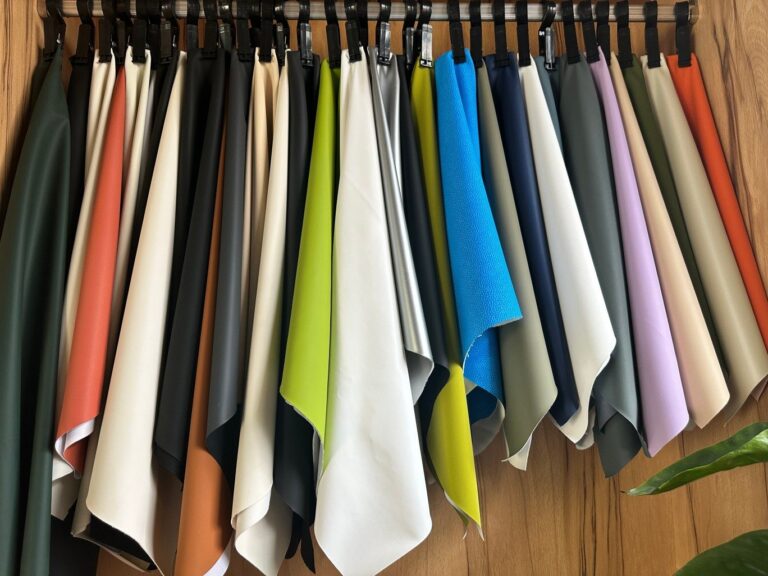
Wrapped and labeled rolls carry batch numbers. Quality needs a trail.
Reading Peel Tests for Synthetic Leather Quality
Turn the signs into a procedure and the grading becomes repeatable. Cut three squares from the head, middle, and tail of the roll. Run a 90-degree peel on each and record the force, not just the verdict. Then condition a fourth square through heat and humidity cycles and peel that. Four pulls, one page, and a roll tells you which rung of the ladder it really stands on.
Consistency across the roll matters as much as the average. A roll that peels strongly at the head and weakly at the tail has a process drifting between settings. That drift never improves at your cutting table. Reject on spread, not only on mean, and your failure rate drops without changing suppliers.
Keep the pulls on file with the batch numbers. When a field claim arrives two years later, the archived peel page turns an argument into a lookup. Mills respect buyers who can produce the original evidence, and honest mills are relieved to see it, because their data will match yours. That shared record is what quality partnerships are built on.
The Grading Ladder, Condensed
| Grade | Abrasion | Fastness / Tear | Peel + Humidity |
|---|---|---|---|
| A: contract grade | 60,000+ cycles | Grade 4 / 25N both ways | Strong, no blisters |
| B: standard furniture | 25,000-60,000 | Grade 4 / 25N | Strong, minor creep |
| C: decorative use only | Under 25,000 | Grade 3 or lower | Clean lift or blisters |
Cinema seating sits firmly in grade A territory, and the photo below shows why: a seat that runs eight showings a day has no off-season. For buyers building such programs, our silicone leather introduction explains the chemistry that clears every rung at once.
One warning about the bottom rung. Grade C material is not defective, and it is not always a mistake. Decorative panels, photo backdrops, and short-season retail displays can use it profitably. The failure happens when grade C rolls get specified into grade B seats, usually through a price-driven substitution nobody documented. Write the grade into the purchase order. Ambiguity is where substitutions hide.

Eight showings a day: public seating is the strictest grading examiner.
Put a roll on this ladder before it ships, not after it fails. Our samples center ships graded panels with test data attached, or contact our lab desk to grade your incumbent roll against the same ladder.
Synthetic leather quality rewards buyers who measure. Four lab numbers place the roll. Three peel signs explain it. One shelf-life reality, from one to five years depending on grade, keeps the stakes honest. Work the ladder in that order and the word quality stops being a feeling and becomes a score you can defend in any meeting.
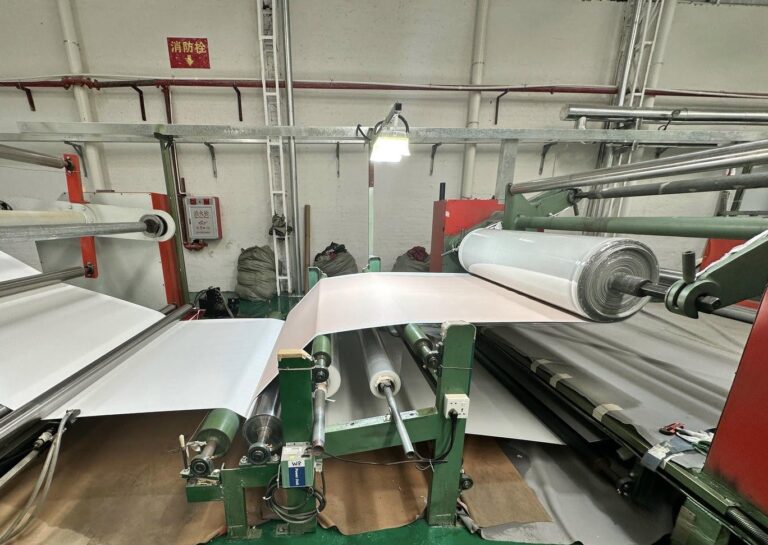
Inside factory quality control: where the four numbers are earned.