Is faux leather PVC still legal to sell in your market, and what does compliance actually cost now? Those two questions dominate our inbound inquiries from EU-bound programs. The answers changed faster in 24 months than in the previous 20 years. A wave of REACH amendments, vehicle rules, and POPs restrictions has redrawn the material map. This guide walks through the timeline, the chemistry it targets, and the decision framework we hand to buyers who quote PVC today.
Faux Leather PVC Today: Two Chemistries, One Label
PVC leather starts as rigid polyvinyl chloride. Plasticizers at 20% to 40% by weight make it flexible enough for upholstery. Which plasticizer the factory used defines everything about compliance. Conventional grades rely on ortho-phthalates such as DEHP. Newer formulations substitute DOTP, DINCH, or other non-phthalate plasticizers. Both rolls look identical on a showroom shelf. One carries a restricted substance, the other does not.
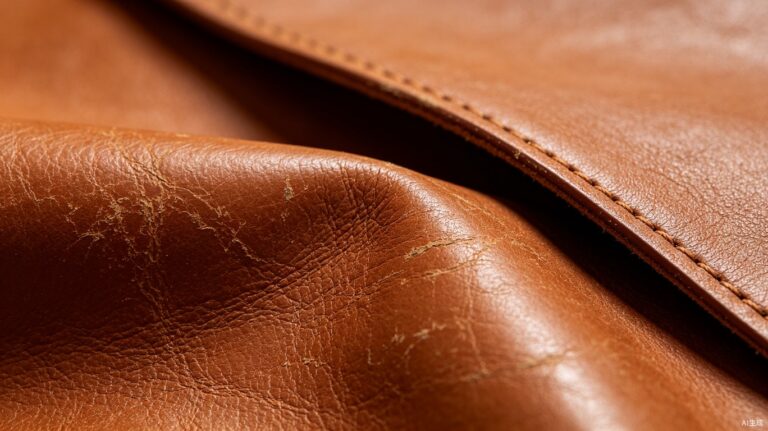
The plasticizer also drives the known weakness: migration. Plasticizers do not stay bound in the polymer. They leach out under heat, humidity, and flexing, leaving the surface brittle. Industry experience puts conventional PVC service life at 3 to 5 years in demanding upholstery, with surface cracking as the visible symptom of what chemistry already knew. The label tells you the category. The spec sheet tells you the truth.

Calendering forms the PVC sheet; the recipe behind it determines its legal status.
The Regulatory Timeline That Changed Your Quote
Four regulatory milestones matter to buyers sourcing faux leather PVC right now:
- July 2023: Regulation (EU) 2022/1228 barred PVC leather from new EU vehicle type approvals over phthalate leaching.
- November 2024: REACH Annex XVII Entry 63 capped lead at 0.1% in PVC articles, hitting new production immediately.
- Ongoing: REACH Entry 51/52 restricts DEHP, DBP, BBP, and DIBP to 0.1% by weight in plasticized consumer articles.
- 2025: POPs rules keep short-chain chlorinated paraffins, a secondary plasticizer in some PVC, capped at 0.15%.
Each rule landed on a supply chain that had run on the same recipe for decades. Compliance costs added an estimated 8% to 12% to PVC leather production, with smaller European converters hit hardest. Substitution has a price too: non-phthalate plasticizers such as BASF’s DINCH command a premium over commodity DEHP, and reformulation changes the material’s feel, which sends brands back through approval testing.

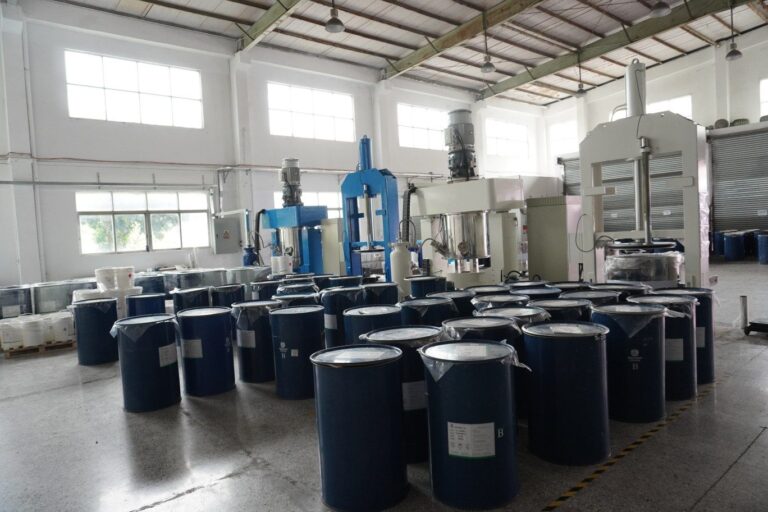
The plasticizer drum, not the calender, decides whether a PVC roll ships to the EU.
Inside the Reformulation: What Non-Phthalate Really Changes
DOTP, the workhorse replacement for DEHP, is a terephthalate built from the same 2-ethylhexanol feedstock. Molecule shape changes how it sits between PVC chains. The practical results show up in three places on a spec sheet: slightly lower low-temperature flexibility, marginally different migration behavior, and a different surface feel that brands notice in hand testing. None of these changes is disqualifying. All of them reset approval testing.
Buyers should also understand the paper difference. A DOTP-based roll still contains a plasticizer, so migration testing still applies. What changes is the substance list: terephthalates sit outside the Entry 51/52 restrictions, so the batch report clears EU limits without argument. Japanese and Korean buyers increasingly specify the same chemistry voluntarily, which is why non-phthalate capacity keeps expanding even in non-EU supply chains.
Migration also explains the fogging complaints that plague car cabins. Plasticizer vapor condenses on cold glass as an oily film. Several automaker specifications now set fogging limits alongside phthalate limits for this reason. A DOTP-based formulation improves the picture but does not eliminate it, because the plasticizer is still physically present. This is the mechanical ceiling of the reformulation route. Chemistry can swap the offender. It cannot remove the concept of plasticizing from a plastic that needs it.
US and Asia: Not Every Market Follows REACH
Buyers sometimes assume REACH compliance covers the planet. It does not. The United States runs its own system. California Prop 65 requires warning labels when listed phthalates exceed threshold levels. The CPSC restricts specific phthalates in children’s toys and childcare articles at 0.1%. A roll legal in Houston may need a label in Los Angeles. Asia moves on a different clock. Japan and South Korea enforce their own substance lists with thresholds that sometimes exceed REACH strictness. China’s GB standards focus on heavy metals and formaldehyde in furniture rather than plasticizers specifically.
The practical lesson from our export desk: write the destination market into the material specification. One program shipping the same sofa line to three regions may need two different PVC recipes and one silicone alternative. Vendors who pretend one recipe fits everywhere are selling you their convenience, not your compliance.
What a Faux Leather PVC Batch Report Must Show
A compliant order lives or dies by its paperwork. Every batch report for regulated faux leather PVC should name four things in plain language. First, the exact plasticizer used, by chemical name, not by marketing label. Second, the test method behind the claim, typically GC-MS screening against the restricted substance list. Third, the measured concentration, expressed as a percentage of material weight, not just a pass or fail stamp. Fourth, the standard version the test referenced, because limits have shifted twice since 2023.
Migration testing deserves special attention. Total content and migration are different numbers. A plasticizer can sit inside the polymer at 25% by weight and still pass a migration limit. Migration measures what leaches out under defined contact conditions. Protocols such as EN 71-3 define the contact fluids, temperatures, and durations. A report that only shows total content tells you what went in. It says nothing about what reaches skin or a car cabin. Buyers who accept the weaker number inherit the risk.
Keep the reports for the life of the program. EU market surveillance can request documentation years after delivery. A missing batch report converts a compliant material into an unsellable one on paper. Digital archiving costs nothing at order time and protects the entire revenue tied to that specification.
Compliance vs Durability: The Full Comparison
Regulation aside, PVC still competes on mechanical strengths that matter in contract settings. The honest scorecard compares all four columns buyers actually choose between:
| Criterion | PVC (standard) | PVC (non-phthalate) | PU | Silicone |
|---|---|---|---|---|
| EU compliance risk | High | Managed | Low | Low |
| Service life | 3-5 years | 4-6 years | 3-5 years | 10-15 years |
| Chemical resistance | Excellent | Excellent | Moderate | Excellent |
| Plasticizer migration | Yes | Reduced | None | None |
| Cost index | 1.0 | 1.1-1.2 | 1.2-1.5 | 1.8-2.5 |
Reading the table as a buyer: non-phthalate PVC closes the compliance gap and keeps the legendary chemical resistance. It does not fix migration entirely or extend life dramatically. Where a program needs a decade of service, chemistry at the silicone end of the table remains the only row that delivers it. Our comparison of silicone vs PU covers that trade-off in depth.

Where each material wins: the choice shifts by industry, budget, and market.
When Compliant PVC Is Still the Right Call
We do not advise phasing PVC out everywhere. Short-lifecycle retail fixtures, promotional furniture, and price-led markets without EU exposure still justify compliant PVC. One discount retail chain we advised switched to DOTP-based PVC for its store seating across non-EU markets and kept unit costs within 12% of the old recipe. The reapproval paperwork took six weeks. The program never needed a decade of durability, so paying for silicone would have been over-engineering.
The calculus flips the moment a program touches EU vehicles, children’s products, or anything skin-contact intensive for long periods. There, the risk sits not in the material but in the paper trail. Every batch needs a test report naming the exact plasticizer. For programs that need both compliance and lifespan, buyers typically end up evaluating eco-friendly silicone leather instead, accepting the higher unit cost to delete the compliance file entirely.
Your Next Order: A Compliance Checklist
Before signing a faux leather PVC purchase order for any regulated market, close these five gaps:
- Request the plasticizer declaration by name: DEHP-free is not the same as phthalate-free.
- Match each restricted substance against REACH Entry 51/52 limits at 0.1% by weight.
- Confirm lead content against Entry 63 for any article produced after November 2024.
- For vehicle interiors, verify the material’s status under Regulation (EU) 2022/1228.
- Ask who pays if a batch fails border testing: the clause decides your real exposure.
Compliant faux leather PVC remains a legitimate tool for the right program and the right market. The buyers who get burned are the ones who treated yesterday’s recipe as the default. Regulations moved. Sourcing language should move with them. Ask the five questions above before the price conversation, not after.
Near-zero VOC silicone formulation: what “no plasticizers” looks like in testing.
About TOPSUN
TOPSUN produces silicone leather for buyers who want regulated markets removed from their risk register entirely.
Solvent-free, plasticizer-free construction ships with REACH, RoHS, and California Prop 65 documentation plus SGS test reports on every order.
References
- https://exactitudeconsultancy.com/reports/54400… — PVC leather market $3.73B (2025) to $7.00B (2035) at 6.5% CAGR; compliance costs add 8-12% to production (2026)
- https://wandaoleather.com/blog/pvc-vs-pu-leathe… — REACH Annex XVII: DEHP/DBP/BBP/DIBP capped at 0.1%; POPs restrict SCCPs to 0.15% (2026)