$41.47 billion. That is the global synthetic and artificial leather market value for 2026. Growth runs at 8.2% a year. Behind that number sit thousands of suppliers, and they are not the same kind of business. Some run their own coating lines. Some own nothing but a website and a warehouse. Choosing the wrong artificial leather company type is the costliest mistake we see new buyers make. The error stays invisible until the first claim arrives.
This guide maps the 2026 market and sorts suppliers into four company types. It then lists the certifications that matter, an audit sequence, and a decision tree for your next order.
The Artificial Leather Company Landscape in 2026
Forecasts differ by scope, but every major research house points the same direction. The Business Research Company sizes the combined synthetic and artificial leather market at $38.32 billion in 2025. The 2026 estimate stands at $41.47 billion. Grand View Research projects the broader synthetic leather segment reaching $115.4 billion by 2033. A narrower definition tracks only artificial leather. That segment still grows steadily, from $17.52 billion in 2025 toward $25.48 billion by 2035.
Growth at this pace attracts two very different species of seller. The first invests in production equipment, laboratories, and quality systems. The second buys finished rolls in bulk, repackages them, and resells the margin. Both appear in the same search results, use similar product photography, and often quote similar prices. Asia Pacific remains the production center, so most buyers source here. That is also why the company-type question matters most in cross-border trade.

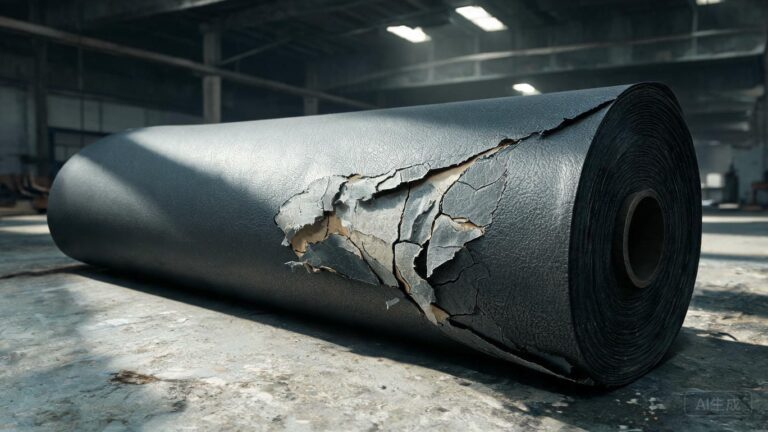
A calender line is something only a real manufacturer can show you, on site or on a live video call.
Four Types of Artificial Leather Companies
When our export team reviews a competitor or a partner, we follow one habit. We sort every artificial leather company into one of four buckets. Each type has a legitimate role. Problems start when a buyer pays manufacturer prices for trader service, or expects customization from a reseller:
- Full manufacturer: owns coating lines, mixes its own resin formulas, and runs in-house testing. Best for custom colors, large programs, and any project where batch consistency matters.
- Trading company: aggregates products from several factories and adds export service. Useful for mixed-container orders and small quantities across many SKUs.
- Converter: buys base fabric or semi-finished rolls and adds finishing, printing, or embossing. Good for decorative effects a base factory does not offer.
- Brand distributor: sells one factory’s line under exclusive terms in a region. Common in automotive and medical channels where documentation continuity matters.
The type determines what the company can promise. A trader cannot fix a hydrolysis problem, because the resin was never theirs. A manufacturer cannot easily fill a 200-meter mixed order, because its lines run in tonnage. Sourcing guides for procurement teams make the same point. Qualification starts with legal registration and export licenses. It then moves to the quality system behind the certificate wall.

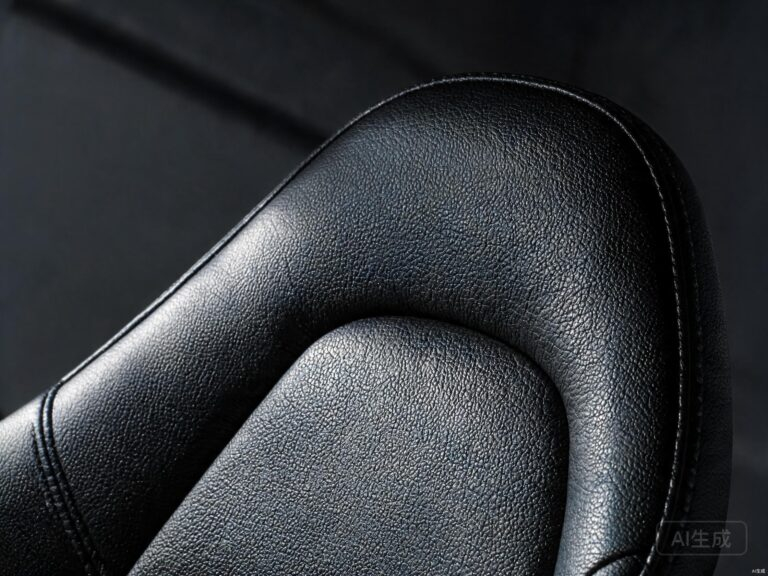
Automotive programs demand manufacturer-level documentation from the first sample to the last shipment.
Certifications That Separate Manufacturers From Middlemen
Certificates are the fastest filter, but only if you read them correctly. An ISO 9001 certificate proves a quality management system exists. It does not prove the certified company produced your material. That distinction is where most verification effort should go:
- ISO 9001: the baseline for any serious supplier. Check the certificate scope, not just its existence. The scope should name coated fabric production.
- ISO 14001 and REACH compliance: environmental management and chemical safety. European buyers cannot skip REACH, and retail chains increasingly audit it.
- OEKO-TEX Standard 100: relevant for anything touching skin, from bags to furniture.
- IATF 16949: required for automotive programs. Traders almost never hold it, because it certifies a production process.
- Application-specific tests: FMVSS 302 for flame retardancy, ISO 10993-5 for medical contact, and VOC classes for indoor air quality.
Ask for the certificate number and verify it on the issuing body’s database. A ten-minute check has saved more programs than any negotiation skill. The video below shows how we document certification coverage for automotive buyers. That industry runs the strictest documentation chain of all.
Video: how certification coverage is documented for automotive interior programs.
How to Audit an Artificial Leather Company Before the Deposit
An audit does not require an onsite visit on day one, though the largest programs always end with one. A structured remote audit takes two working days and catches most problems. Run these five steps in order:
- Step 1, verify the license: business scope must include manufacturing, not just trading. Cross-check the registered address against the factory address.
- Step 2, verify the certificates: certificate numbers, scope text, and validity dates on the issuer’s database.
- Step 3, request a live line video: ask for a real-time walkthrough of the coating line, not a produced video. Note whether staff know the equipment.
- Step 4, test the lab: request recent test reports for peel strength, Martindale abrasion, and hydrolysis resistance. Then send a sample to a third-party lab and compare.
- Step 5, run a pilot order: place a small production batch under the same terms as your target order. Sample-to-production drift is the classic failure mode.

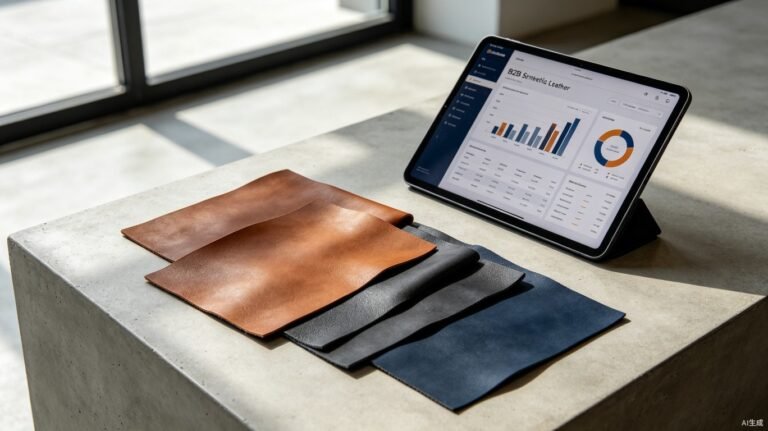
A deep swatch library signals real production history across colors, grains, and thicknesses.
Step 3 deserves emphasis. Manufacturers welcome live video calls because their floors survive scrutiny. Intermediaries tend to offer recorded tours instead, and the excuse always sounds reasonable. We publish our own production process openly for exactly this reason. Buyers who know what a coating line looks like cannot be misled by one. Does your program specify a premium material? Then ask the same audit questions of any silicone leather introduction supplier you evaluate.
Cost structure gives the audit a second angle. Ask the company to explain its price build-up: resin, base fabric, coating weight, and finishing. A manufacturer answers from its own bill of materials. A trader needs to call someone before answering. Neither answer is wrong, but the response time tells you who controls the levers when a specification changes mid-program.
Request Artificial Leather Samples
What Each Company Type Charges and Delivers
Commercial terms reveal company type faster than any website claim. A real factory quotes from its own capacity plan. A trader quotes after calling three factories. The benchmarks below reflect what our export desk sees across the coated fabric market in 2026. Treat them as screening ranges, not guarantees:
| Company type | Typical MOQ | Typical lead time | Custom color matching |
|---|---|---|---|
| Full manufacturer | 500 m per color | 7-15 days | Pantone/RAL matching in-house |
| Trading company | 100-300 m | 15-30 days | Forwarded, secondhand answers |
| Converter | 300-500 m | 10-20 days | Surface effects only |
| Brand distributor | Set by brand | 20-40 days | Catalog range only |
Two patterns in this table deserve attention. First, the lowest MOQ usually belongs to the seller with the least control over quality. Second, lead times stack with every middleman layer. If your target quote carries a lead time above three weeks, ask how many companies sit between you and the coating line.
Decision Tree: Which Company Type Fits Your Next Order?
Work through these questions in order. The first “yes” gives you your answer:
- Custom color, grain, or performance spec? Go directly to a full manufacturer. Customization dies at the trading company’s price list.
- Automotive, medical, or child-contact application? Full manufacturer with IATF 16949, ISO 10993, or the matching scheme. No exceptions.
- Many SKUs, small quantities, one container? A trading company is the efficient answer. Pay for aggregation, get aggregation.
- Decorative printing or embossing on an existing base? A converter. Check its adhesion and flex tests on the finished product.
- Long program with claims risk? Full manufacturer again, because only the producer can respond to a batch investigation.
One final note on material choice. Artificial leather chemistry decides service life more than any supplier credential. Buyers comparing options should read our factory production walkthrough. It shows how silicone-based coating differs from PU and PVC lines. For programs where replacement cost dominates, the chemistry decision usually pays for the audit ten times over.
Frequently Asked Questions
Can a trading company provide custom artificial leather?
It can forward your request to a factory. But it adds a layer between you and the people who control the formula. For custom work, most buyers end up wishing they had contracted the manufacturer directly. That wish grows stronger when a second sample round is needed.
Is a higher price from a manufacturer always better value?
Not always. But the gap is usually smaller than buyers expect. A manufacturer selling direct removes one margin and absorbs fewer handoffs. Compare quotes at the same specification level, then weigh the documentation continuity you get from the producing company.
References
- The Business Research Company, Synthetic Leather/Artificial Leather Global Market Report 2026: https://www.thebusinessresearchcompany.com/repo…
- Grand View Research, Synthetic Leather Market Size and Share Report 2026-2033: https://www.grandviewresearch.com/industry-anal…
- Global Market Statistics, Artificial Leather Market Size, Share and Trends: https://www.globalmarketstatistics.com/market-r…
- hh-mf, 5 Sourcing Pitfalls Plaguing Synthetic Leather Procurement: https://www.hh-mf.com/5-sourcing-pitfalls-plagu…