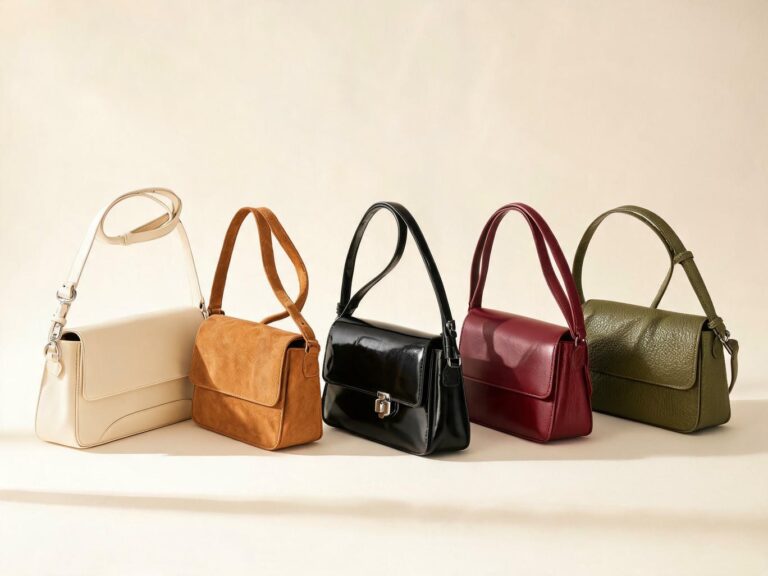
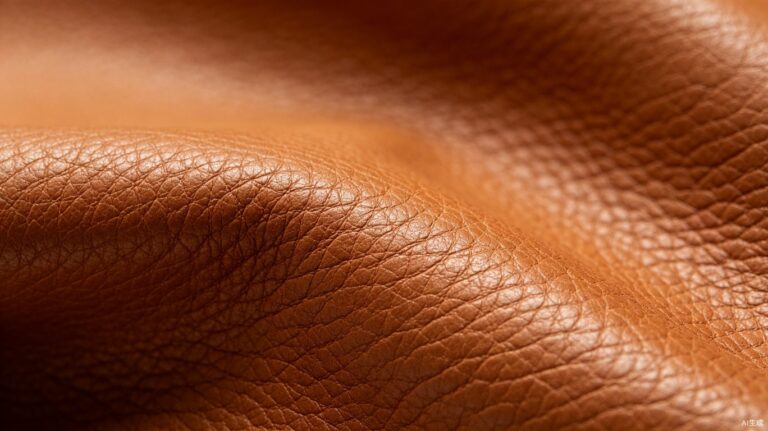
The spec sheet for a client’s new tote said almost nothing about material. One line: genuine leather, 1.2 mm, whole bag. The approved sample looked flawless on the desk. Six weeks after the bags hit the store, the handles had creased white at the grip, the tall panels bowed outward, and the folded top edge cracked at the corner. Every symptom traced back to the same mistake. Choosing leather for bags with a single thickness number ignores the fact that each part does a different job. This guide maps the thickness each part needs, and the grade that belongs there.
One Thickness for the Whole Bag Is Where Bags Fail
A handle carries pulling load and repeated grip, so it needs the thickest stock on the bag. A fold area must skive down thin or it cracks. A card pocket must stay slim or the wallet bulges. When one number covers all of them, the factory compromises somewhere. Handles get whatever is left after the panels are cut. The result reads as a quality problem in reviews, but it starts as a specification problem on page one.
The Thickness Map: Part by Part
Write thickness per part, with a tolerance and a measurement method. Industry practice for bags and business accessories looks like this.
| Bag part | Thickness range | Why |
|---|---|---|
| Handles | 1.5-2.2 mm | Supports pulling and repeated handling |
| Main panels | 1.2-1.8 mm | Balances strength, shape, and weight |
| Soft silhouettes | 0.8-1.0 mm | Slouchy shapes need drape, not stiffness |
| Wrapped piping | 0.8-1.2 mm | Wraps cleanly around the edge |
| Card pockets | 0.5-0.8 mm | Keeps stacked layers slim |
| Fold areas | 0.4-0.7 mm | Skived folds bend without cracking |
Add a written tolerance too. A 1.4 mm target might read 1.3-1.5 mm as the acceptable range, measured across several points of each hide. Natural material is never perfectly uniform, and a tolerance is what turns that fact into a QC rule instead of an argument.

Each swatch on the rack carries its own thickness range. The spec sheet should say which one goes where.
Get a Part-by-Part Spec Review
Match the Grade to Where the Bag Works
Thickness is only half the spec. Grade placement is the other half. Full-grain stock earns its cost on visible panels that age in public. High-friction zones work better with different materials entirely. Professional factories line card pockets with microfiber and reinforce behind handles, because each material performs where it works best. That mixed-material logic is exactly why programs pair a silicone microfiber leather lining with a tougher outer shell.
Synthetic panels carry their own minimums. RFQ guidance for bags sets PU at 0.9-1.1 mm with at least 500 Martindale cycles, and buyers who compare coatings get longer surface life. Where wipe-clean and wear resistance matter most, the full vs semi silicone leather choice decides whether the coating survives the season.

Grade and thickness belong together on one rack: panels, straps, and linings each carry a different card.
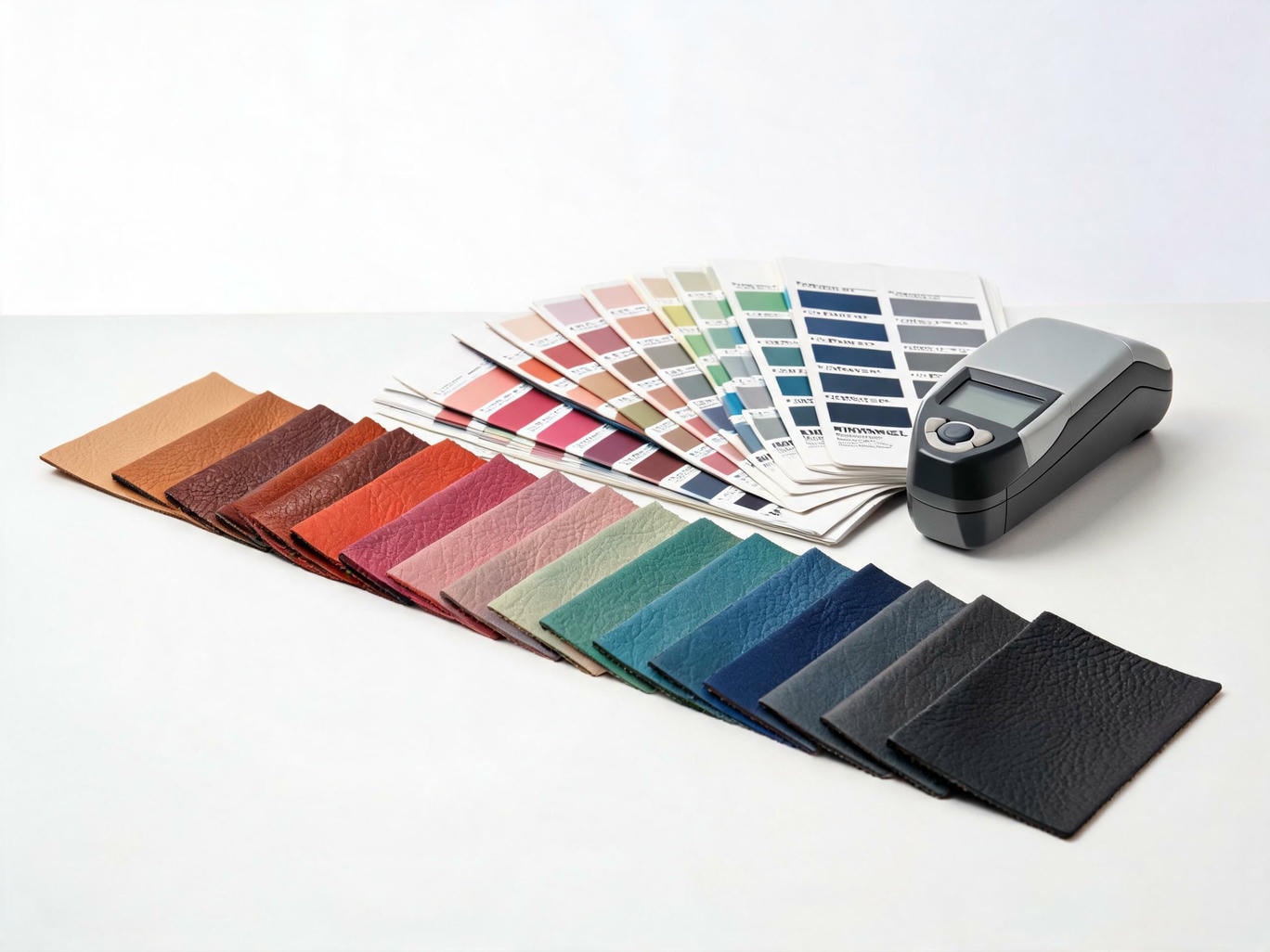
Color has to match across parts cut from different stock, so lock the palette before the thickness map goes to the floor.
A Judgment Table for Your Next Spec Sheet
| If you see… | The spec was missing… |
|---|---|
| Handles creasing white at the grip | 1.5-2.2 mm handle leather, its own line item |
| Tall panels bowing outward | 1.2-1.8 mm panels plus base reinforcement |
| Cracks along a folded top edge | 0.4-0.7 mm skived fold allowance |
| Bulky card stacks | 0.5-0.8 mm pocket stock |
| QC arguments on incoming rolls | A written tolerance, like 1.3-1.5 mm for a 1.4 target |
A spec sheet that assigns thickness per part, with a tolerance on every line, is what separates a dependable bag from a pretty sample.
FAQ
What thickness of leather is best for bag handles?
Specify 1.5-2.2 mm for handles and load-bearing strap ends. Handles take pulling force and constant grip, so they need the thickest stock on the bag. Thinner stock creases white at the grip within weeks of daily use.
Should I write one thickness for the whole bag?
No. Write thickness per part with a tolerance and a measurement method. Unclear initial specifications cause the majority of supplier disputes, and a single number for every part is the most common unclear spec in bag RFQs.
References
1. https://szoneierleather.com/leather-manufacturi… — Thickness map for bags: handles 1.5-2.2 mm, main panels 1.2-1.8 mm, piping 0.8-1.2 mm, folds 0.4-0.7 mm; tolerance example 1.3-1.5 mm for a 1.4 target (2026)
2. https://chinahandbagfactory.com/what-informatio… — RFQ leather specs: 1.2-1.4 mm structured, 0.8-1.0 mm soft silhouettes; PU 0.9-1.1 mm at 500+ Martindale; unclear specs drive most supplier disputes (2026)