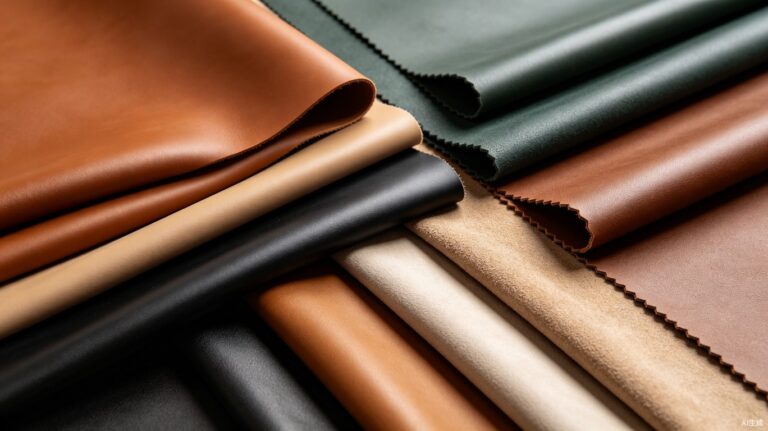
A furniture brand sent a batch of coated panels back to us last spring. The surface layer peeled off in clean sheets, and everyone blamed the coating formula first. The real fault sat one layer down: a non-woven fabric substrate too weak for the application. Fiber choice and bonding density decide whether a coated product holds together, and most buyers never inspect that layer.
This quick guide covers the essentials. What nonwovens are, how bonding changes performance, and why the substrate decides the life of coated leather.
What Non-Woven Fabric Actually Is
Non-woven fabric is a fiber web bonded directly by mechanical, thermal or chemical means. No yarn is spun, no loom is threaded, no loops are knitted. Fiber goes in one end of the line and finished fabric sheet comes out the other. Four technologies dominate production:
- Needle punch: barbed needles create dense mechanical bonding
- Spunbond: continuous filaments bonded by heat
- Meltblown: ultra-fine fibers for filtration media
- Spunlace: high-pressure water jets entangle the web

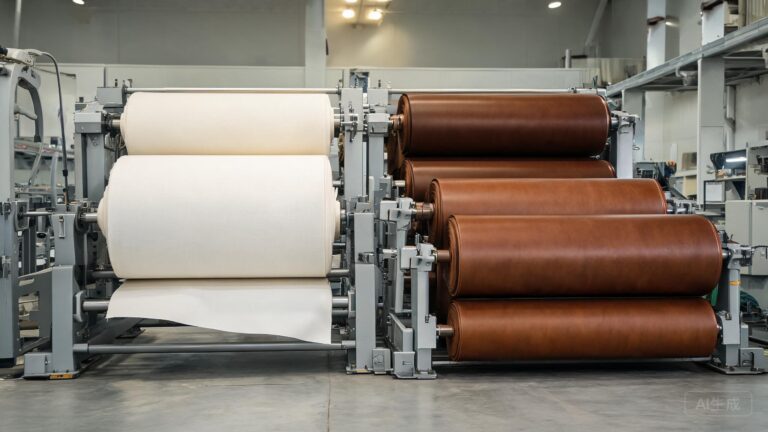
Base fabric rolls waiting for coating: the substrate layer that buyers rarely see.
The scale of this quiet industry surprises people. The nonwovens market reached $52.6 billion in 2023 and is projected to hit $75.7 billion by 2030 at 4.9% annual growth. Polypropylene holds a 45.3% share, and Asia-Pacific supplies 43.1% of global output. The material hides inside masks, geotextiles, filters and automotive cabins. It also forms the backing of what silicone leather is made of.
Non-Woven Fabric vs Woven: What the Structure Buys
Woven fabric interlaces two yarn sets at right angles, which delivers high tear strength and long reuse life. Nonwovens trade some of that strength for speed, uniformity and cost. A single continuous line turns polymer or staple fiber into fabric in one pass. Thickness tunes from whisper-light mask layers to load-bearing geotextile.

Calender rollers consolidate the fiber web: bonding density is set at this stage.
For coated products the practical takeaway is simple. Woven wins where tear propagation matters most. Nonwoven wins where uniform thickness, roll-to-roll consistency and price per square meter drive the decision. Neither is better in the abstract; the application picks the winner.
Ask Our Engineers About Substrate Options
The Substrate Under Your Coating
Synthetic leather is a sandwich: skin layer, sometimes a middle foam, and the nonwoven substrate that carries every one of them. Premium constructions use a microfiber nonwoven saturated with PU, which mimics the collagen bundle structure of genuine hide. Cheap constructions use low-density needle punch that saves cents per meter and repays the saving in delamination claims.
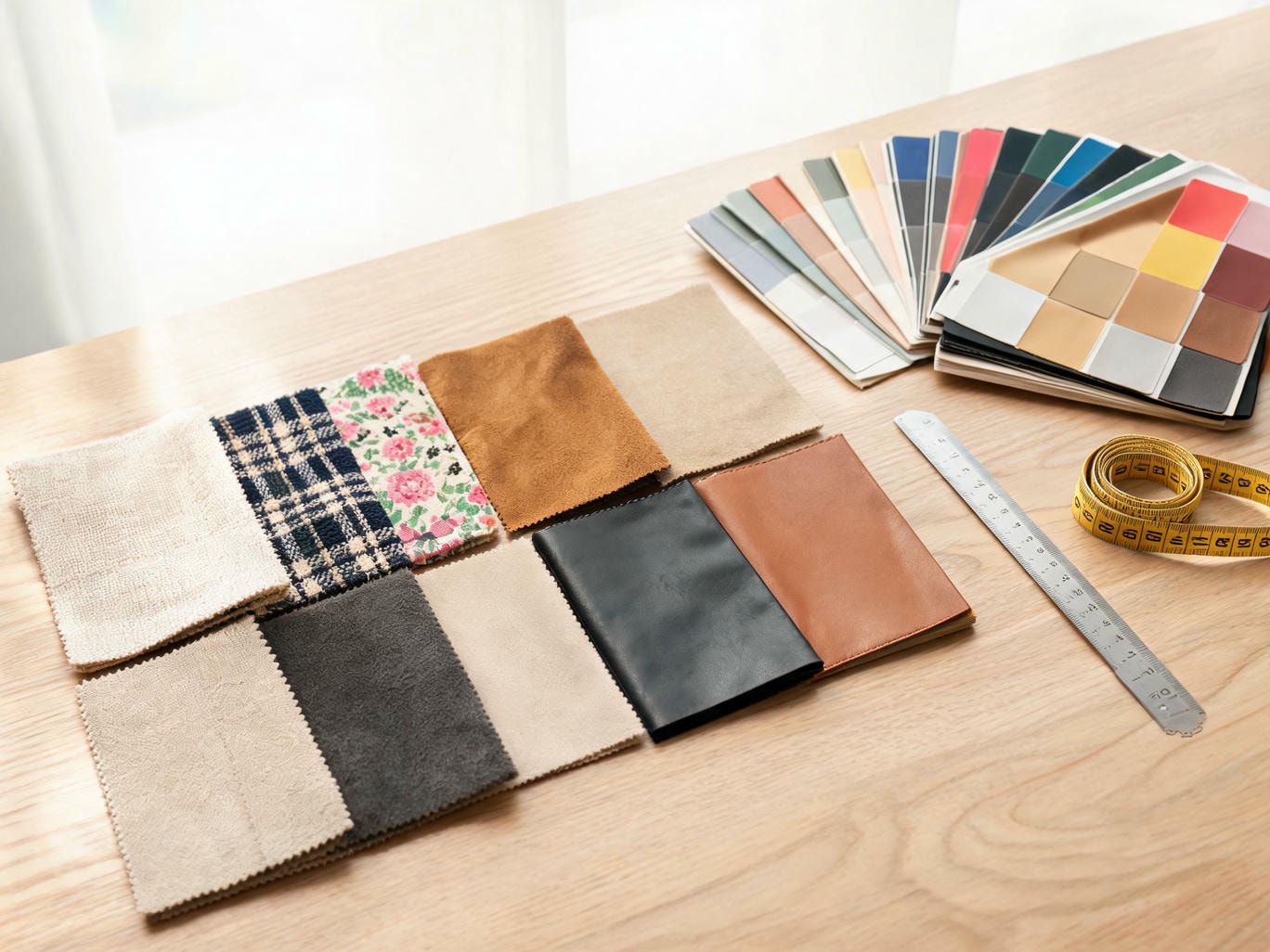
Textile and coating layers together: the bond between them is the product.
In our coating plant, peel strength is the number we watch when a new substrate arrives. Bonding density, fiber type and primer chemistry interact in ways a datasheet cannot predict. Every silicone microfiber leather batch gets a peel check before release. The video below shows how substrate and coating bond on our line.
Watch substrate and silicone coating bond into a single peel-resistant structure.
Choose the Substrate Like You Choose the Skin
The skin gets the compliments, but the non-woven fabric underneath decides whether the product survives its warranty period. Inspect the substrate, ask for peel strength data, and treat bonding method as a purchasing decision rather than a factory detail.
References
- https://www.grandviewresearch.com/industry-anal… — Nonwovens market $52.56B (2023) to $75.74B (2030), CAGR 4.9%; PP 45.3%; Asia-Pacific 43.1%
- https://vinanonwoven.com/en/news/what-is-nonwov… — Four nonwoven technologies: needle punch, spunbond, meltblown, spunlace (2026)