Last spring, a procurement director showed us two spec sheets from the same hotel renovation. Both described the seating textile as a durable fabric material. One backed the phrase with a test report. It listed 200,000 Martindale cycles, EN 13773 Class 4, and a hydrolysis clause modeled on ASTM D3690.
The other offered the adjective alone. Eighteen months later, the seats behind the second door were peeling at every seam, and the replacement budget had grown by five figures. The difference was never the word choice. It was the paperwork attached to it.
I review contracts for a living, and that story repeats with depressing regularity. “Durable” is not a property you can inspect on arrival. It is a bundle of test clauses, and every clause has a number, a method, and a pass line. This article lists the standards that turn the phrase into enforceable text, and the five clauses we insist on before any purchase order is signed.
What Counts as a Durable Fabric Material in a Contract
Start with the finding that surprises most buyers. The Association for Contract Textiles surveyed its member companies on this exact question. It asked whether surface abrasion was the leading cause of fabric failures in the field. The answer was no. Field failures come mostly from inappropriate cleaning, missing maintenance, physical abuse, and wrong-application installs. Abrasion test results, on their own, are poor predictors of service life.
The survey comes with a second warning: test variance. A 2009 ACT verification study found results on the same fabric can differ by at least 60 percent between runs.
ACT states plainly that a fabric with twice the abrasion cycles does not deliver double the life. So if one supplier quotes 40,000 cycles and another quotes 80,000, the second is not automatically twice as durable. Both may sit inside the same performance band once measurement noise is considered. That band logic is why our quotations print the method, the abradant, and the cycle count together.
For procurement, the lesson is structural. A durable fabric material is not the one with the biggest rub count. It is the one whose spec sheet names the test method, the abradant, and the pressure. The threshold must also match the application. Vague claims cannot be enforced. Test clauses can.

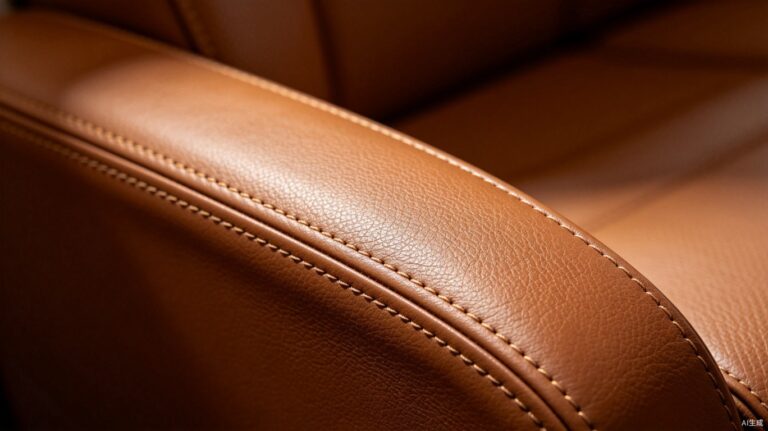
Every durability claim in this article ends at a bench like this one.
Abrasion Tiers: The Numbers Behind a Durable Fabric Material
Abrasion testing still matters; it just needs context. Two machine families dominate. The Martindale, standard in Europe, rubs the fabric in a figure-of-eight pattern against worsted wool under ISO 12947. The Wyzenbeek, standard in North America, rubs it in straight strokes against cotton duck and reports double rubs (DR). The two scales are not interchangeable, which is why the ACT guideline lists both.
ACT’s voluntary guideline for woven and knit upholstery sets two tiers. Low-traffic private spaces get 15,000 double rubs Wyzenbeek, or 20,000 Martindale cycles. High-traffic public spaces get 30,000 double rubs, or 40,000 Martindale cycles. Coated fabrics carry their own bar: 50,000 double rubs for high-traffic use. Anything quoted above the high-traffic tier carries an ACT-mandated disclaimer. Extra cycles, ACT notes, are not an indicator of lifespan.
Now do the arithmetic on a real project. A hotel lobby chair is often estimated to see roughly 10,000 rubs per month. Over a typical 18-month replacement cycle, that is 180,000 rubs of cumulative wear.
Sourcing guides for hospitality seating therefore state that contract-grade PU leather must exceed 100,000 rubs. Ordinary residential fabric never approaches that number. It also explains why the most durable upholstery fabric for public spaces is specified far above the residential tier. An abrasion resistant fabric claim without a test method remains meaningless in negotiation. Multiply that arithmetic by 200 rooms, and the specification becomes the budget.
Our own contract work follows the same logic. The High Performance line in our range is sampled at 200,000+ cycles under ISO 12947. Heavy duty upholstery fabric for cinemas, airports, and transit seating needs headroom above the 50,000 DR coated-fabric floor. The clause to write is simple. “Martindale abrasion per ISO 12947, minimum 40,000 cycles for public-space seating, test report per shipment lot.”
One more number belongs next to the rub count: tear strength. Abrasion says nothing about a seam snagged by a luggage corner or a staple edge. We therefore pair the abrasion clause with a tear resistant fabric material requirement, stated in newtons. The ASTM method must be named on the certificate. A contract grade fabric quotation that answers both, with method and value printed out, earns a second meeting. One that answers neither is just a catalog page.

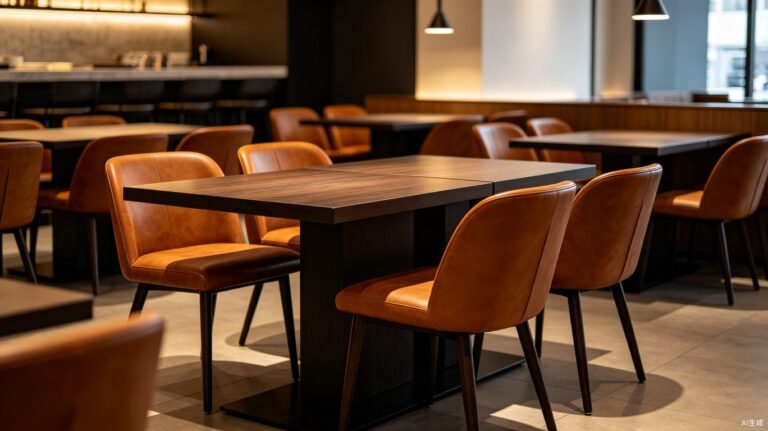
Inspection is where contract clauses become factory habits.
The Hydrolysis Clause Your Spec Sheet Is Missing
Here is the clause that separates a professional schedule from a catalog. Abrasion tests measure surface wear. They say nothing about hydrolysis, the moisture-driven breakdown of polyurethane polymer chains that cracks coatings from the inside out. A fabric can post an impressive rub count and still peel in a humid lobby within two years.
ASTM D3690, the performance specification for vinyl- and urethane-coated indoor upholstery, addresses this directly. Its hydrolytic stability clause requires coating adhesion to retain at least 75 percent of original strength after exposure. The same clause demands no cracking or delamination at 25,000 surface-abrasion cycles, and no breaks at 15,000 flex cycles.
The standard also sets baseline coating adhesion at 525 N/m and caps plasticizer loss at 10 percent. Migrating plasticizers are what accelerate the failure.
The field data explains why this clause earns its place. Independent hotel-seating analysis puts the irreversible hydrolysis threshold for standard polyester-urethane at 70 percent relative humidity. Above that line, tensile strength falls by roughly 35 percent per year. The documented outcome is an 18-month peeling cycle. Specifying correctly the first time saves more than $15,000 in avoided replacements per large property. Our hydrolysis-resistant silicone leather page details why silicone chemistry escapes this mechanism.
The short version: silicone’s backbone is Si-O, not the ester bonds water attacks, so there is no hydrolysis clock ticking. We verify it in the chamber anyway: 85 degrees C, 85 percent relative humidity, 14 weeks, no delamination or strength loss. We publish the full comparison with PU on our silicone versus PU analysis page. PU seating typically serves 3 to 5 years before surface failure; silicone-coated material is rated for 10 to 15. For a procurement calendar, that difference converts a three-year furniture refresh into a decade of quiet operation.

Two lifespans, one procurement budget. The hydrolysis clause decides which.
Fire and Chemistry: Compliance Is Part of Durability
A fabric that fails inspection is not durable, whatever its rub count says. In Europe, EN 13773 classifies the burning behavior of vertically oriented fabrics from Class 1 (best) to Class 5. Hospitality buyers commonly specify Class 1 for drapery zones, tested through the EN 1101 and EN 13772 chain. Transport interiors carry their own bar, FMVSS 302 in the US automotive market.
One procurement habit prevents expensive surprises: require the certificate to name the standard, the class, and the ignition source. A document that only says “flame retardant” is not a document.
Chemical durability belongs in the same clause family. Public seating is disinfected thousands of times over its life. Coatings that cannot tolerate alcohol or quaternary ammonium agents age fast, whatever their abrasion numbers say. Our Super Flame Retardant line carries EN 13773 Class 4 certification. The formulation is 100 percent solvent-free, with non-detect VOC under ISO 16000-6, so heavy cleaning schedules do not trade air quality for longevity.
Structural numbers deserve the same contract language. ASTM D3690 Grade A demands a breaking strength of 244 N minimum, in both directions. Tongue tear must reach 27 N minimum. Those figures sound abstract until housekeeping drags a loaded chair across a tile floor. We publish tensile at 15+ N/mm and tear at 20+ N on our Classic line, with 35+ N tear on the Rigid Substrate line. That turns durable fabric material for furniture into physics rather than hope. Watch how this performs as an engineered system in the clip below.
Engineering-project durability: from chamber testing to installed seating.
Five Clauses to Enforce Before You Sign
Everything above reduces to a five-line schedule. We use it for cinema seating, contract furniture, and transport programs. It fits on one page of a tender. The table below is the version we recommend to buyers evaluating any durable fabric for sofa, seating, or panel programs.
| Durability Clause | Standard & Method | Minimum to Enforce | What It Prevents |
|---|---|---|---|
| Abrasion | ISO 12947 Martindale (or ACT Wyzenbeek) | 40,000 cycles / 50,000 DR coated, high traffic | Surface wear claims with no method named |
| Hydrolysis | ASTM D3690, section on hydrolytic stability | Adhesion retains 75% of original strength | Peeling coatings in humid interiors |
| Flex endurance | ASTM D3690 flexing requirement | No breaks at 15,000 flex cycles | Cracks at seat edges and seams |
| Flame class | EN 13773 / FMVSS 302 by occupancy | Class named on certificate, per project code | Failed inspections and re-upholstery orders |
| Chemical resilience | ISO 16000-6 VOC; disinfection compatibility | Non-detect VOC; alcohol-safe surface | Coating breakdown from cleaning cycles |
Turn that schedule into action with five steps. First, delete every unnumbered durability adjective from your RFQ. Second, name the method and abradant for abrasion, not just the cycle count. Third, insert the ASTM D3690 hydrolysis language even if suppliers have never seen it; ask, and see who answers. Fourth, demand certificates that cite standard, class, and ignition source. Fifth, tie a lot-sampled test report to each shipment, as our furniture and sofa program buyers already do. Buyers who send this schedule before sampling always receive faster, sharper quotes.
A durable fabric material is not the one with the loudest brochure. It is the one whose supplier signs the schedule above without flinching. When a quote arrives with Martindale tiers, hydrolysis retention, and a named flame class, you have found a factory. A catalog page would have stalled on the first question.
Talk to Our Engineers About Contract Test Data
Request Samples with Full Test Documentation
References
- https://contracttextiles.org/learn/abrasion-dis… — ACT Voluntary Abrasion Guidelines and field-failure survey findings.
- https://store.astm.org/d3690-02r08.html — ASTM D3690 performance specification for vinyl- and urethane-coated upholstery, hydrolytic stability requirements.
- https://neveitaliafurniture.com/hotel-pu-leathe… — Contract-grade PU leather durability in hotels: rub counts, replacement cycles, and cost.