A design team once specified a gorgeous woven textile for a hotel lobby feature wall. It photographed beautifully. Within a year, seams had relaxed. The padding had flattened behind every chair rail. The local fire inspector refused re-certification because nobody had checked the fabric’s flame-spread class. Decoration with fabric fails this way constantly: the concept wins, the material loses.
Our R&D view is blunt. Decoration with fabric is a design decision and a materials decision at the same time. The second half is where projects actually get hurt. This article walks through five applications where that plays out, and the numbers each one demands.
Where Decoration with Fabric Works Hardest
The market keeps voting for fabric surfaces. Wall paneling alone is projected to grow from $11.35 billion in 2025 to $16.81 billion by 2031, a 6.76% CAGR, as flat paint gives way to textured, functional surfaces. Home furnishing fabrics, the wider pool that decorators buy from, reached $115.5 billion in 2025 with upholstery as the largest application at 38.5% of it. Five applications dominate the spec sheets.
First, padded and upholstered wall panels. They turn a corridor or headboard wall into something tactile. In reality they are furniture in disguise. Hands, luggage, and vacuum cleaners all abrade them. Second, acoustic fabric panels, where the cloth is the visible skin over an absorptive core. Third, ceiling and draped installations, where gravity and dust test every seam. Fourth, room dividers and screens, which flex and get repositioned constantly. Fifth, statement furniture wraps, from reception desks to bar fronts, where impact resistance matters more than drape.

Every decorative surface starts as a drawing, then becomes a tool, then a material spec.
The trend data backs the shift. Acoustic slat panels have become one of the fastest-growing residential features. Full-width slat walls now replace standalone upholstered headboards in bedroom design. Offices now specify acoustic treatment on the camera-facing wall to clean up video-call audio. The coverage is roughly 15 to 20% of the room’s wall area. Decoration is no longer a finish layer. It is architecture.
Acoustics: What Decoration with Fabric Adds to a Room
Fabric does acoustic work that hard surfaces cannot. Fabric-wrapped acoustic panels pair an absorptive core with a decorative skin. Two-inch panels reach high NRC values that control mid-to-high-frequency reverberation. In plain terms, the panel absorbs reflected sound instead of bouncing it, which shortens reverberation time and makes speech intelligible. The dB drop on paper looks modest. The room feels transformed.
This is why we treat the face material as a functional component, not trim. A dense, closed surface keeps the panel’s rating stable after years of dust and cleaning. Our silicone leather introduction explains the polymer logic behind that stability. A porous decorative weave, by contrast, can load up with dust and quietly lose absorption. Specify the skin as carefully as the core.

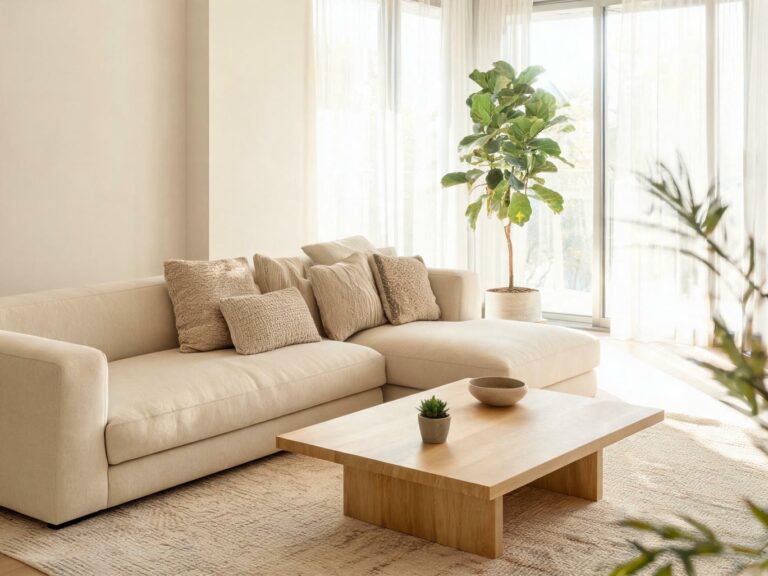
Decorative panels doing double duty: visual warmth in daylight, reverberation control at showtime.
Fire Ratings: Where Beautiful Rooms Fail Inspection
Fire performance is the check that kills decorated interiors, and it rarely shows up in mood boards. Wall and ceiling fabrics sit in exactly the zones that building codes treat most strictly, because flame spread across a vertical surface is fast. Buying guides for decorative panels list fire rating right next to acoustic performance as a top purchase criterion, yet orders still arrive without documentation.
Demand the certificate before the deposit, not after. Our decorative-grade materials carry EN 13773 Class 4, the “super flame retardant” band for building and transport interiors, alongside near-zero VOC chemistry verified under ISO 16000-6 so the finished room does not trade air quality for aesthetics. If a supplier cannot name the standard and the class, the fabric is not ready for a contract interior.
Talk to Our R&D Team About Your Design
The Spec Sheet Before Production Starts
A decorator hands us a mood board; an engineer has to hand back numbers. These are the four we insist on before any decorative project goes to production.
| Decoration Demand | What It Protects | The Number to Demand |
|---|---|---|
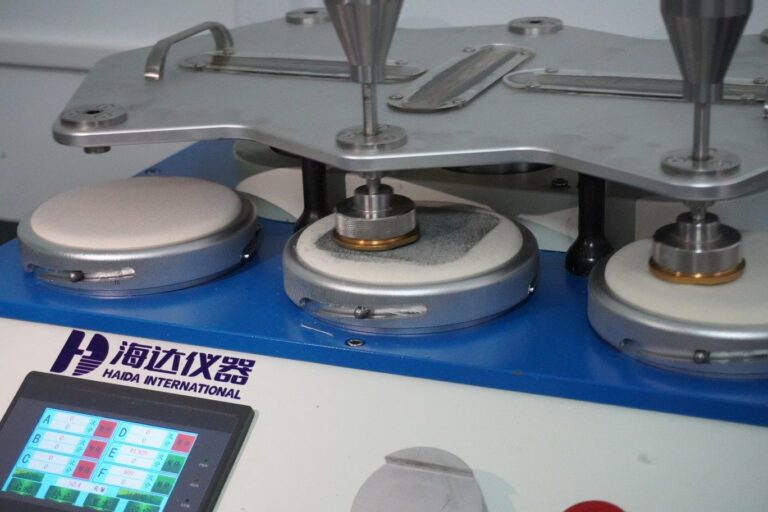
| Touch and abrasion | Panels and headboards handled daily | Martindale 50,000+ cycles (ISO 12947) |
| Fire class | Inspection sign-off in public rooms | EN 13773 Class 4, documented |
| Color stability | Sunlit lobbies and window walls | Grade 4-5 fastness; UV-stable 1,500+ h |
| Design freedom | Brand palettes and textures | 100+ textures; Pantone/RAL custom colors |

Sample selection: aesthetics on top, test reports underneath.
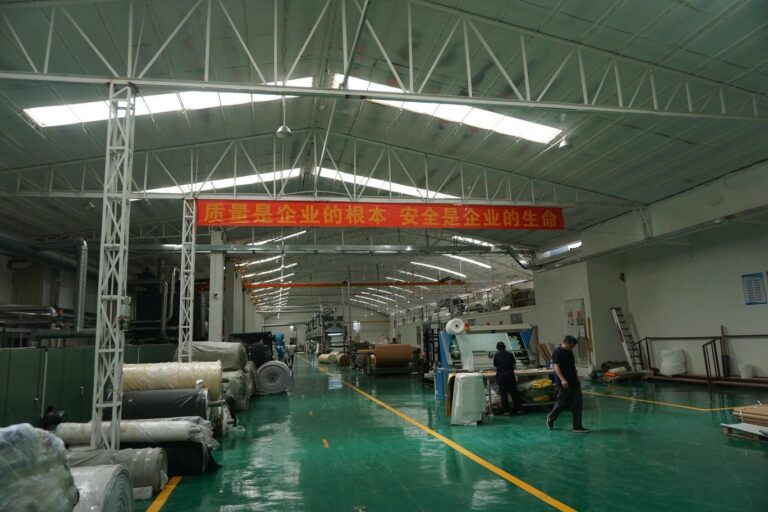
Texture variety is engineered, not found. Embossed grains, weaves, and metallic finishes all come from release-paper and tooling work on the production line, which is why our factory production overview reads like a design catalog. The watch below shows how a decorative pattern moves from concept to a repeatable, cleanable surface at production width.
From pattern concept to finished decorative wall surface.
Request Decorative Fabric Samples for Your Project
Decoration with Fabric Is Moving Past Flat Surfaces
Decoration with fabric is heading somewhere interesting: surfaces that are decorative, acoustic, and code-compliant in one layer, specified in Pantone codes instead of trade names. Designers will keep pushing texture and form. Our job on the R&D side is to make sure the material underneath keeps every promise the render made, five years after handover.
Which fabric decoration application fails most often?
Upholstered wall panels in high-touch zones. They look like decoration and get treated like furniture, so padding flattens and seams relax where hands and luggage work the surface. Abrasion data, not appearance, predicts their lifespan.
Can a decorative surface also be easy to clean?
Yes, if the face material is non-porous. Coated silicone surfaces wipe clean with alcohol-based agents and hold Grade 4-5 color fastness through repeated cleaning cycles. Woven decorative fabrics usually cannot promise both, which is why hospitality projects increasingly mix the two by zone.
About TOPSUN R&D
Our R&D team engineers full-silicone coated fabrics for decorative, acoustic, and contract interiors, supplying projects in 30+ countries with documented fire, abrasion, and color data.
References
- https://www.intcodecor.com/news/company/2026/20… — wall panel market $11.35B (2025) to $16.81B (2031), CAGR 6.76%; acoustic slat panel trends
- https://pmarketresearch.com/chemi/home-furnishi… — home furnishing fabric market $115.5B (2025), upholstery 38.5% of applications
- https://www.memtechacoustics.com/products/archi… — fabric-wrapped acoustic panels, 2-inch NRC performance, fire-rated construction