What separates a fabric that leans back in a lounge from one that survives a bleach bucket? Buyers tend to read fabric applications as one continuous catalog, ranked by price and color. The formulation bench says otherwise. Applications split into three chemical worlds, and each world pulls a different set of build levers.
This article compares the three worlds side by side. It names the levers that change on the line. It shows the market weight behind each world. It closes with a verdict table you can carry into your next application brief.
Where Fabric Applications Actually Diverge
Market reports sort coated fabrics by application: transportation, protective clothing, industrial, roofing, and furniture and seating. By end-use industry, aerospace and defense leads at 23.6% of the market in 2025. Those segments count revenue well. They hide what an engineer needs, which is why two applications that look adjacent can demand opposite builds.
On the bench, every application answers to one of three drivers. Comfort worlds buy a hand. Chemistry worlds buy survival against agents. Code worlds buy a certificate. The rest of this article walks each world and the build it pulls.

Same line, different builds: the application decides the settings.
World One: Comfort-Driven Applications
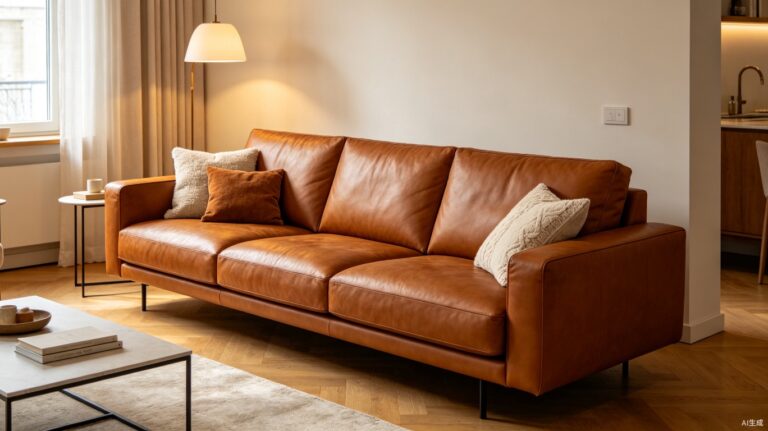
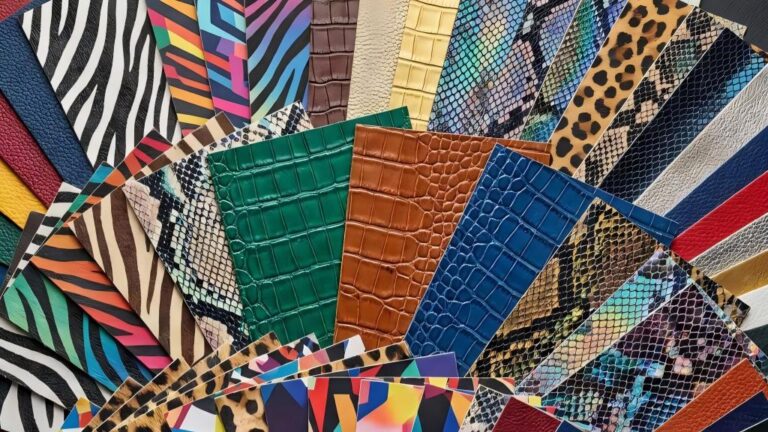
Furniture, fashion, bags, and salon seating live here. The spec is a hand: softness, drape, texture depth, and a color that matches the mood board. The build levers follow. Release paper grain sets the surface, with catalogs running past one hundred textures from lychee to matte flat. Layer construction sets the fold. Thin builds near 0.3 mm read soft, while structured builds hold shape on a sofa arm.
Color is a lever too, not a swatch luck. Program work matches Pantone and RAL codes and then verifies the match with a delta E reading. Eco-sourced constructions such as silicone leather on PET base serve this world when the brief adds a sustainability line.
The watch-out in this world is adjectives. “Buttery” cannot be quoted or repeated across orders. The proof versions are fold-cycle counts, softness fixtures, and color fastness at grade 4 to 5. That way the shade that won the sample also survives the cleaning crew.
World Two: Chemistry-Driven Applications
Healthcare, food service, marine, and outdoor RV seating live here. The spec is a chemical list: quaternary ammonium wipes, salt water, summer UV, and years of humidity. The build levers change. Barrier thickness rises, because the coating is armor. Chemistry turns inert: silicone carries no plasticizers to migrate, bleed, or feed hydrolysis.
Process detail decides the barrier. Coating science guides describe dip, spray, and calendering routes, with computer-controlled systems holding thickness uniform across the width. Pretreatment and surface tension control govern adhesion, which is why a well-built coated fabric does not delaminate when the chemical list gets aggressive. This is also where the silicone versus PU comparison stops being academic: PU drinks water and hydrolyzes, silicone does not.
The numbers that prove this world are chamber-grade. Hydrolysis runs at 85°C and 85 percent relative humidity for 14 weeks. Salt spray passes 1,000 hours. UV cabinets pass 1,500 hours with fastness at grade 4 to 5.

RV and marine builds: the chemical list writes the spec.
World Three: Code-Driven Applications
Automotive, aviation, and baby products live here. The spec is a regulation: FMVSS 302 flame behavior, VOC ceilings, cold flex at minus 40 degrees, and infant-safety certifications. No amount of softness buys entry. The build levers sit in the formulation and the paperwork. Flame behavior comes from the chemistry itself rather than a surface spray, and silicone burns to a non-toxic ash with no dripping. VOC compliance comes from the process, which is why solvent-free coating lines matter more here than anywhere else.
The market already voted on this world. Aerospace and defense alone takes 23.6% of coated fabric demand in 2025, and code-bearing seating fills aircraft cabins, rail cars, and EV cabins. See our automotive interiors program for how the file assembles.
The watch-out: certificates attach to programs, not to catalogs. A flame report earned for one cabin spec does not transfer to the next one. Ask which program the file covers, and at which thickness.
Inside the R&D bench where application builds are set and tested.
Match Your Application to a Build
What Fabric Applications Change in the Build
Step back and three levers run through every world. The surface lever is the release paper grain and finish. The barrier lever is thickness plus chemistry. The documentation lever is the test and certificate file. The world decides which lever leads, and the line reconfigures around it: same coater, same dryer, different settings, different release paper, different file.
Silicone coating spans all three worlds because it scores on each lever. It takes deep grain and soft folds for comfort, shrugs off bleach and salt for chemistry, and ships solvent-free with an inherent flame profile for code. That range is why one material family keeps showing up in all three columns of the table below.

The process flow holds; only the settings change per world.
A Verdict Table for Your Next Application Brief
| Application Family | Leading Build Levers | Watch-Out |
|---|---|---|
| Comfort-driven: furniture, fashion, bags | Release paper grain, soft layer build, Pantone/RAL color match | Demand fold cycles, softness data, and grade 4-5 fastness instead of adjectives |
| Chemistry-driven: healthcare, marine, RV, outdoor | Barrier thickness, plasticizer-free inert chemistry, pretreatment adhesion | Name the chemical list; demand hydrolysis, salt spray, and UV files |
| Code-driven: automotive, aviation, baby | Inherent flame chemistry, solvent-free VOC process, cold flex at -40°C | Certificates follow programs; confirm the file covers your spec and thickness |
The verdict is short. The world sets the levers, and the levers set the questions. A brief that names its world walks into the supplier meeting with the right tests already attached, and the build comes back right the first time.
Request Application-Matched Samples
References
1. https://www.databridgemarketresearch.com/report… – Coated fabrics market: application segments span transportation, protective clothing, industrial, roofing, and furniture and seating; aerospace and defense holds 23.6% of end-use demand in 2025.
2. https://www.plabric.com/blog/understanding-the-… – The science behind coated fabrics: dip, spray, and calendering routes, computer-controlled thickness uniformity, and pretreatment steps that govern coating adhesion.