Which vegan leather fashion line survives its first warranty season? Ask that in a sourcing meeting and the room usually splits. Half the table sees a $26.8 billion opportunity by 2033. The other half has handled returned bags with peeling corners. Both halves are right, and the difference between them is rarely the label. It is the material under the label.
Here is the short answer up front. Most vegan leather on the market is plasticized PU or PVC bonded to fabric. The bond is the weak point. The sections below compare the four material families, the failure timelines, and the cost those failures land on a brand.
| Material Family | Typical Service Life | Failure Mode | Program Risk |
|---|---|---|---|
| PVC vegan leather | 1-3 years | Plasticizer loss, surface cracking | Warranty claims on entry-price lines |
| PU vegan leather | 3-5 years (premium) | Coating-to-fabric bond peel | Returns at corners, seams, elbows |
| Bio-based vegan leather | Emerging | Durability data still thin | Scaling and supply uncertainty |
| Silicone leather | 10+ years | No plasticizer to lose | Higher unit cost at sampling |
What Vegan Leather Fashion Is Actually Made Of
Synthetic materials held 89.4 percent of vegan leather segment revenue in 2025, and PU is the workhorse inside that share, at roughly 90 percent of production. The plant-based story, cactus and mushroom and pineapple, is real but niche. It ships in capsules and press releases far more often than in core programs. Most of what sells under the vegan leather fashion banner this season is chemistry, not agriculture.
Every one of those synthetics shares the same architecture: a plastic face bonded to a fabric backing. The bond is the weak point, because bending works the adhesive line and friction wears the thin topcoat. Plasticizers keep PU and PVC soft, and plasticizers migrate. When they leave, the face goes brittle and lifts away from the backing. Silicone leather removes that failure mode by design, since its polymer carries no plasticizer at all.

Plant-based leather samples in a fashion material library. Bio-based options are real, but they ship in capsules, not core programs.
The Peeling Timeline, From Six Months to Five Years
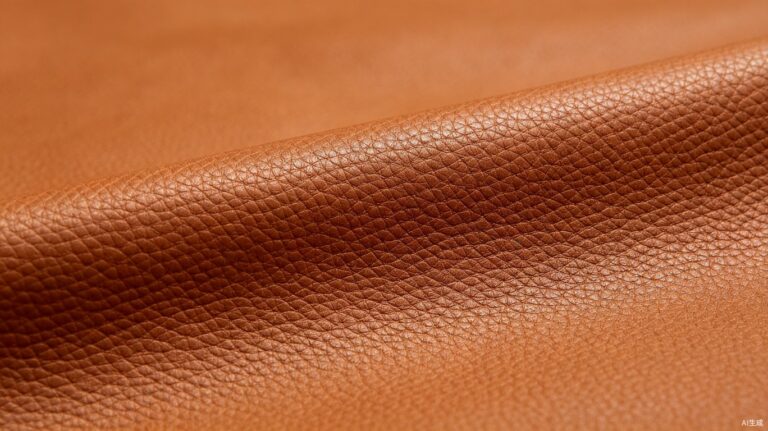
Failure timelines cluster at two ends. Low-grade PVC or poorly backed PU can show degradation inside 6 to 12 months, with heat, friction, and moisture speeding the peel at bag corners, jacket elbows, and seat seams. Premium coatings stretch the runway to 3 to 5 years. Once the surface cracks, the damage is irreversible; there is no reconditioning path the way there is for full-grain hide.
Material rated at 200,000 Martindale cycles tells a different story. Our silicone leather carries that abrasion number (ISO 12947-2), plus flex resistance past 100,000 cycles, because there is no plasticizer migrating out of the face. The material wears on the same timeline as the hardware around it, which is the timeline a warranty is actually written against.

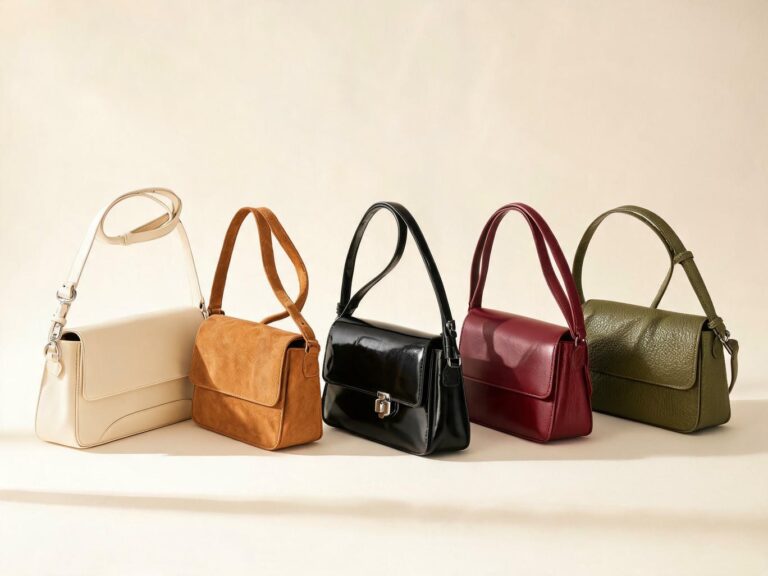
Crossbody bag in leather. Corners and strap anchors take the highest flex load, which is where bonded coatings peel first.
Where the Cost Lands: Returns, Reviews, and Reorders
Now put a number on the failure. A bag factory guide written for brands puts it plainly. Cheap PU or PVC that cracks within 1 to 3 years hits warranty claims. It drives one-star reviews about durability. It burns brand trust you paid years to build. The material saving on the bill of materials is measured in cents per unit. The return is measured at full retail price plus freight.
Sourcing teams have noticed. Demand keeps climbing at an 11.4 percent CAGR through 2033, and a growing share of that growth lands on programs that can document durability, not just promise it. Working with a serious vegan leather supplier means flex and abrasion certificates arrive with the sample card, not after the first claim.

Metallic-sheen sample strips from the swatch wall. Seasonal color stories still need a substrate that survives the season.
For fashion and sports programs, the calculus is sharper, because those products flex, sweat, and live in gyms. A coating that survives a shelf survives nothing there. Silicone-backed panels pass the flex rig and the cleaning schedule in the same run, which is why that segment dominates our sample requests.
Premium bag program footage: silicone leather panels finished for high-end leather goods production.
The Verdict for Vegan Leather Fashion Programs
The verdict depends on the promise the product makes. A label that says two seasons can ride on budget PU. A label that says three years needs premium coating chemistry and test certificates. A label that says this bag outlives the trend cycle needs a material with no plasticizer to lose, which is the whole argument for silicone.
| If Your Priority Is | Specify |
|---|---|
| A one-season capsule | Budget PU or PVC, priced to walk away from |
| A 2-3 year warranty | Premium PU with documented coating tests |
| Daily flexing (bags, jackets, seats) | Silicone-backed panels with flex certificates |
| A 5+ year brand promise | Silicone leather, plasticizer-free, 10+ year service life |

A designer sketches the next season’s line. The material decision on the spec sheet outlives every sketch on the wall.
Vegan leather fashion wins when the material matches the promise. Choose the family by warranty length, demand the certificates with the samples, and the returns column stays quiet.
Request Vegan Leather Fashion Samples
References
1. https://www.grandviewresearch.com/industry-anal… — Vegan leather market valued at USD 11.6 billion in 2025, forecast to USD 26.8 billion by 2033 at 11.4% CAGR, with synthetic materials at 89.4% share.(2026)
2. https://www.alibaba.com/product-insights/vegan-… — Low-grade vegan leather degrades within 6-12 months while premium coatings last 3-5 years, with peeling concentrated at high-stress zones.(2026)
3. https://bsbagfactory.com/news/vegan-leather-vs-… — Cheap PU or PVC cracking after 1-3 years drives warranty claims, durability complaints, and brand trust damage.(2025)