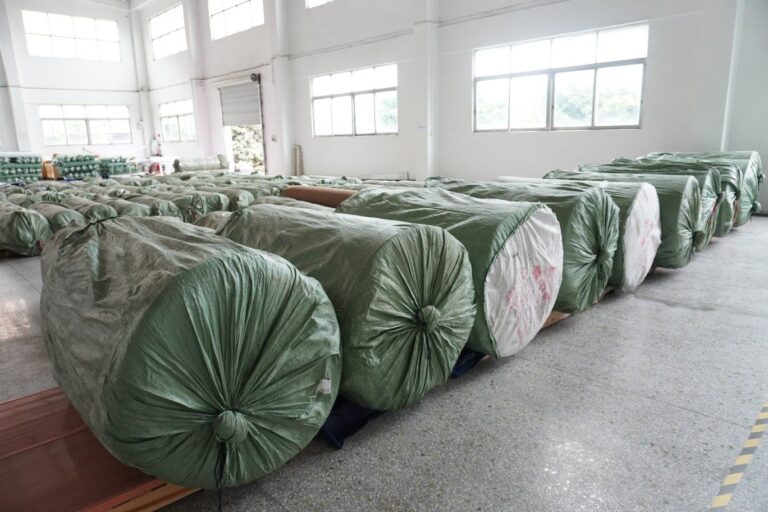
Type a and a eco products into a search bar. You land on a New Delhi textile house that has spent eighteen years attaching GOTS certificates to organic cotton, hemp and rPET fabrics for more than 400 brands across 16 countries. The reason a buyer in London or Rotterdam can find them at all is not the word “eco”. It is the paperwork behind it.
That distinction matters more in 2026 than at any point in the category’s history. Since 27 September 2026, EU rules prohibit products being marketed with generic green claims such as “eco-friendly” or “green” unless the seller can demonstrate recognized excellent environmental performance. The conclusion for sourcing teams is blunt. Adjectives are now a liability, certificates are an asset. This guide breaks down:
- what the new rules ban
- what evidence still works
- the five documents that separate a certifiable supplier from a well-branded one
| Claim Wording You Will Still See | Status Since 27 September 2026 (EU) | Evidence That Replaces It |
|---|---|---|
| “Eco-friendly” / “green” / “natural” (generic) | Banned without proof of recognized excellent environmental performance | Scheme certification with a license number (GOTS, EU Ecolabel) and scope document |
| “Climate neutral” based on carbon offsetting | Banned in all circumstances | Measured footprint reduction with a stated methodology |
| Self-designed “green badge” labels | Banned unless based on a certification scheme | Third-party scheme label with a public register entry |
| “Made with 30% recycled plastic” | Allowed — specific and measurable | Composition certificate (e.g., GRS) or batch test |
| “Solvent-free silicone coating process” | Allowed — specific process claim | Process documentation + VOC emission report (ISO 16000-6) |
Who Is A and A Eco Products? A Named Case of the Certificate-First Route
A&A Eco Products is a sustainable textile company based in New Delhi, India, selling certified organic and recycled fabrics for apparel and furnishing. The company positions itself on verifiable substance rather than slogans: eighteen years in operation, more than 100 sustainable fabrics in the range, supplied to 400+ brands across 44 cities, 16 countries and 6 continents.
- organic cotton poplin and sateen
- 100% hemp with its natural UV resistance
- flax linen
- Tencel
- peace silk
- rPET made from recycled bottles
None of that depends on the word “eco” standing alone. The range is described fiber by fiber, with certified organic inputs and recycled content spelled out. When buyers search the company’s name, what they are really searching for is proof-backed fabric sourcing — the same logic regulators are now imposing on everyone else.
The certificate-first logic travels across material families, too. A recycled-PET substrate behaves like any other base fabric once it enters a coating line. That is why PET-base silicone leather exists as a product family:
- recycled content at the substrate
- performance chemistry at the surface
- each verifiable on its own documents
That separation — fiber story and coating story, both documented — is exactly the structure the new EU rules reward.
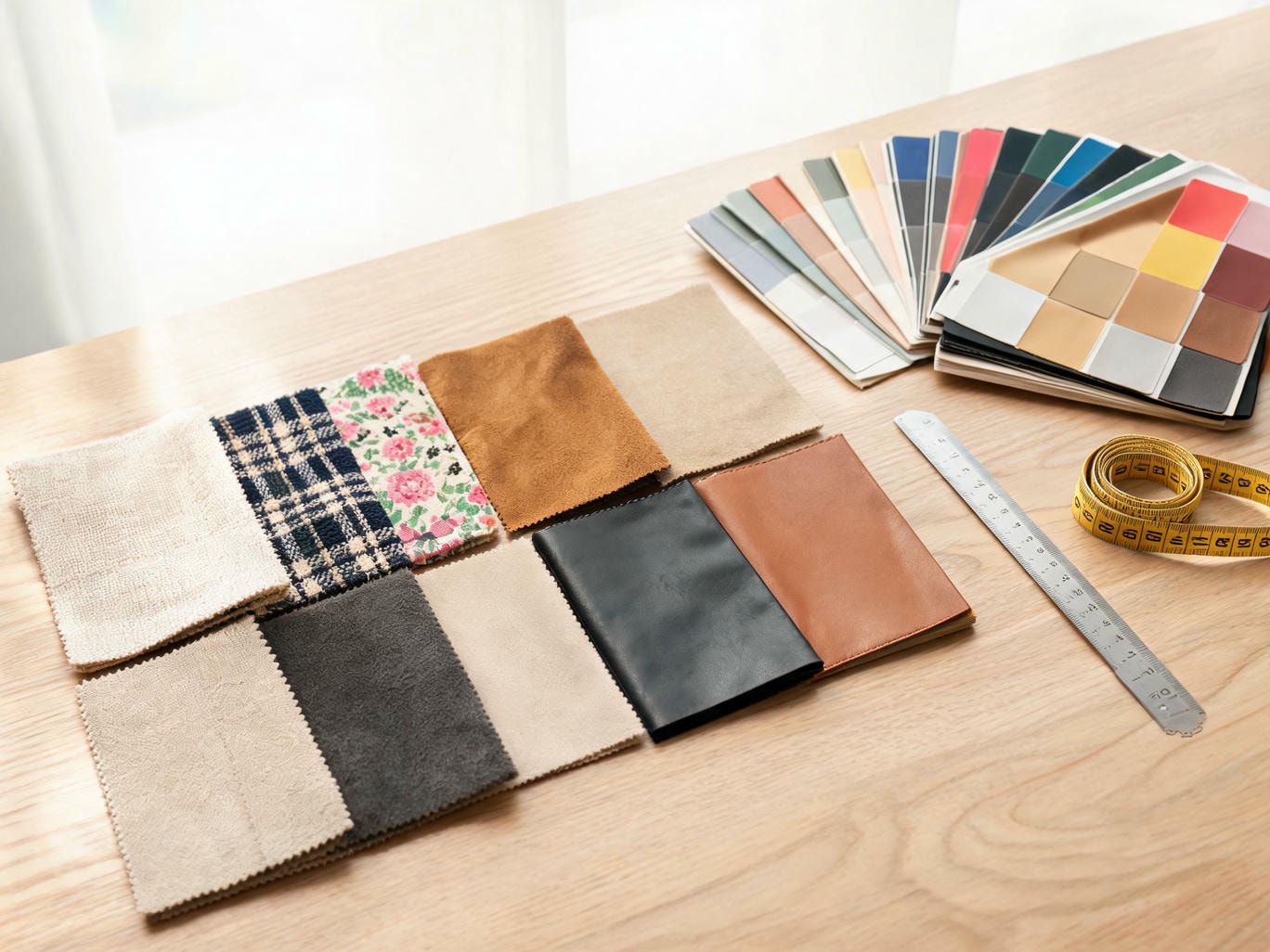
Fabric houses and performance-coating mills answer the same questionnaire — with different documents.
What Changed on 27 September 2026: The Generic-Claim Ban Reaches the Supply Chain
Directive (EU) 2024/825 — the Empowering Consumers for the Green Transition directive — entered into force on 26 March 2024 with a transposition deadline of 27 March 2026. Its rules apply from 27 September 2026. It adds three greenwashing practices to the EU’s blacklist:
- generic environmental claims such as “environmentally friendly”, “eco-friendly”, “green” or “climate-friendly” made without demonstrating recognized excellent environmental performance
- sustainability labels not based on certification schemes
- claims of neutral, reduced or positive climate impact based on offsetting
The European Commission’s own research explains why:
- 53% of green claims examined were found to give vague, misleading or unfounded information
- 40% had no supporting evidence at all
- the EU market carried some 230 sustainability labels with vastly different levels of verification
Strictly speaking, the directive governs consumer-facing commercial practices. But supply chains do not stop at the factory gate. The hangtag on the retail sofa quotes the material purchase order. The claim on the tag is only as strong as the file behind it. A brand that inherits an undocumented “eco” material from its supplier has two choices under the new rules. Market the product without the claim, or carry the risk anyway.
Procurement teams have noticed. Where a sourcing file once screened for price and lead time, it now screens marketing language the way it screens metal content — which is what a documented eco-friendly silicone leather file is built for. The practical consequence: suppliers who cannot document get designed out before the sample stage.

Verification happens at incoming goods, not on the hangtag — the same is true for claims.
From A and A Eco Products to Your RFQ: The Five-Document Test
Whether the supplier on your shortlist is an organic fabric house in Delhi or a silicone coating mill in Guangdong, the vetting instrument is the same: five documents, requested before the sample ships. A supplier who hesitates at any of them has answered your question.
1. A certificate with a number you can look up. Certification only counts if it traces to a scheme and a holder. Ask for the GOTS scope certificate or license ID verifiable in the scheme’s public database, or for chemical safety, a REACH screening report with its report number. For example, an SGS-issued screen of 247 SVHC substances, all not detected, with the laboratory’s reference code on the front page.
2. Composition and process disclosure. The substrate, the coating chemistry, solvent-free or solvent-borne — in writing. A fabric house that lists fiber by fiber is doing this right. A material supplier that will not name its polymer is asking you to market a mystery.
3. Third-party test reports, per lot rather than one brochure PDF. The documents that matter are current and repeatable:
- VOC emissions to ISO 16000-6 (non-detect is the target)
- cytotoxicity to ISO 10993-5
- food-contact extracts to FDA 21 CFR 175.300 where the application touches food
One PDF from 2019 is not a system.
4. Lifespan evidence, not just safety evidence. An eco claim that ignores how long the product lives is marketing, because replacement is the largest hidden environmental cost. Three numbers turn “durable” into a fact:
- Accelerated aging at 85°C and 85% relative humidity for 14+ weeks with zero delamination
- QUV weathering past 1,500 hours (ASTM G154)
- Martindale abrasion at 200,000+ cycles (ISO 12947-2)
5. Continuity answers. Capacity, MOQ, lead time and batch consistency decide whether the second order matches the first. A certified material that cannot be reproduced on schedule fails the sustainability test anyway, because the program restarts — new tooling, new sampling, new waste.

Five documents, checked at incoming inspection — the same five for any material family.
Reading the Same Test in Performance Data: What Fourteen Weeks at 85°C Proves
The five-document test sounds abstract until you open a material file that passes it. Silicone leather starts with a structural advantage. The Si-O-Si backbone carries a bond energy of roughly 452 kJ/mol against about 360 kJ/mol for the ester links in PU — about 25% stronger, and hydrophobic rather than hydrolysis-prone.
In the accelerated aging test that best predicts humid-service life, silicone-coated material holds through 14+ weeks at 85°C and 85% relative humidity with zero delamination and less than 5% tensile-strength change. PU begins cracking at 3–4 weeks.
That gap is what supports a 10–15 year service rating. It is also why lifespan belongs in the eco questionnaire. A material that lasts three times as long displaces three rounds of replacement, shipping and disposal.
The safety documents line up the same way:
- VOC emissions to ISO 16000-6 come back non-detect because the solvent-free coating process never introduces them
- the REACH screen of 247 SVHC substances reports not detected
- ISO 10993-5 cytotoxicity passes at 74.58% cell viability at 100% extract
- food-contact extracts to FDA 21 CFR 175.300 return non-detect in all three simulants
Continuity sits on the production side:
- three manufacturing bases totaling 60,000+ m²
- monthly capacity above 500,000 meters
- MOQ from 500 meters and 7–15 day lead times
Those are the numbers behind the factory production process that keep a certified program certified on reorder. Raw-material discipline is the quiet half of that promise.

Continuity is a document too: traceable substrate stock behind every certified batch.
Eco certifications on camera: what a document-backed material claim looks like in production.
Two Ways to Answer an Eco Questionnaire — Only One Survives 2026
Put the two sourcing cultures side by side. The new rules do the sorting for you. The left column below reads fine in a brochure. The right column reads fine in a compliance file. Since 27 September 2026, only the right column is legal in the EU. Only the right column survives a serious RFQ anywhere else.
| RFQ Questionnaire Line | The Adjective Answer | The Evidence Answer |
|---|---|---|
| “Is the material eco-friendly?” | “Yes — our material is green and sustainable.” | “REACH screen of 247 SVHC substances: not detected. SGS report number on file.” |
| “Any VOC concerns?” | “Low-odor, no smell at all.” | “ISO 16000-6: non-detect emissions, report issued per lot.” |
| “How long does it last?” | “Very durable, premium quality.” | “85°C/85% RH 14+ weeks, zero delamination; 10–15 year service rating.” |
| “Can you prove skin safety?” | “Tested for safety, of course.” | “ISO 10993-5 cytotoxicity: 74.58% cell viability at 100% extract.” |
Request the Eco-Claims Evidence Pack
The certificate-first route that made a and a eco products a searchable name — every claim paired with a certification, every fabric described by composition rather than adjective — is now simply the legal minimum inside the EU and the practical minimum everywhere else. Generic green words turned from free marketing into a compliance exposure on 27 September 2026. Documented performance turned from a nice-to-have attachment into the entire answer.
Whether the next name on your shortlist is a Delhi organic fabric house or a silicone leather mill in Guangdong, apply the same test. If an eco claim cannot survive a document request, it was never a claim — it was a decoration.
References
1. https://aaeco.net/ — A&A Eco Products: New Delhi-based sustainable textile company; certified organic and recycled fabrics, 18 years, 400+ brands, 100+ sustainable fabrics
2. https://environment.ec.europa.eu/topics/circula… — European Commission, Green claims: 53% of green claims vague, misleading or unfounded; 40% with no supporting evidence; 230 sustainability labels in the EU