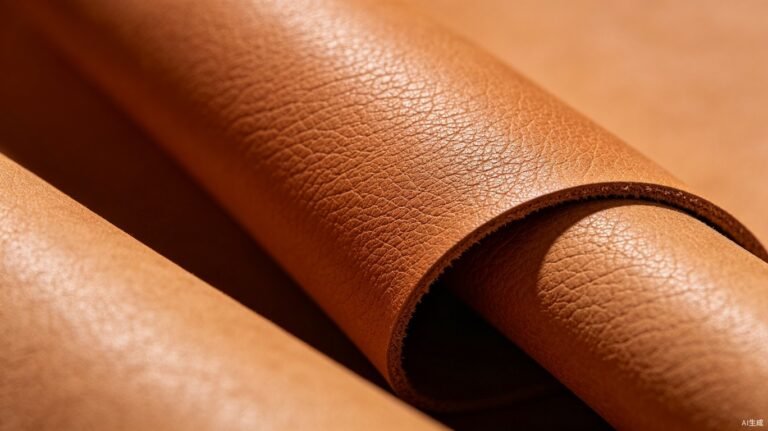
The $64.5B Shift: Why Brands Are Going Animal-Free by 2033
The global faux leather market is projected to reach US$64.5 billion by 2033, growing at 7.6% CAGR from 2026 — driven primarily by what Persistence Market Research[$TRAE_REF](https://www.persistencemarketresearch.com/market-research/faux-leather-market.asp) identifies as “surging consumer and corporate preference for cruelty-free, animal-friendly materials across the fashion, automotive, and furniture sectors.” The bio-based vegan leather segment is growing even faster — 14.5% CAGR, from USD 3.2 billion in 2025 toward USD 10.5 billion by 2034.
But here is the number that should make any product developer pause: 90% of animal-free leather on the market today still contains plastic. PU and PVC account for the overwhelming majority of faux leather production — and both peel, crack, or delaminate within 2-5 years of field use. The market is growing, the ethics are improving, but the durability problem has not been solved by the dominant materials.
This article breaks down six categories of animal free leather materials — what they are made of, how long they last, what they cost, and which one actually meets the 10-year service life threshold that automotive, furniture, and medical buyers require.

Base fabric rolls — the non-animal substrate that replaces animal hides in silicone leather production
PU Leather: 55% of the Market, 100% of the Plastic Problem
Polyurethane leather — or PU — holds roughly 55% of the global vegan leather market share. It is cheap, versatile, and far less environmentally damaging than animal leather. The Global Fashion Agenda found that PU has less than half the environmental impact of cow skin leather.
But PU is still a petroleum-based polymer. The manufacturing process requires polyols and isocyanates blended into a liquid slurry, which is then coated onto a fabric backing. In many production lines — particularly in Asian supply chains — the solvent DMF (dimethylformamide) is still used to dissolve and apply the polyurethane. DMF is classified as a reproductive toxin under EU REACH regulation EC 1907/2006 and is restricted to a 1 ppm emission limit in automotive interiors under VDA 277.
The durability problem is structural. PU coatings rely on physical cross-linking — not chemical bonds. Over time, UV exposure breaks down the urethane bonds, and hydrolysis attacks the ester linkages in the polymer backbone. The result: peeling, cracking, and delamination that typically begins at 14-24 months in automotive and furniture applications. Standard PU leather achieves 20,000-50,000 Martindale abrasion cycles — a benchmark that sounds impressive until you compare it to materials that exceed 200,000 cycles.
Plant-Based Leather: Apple, Cactus, Mycelium — What Actually Scales?
The bio-based leather segment is the fastest-growing category — 18.70% CAGR from $1.4 billion in 2026 to $6.55 billion by 2035. These animal free leather alternatives include:
- Apple leather: Made from juicing waste — peels, cores, and pulp. The leading supplier, Frumat, produces a material containing 50% apple waste and 50% polyurethane. It is not fully plastic-free.
- Cactus leather: Nopal cactus is harvested, dehydrated, and bonded to a textile backing. While the cactus component is biodegradable, the binder and backing often contain PU or other plastics.
- Mycelium leather: Grown from mushroom root structures in days rather than the months or years required for animal rearing. Mycelium materials are non-plastic and non-animal, but current production volumes remain negligible — pilot-scale only.
- Grape leather: Produced from wine industry waste — skins, stalks, and seeds dried and combined with oils. Bio-oil replaces petroleum, but the process still yields a material with limited durability data.
The common thread: plant-based leather materials are promising for sustainability storytelling, but none have published Martindale abrasion data above 50,000 cycles. None have been field-tested beyond 3-5 years. For B2B buyers specifying materials for products that must last 7-10+ years — automotive interiors, furniture upholstery, medical equipment — plant-based options remain in the experimental phase.

Sample strips showing the finish range achievable without animal-derived materials
Cultivated Leather: Real Collagen, Lab-Grown — But at $72,500/Ton
Cultivated leather — produced by growing animal fibroblast cells in a lab — is the most technically fascinating entry in the animal-free category. It contains real animal collagen, replicating the texture, durability, and breathability of traditional leather without raising or slaughtering animals. Each “hide” is grown in days rather than the years required for animal rearing.
In 2025, global cultivated leather production reached approximately 2,010 tons, with an average market price of USD 72,500 per ton. That places it firmly in the luxury niche — viable for high-end fashion accessories and premium automotive branding, but economically impractical for high-volume B2B applications like furniture upholstery or medical seating.
Cultivated leather also raises a regulatory classification question: because it contains animal-derived collagen, some markets may not classify it as “vegan” or even fully “animal-free” under consumer protection labeling laws. For regulatory affairs teams managing multi-market product launches, this ambiguity is a compliance risk that requires legal review before specification.
Silicone Leather: The Only Animal-Free Material That Lasts 10+ Years
Silicone leather occupies a unique position in the animal-free landscape. It contains zero animal-derived materials in any layer — the base fabric is typically polyester or cotton, and the coating is 100% silicone polymer derived from silica (sand). No PU. No PVC. No DMF solvents. No plant-based binders that degrade in 3 years.
The chemistry is the reason it lasts. Silicone polymers use a Si-O (silicon-oxygen) backbone with bond energy of approximately 452 kJ/mol — significantly higher than the C-C bonds in polyurethane (~346 kJ/mol) or the ester linkages in PU that hydrolyze. This means silicone leather does not break down under UV exposure, does not hydrolyze in humid environments, and does not embrittle at low temperatures. TOPSUN’s silicone leather operates from -40°C to 250°C without structural change.
From our production line and testing lab, here are the verified numbers for silicone leather animal free material:
- Martindale abrasion: ≥200,000 cycles — 4-10x standard PU
- UV resistance: 1,000+ hours with no fading or yellowing (ASTM D4329)
- Salt spray resistance: 1,000+ hours
- Color fastness: Grade 4-5 (ISO 105-B02)
- Biocompatibility: ISO 10993-5:2009 certified — non-cytotoxic
- Service life: 10+ years field-tested
For B2B buyers, the certification package matters as much as the performance data. ISO 10993-5 biocompatibility certification means the material passes in vitro cytotoxicity testing — a requirement for medical and children’s product applications. REACH compliance means no restricted substances above threshold limits. For automotive, VDA 277 VOC testing confirms emissions are within cabin air quality standards. These are not marketing claims — they are test reports with issuing body documentation.

Silicone coating line — the solvent-free process that creates animal-free leather without PU or PVC
How to Verify “Animal-Free” Claims Without Getting Greenwashed
“Animal-free” is not a regulated term in most markets. A supplier can label PU-coated fabric as “animal-free” — technically accurate, but misleading if buyers assume it means plastic-free or biodegradable. For cruelty free leather sourcing teams, here are the three documents that separate genuine claims from greenwashing:
| Material | Plastic Content | Martindale Cycles | VOC Status | Service Life | Key Certification |
|---|---|---|---|---|---|
| PU Leather | 100% plastic | 20K-50K | DMF risk | 2-5 years | None specific |
| PVC Leather | 100% plastic | 10K-30K | Phthalate risk | 2-5 years | REACH restricted |
| Plant-Based (Apple/Cactus) | 30-50% plastic | Not published | Unknown | 1-3 years est. | No standard |
| Mycelium | 0% (pilot) | Not published | Low | Unproven | N/A |
| Cultivated | 0% plastic | Not published | Low | Unproven | Cell line origin |
| Silicone Leather | 0% plastic | 200K+ | Zero VOC | 10+ years | ISO 10993-5 |
Comparison of animal-free leather materials by plastic content, durability, and certification status
For organic silicone leather specifically, request three documents before signing any supply agreement: (1) the ISO 10993-5 biocompatibility test report with the issuing body name — not just a claim of compliance, (2) the Martindale abrasion test data with cycle count and test standard reference, and (3) a REACH compliance declaration listing restricted substances and their measured concentrations. If a supplier cannot produce all three within 72 hours, the claims are not verified.
The distinction between “vegan leather” and “animal-free leather” also matters for regulatory compliance. “Vegan” typically means no animal-derived inputs — which silicone leather satisfies. “Animal-free” can include cultivated leather that contains animal collagen but was produced without slaughtering animals. For product labeling in the EU and California market, these terms have different legal implications. Eco-friendly silicone leather satisfies both definitions simultaneously — zero animal inputs and zero animal byproducts.
FAQ
Is silicone leather truly animal-free?
Yes. Silicone leather contains zero animal-derived materials in any layer. The coating is 100% silicone polymer — derived from silica (sand), not animal sources. The base fabric is polyester, cotton, or other non-animal textiles. No animal hides, no collagen, no animal-based plasticizers or stearates are used in the production process. TOPSUN’s silicone leather is certified ISO 10993-5:2009 non-cytotoxic by SGS-CSTC Guangzhou, confirming biocompatibility without any animal-origin components. For silicone vs PU comparison, the key difference is that PU uses petroleum-derived polyols and isocyanates — not animal products, but not plastic-free either.
What is the difference between “vegan leather” and “animal-free leather”?
“Vegan leather” means no animal-derived inputs — it is the stricter standard. “Animal-free leather” is a broader category that includes materials produced without slaughtering animals but may contain animal-derived components (such as cultivated leather grown from animal cells). All vegan leather is animal-free, but not all animal-free leather is vegan. For regulatory labeling, “vegan” carries stronger consumer expectations and fewer compliance ambiguities. Silicone leather satisfies both categories — it is both vegan and animal-free with zero ambiguity.
About TOPSUN: TOPSUN manufactures solvent-free silicone leather for B2B buyers who need verifiable animal-free material certifications across automotive, furniture, medical, and consumer electronics supply chains. Every production batch is tested to ISO 10993-5:2009 biocompatibility standards, 200,000+ Martindale abrasion cycles, and REACH compliance — with test reports issued by SGS-CSTC Guangzhou and certified against ASTM D3363 pencil hardness specifications. Production capacity supports custom colors, textures, and thicknesses from 0.23mm to 2.0mm.
The Bottom Line
The animal-free leather market is expanding rapidly — but expansion is not the same as progress. PU leather is animal-free and cheap, but it is still 100% plastic that peels within 3 years. Plant-based alternatives reduce plastic content but have no proven durability data beyond experimental cycles. Cultivated leather is remarkable but costs $72,500 per ton. The only animal-free material that combines zero plastic content, verified 200,000+ Martindale abrasion cycles, ISO 10993 biocompatibility certification, and 10+ year field service life is silicone leather. If your product specification requires animal-free materials that also last — that is the material to specify.
Learn more about silicone leather technology or explore application-specific specifications for your industry. You can also read our existing vegan leather explained article for a broader overview of animal-free material categories.
Video: TOPSUN Silicone Leather Animal-Free Material Comparison — contact us for the full factory tour video showing solvent-free coating lines and material testing protocols.