The phrase “luxury performance fabrics” describes a material category that didn’t exist a decade ago. Luxury meant leather — animal hide, chrome-tanned, hand-finished. Performance meant synthetic — engineered for durability but aesthetically inferior. These two worlds collided when brands realized their customers wanted both: the sensory quality of luxury and the functional performance of engineered materials, without the ethical and environmental baggage of either traditional option. The result is a new material category where silicone leather has emerged as the defining standard — the only material that delivers luxury-grade aesthetics with engineering-grade performance while eliminating every chemical compromise that disqualifies PU, PVC, and genuine leather from the category.
This analysis examines what defines luxury performance fabrics and why silicone leather has become the reference material that premium brands specify when they need both worlds.
What Defines a Luxury Performance Fabric?
The category requires simultaneous achievement across five dimensions. A material that excels in four but fails one doesn’t qualify:
- Sensory quality: Soft hand-feel, natural drape, authentic grain texture. The material must feel premium to touch — not plasticky, not rigid, not synthetic.
- Durability: 200,000+ Martindale cycles, 100,000+ flex cycles, 10+ year service life. The material must outlast the product it’s specified for.
- Safety: Zero VOC emissions, biocompatible (ISO 10993-5), food-contact certified (FDA 21 CFR 177.2600). No chemical compromise that could harm users.
- Aesthetic customization: Unlimited color matching (Pantone/RAL, Delta E ≤1.0), 100+ texture options, metallic and pearlescent finishes, custom embossing.
- Sustainability narrative: Traceable supply chain, zero solvents, recyclable, no PFAS, no phthalates. The material must support the brand’s sustainability claims with data, not marketing.
Why Genuine Leather Fails the Category
Genuine leather was the original luxury material — and it still delivers exceptional sensory quality and develops a patina that synthetics cannot replicate. But it fails the performance dimensions:
- Safety failure: Chromium VI residues (carcinogenic) fail ISO 10993-5 biocompatibility. Cannot be used in medical, infant, or food-contact applications.
- Durability inconsistency: Natural hide quality varies by animal, breed, and location on the body. No two hides are identical — creating quality control challenges at scale.
- Sustainability failure: Animal agriculture carbon footprint (14.5% of global emissions per UN FAO), chromium tanning effluent, and no circular economy path.
- Maintenance burden: Requires conditioning (“leather food”) every 3-6 months. Oils evaporate; leather cracks without maintenance. Luxury with labor attached.
Genuine leather remains relevant in heritage luxury where the patina and aging process are part of the brand story. But for performance luxury — automotive, hospitality, medical, consumer products — its chemical and maintenance profile disqualifies it.

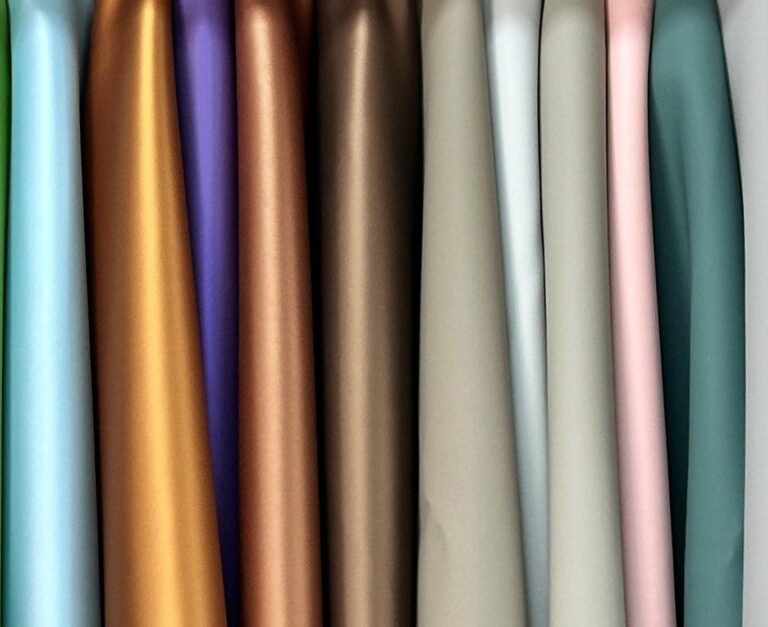
Metallic finish options — silicone leather achieves luxury-grade surface aesthetics that PU and PVC cannot replicate without degradation.
Why PU Leather Fails the Category
PU leather achieves adequate sensory quality and can be aesthetically convincing. But it fails the durability and safety dimensions:
- Durability failure: 25,000-50,000 Martindale cycles (vs 200,000+ for luxury performance). Hydrolysis degradation in 2-5 years. Topcoat delamination visible within 12-18 months in high-UV environments.
- Safety failure: DMF solvent residues fail food-contact standards. VOC emissions of 100-300 µgC/g (VDA 277) fail automotive interior standards. Cannot achieve ISO 10993-5 biocompatibility.
- Aesthetic degradation: PU leather’s surface dulls, yellows, and develops visible micro-cracks within 2-3 years. The luxury aesthetic that sold the product disappears before the warranty expires.
Why Bio-Based Leather Falls Short
Bio-based leather (cactus, pineapple, mushroom) has the strongest sustainability narrative and commands the highest price premium. But it falls short on performance consistency:
- Performance inconsistency: Plant fiber properties vary by harvest, climate, and processing — creating batch-to-batch variability that luxury brands cannot accept at scale.
- Durability limitations: The PU binder used in most bio-based leathers inherits PU’s hydrolysis and degradation profile. The plant content doesn’t improve performance — it only improves the marketing story.
- Scale challenges: Global bio-based leather capacity is under 500,000 meters annually — insufficient for automotive or hospitality brand volumes. Lead times of 4-6 months vs silicone leather’s 7-15 days.
- Safety ambiguity: Most bio-based leathers cannot provide ISO 10993-5 or FDA 21 CFR 177.2600 certification because the PU binder chemistry remains the same as standard PU leather.

Classic sample display — the luxury presentation that brands need. Silicone leather delivers this aesthetic while meeting performance specs that disqualify alternatives.
Why Silicone Leather Defines the Category
Silicone leather is the only material that passes all five luxury performance dimensions simultaneously. Here’s how it achieves each:
| Dimension | How Silicone Leather Achieves It |
|---|---|
| Sensory quality | Soft hand-feel from elastomeric polysiloxane; authentic grain from 100+ embossed textures; natural drape from knit base fabric |
| Durability | 200,000+ Martindale; 100,000+ flex cycles; 10+ year service life; -40°C to 250°C stability; hydrolysis-proof |
| Safety | Zero VOC; ISO 10993-5 biocompatible; FDA 21 CFR 177.2600 food-contact; OEKO-TEX Class I; EN 71 toy-safe |
| Aesthetic customization | Unlimited Pantone/RAL colors (Delta E ≤1.0); metallic and pearlescent finishes; custom embossing in 7-10 days |
| Sustainability | Silica-sourced (sand); zero solvents; 100% recyclable; no PFAS/phthalates/DMF; traceable to raw material source |

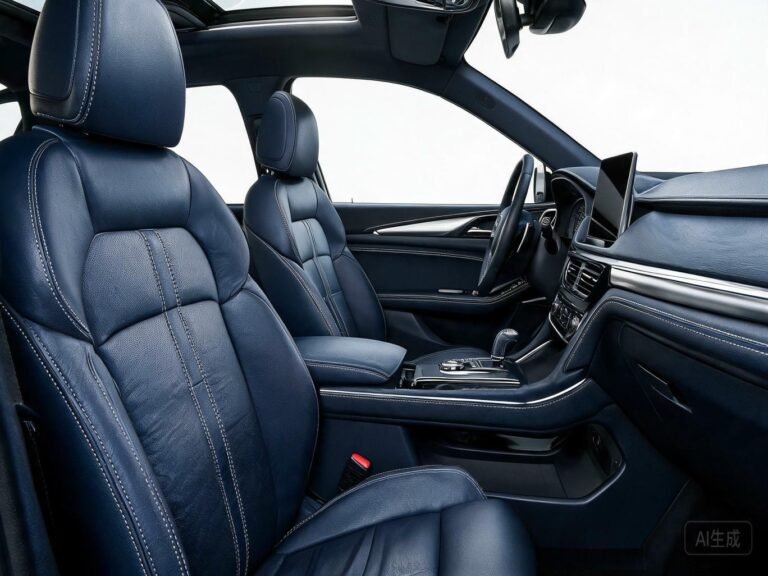
Luxury automotive application — where performance and aesthetics must coexist without compromise.
Where Luxury Performance Fabrics Are Specified
The luxury performance fabric category serves applications where brand reputation, user safety, and material longevity all carry equal weight:
- Automotive premium interiors: EV brands positioning around sustainability + luxury. Silicone leather delivers zero-VOC cabin air (VDA 277 compliant) with hand-feel that matches Nappa genuine leather. Brands: specified by OEMs requiring 10+ year interior warranty.
- Boutique hotel interiors: Headboards, lounge chairs, and VIP suite upholstery where the fabric is both a design statement and a high-traffic surface. Silicone leather’s 200,000+ Martindale cycles deliver the durability; metallic and pearlescent finishes deliver the design.
- Luxury yacht interiors: Cabin upholstery exposed to saltwater, UV, and humidity. Only silicone leather’s salt spray resistance (1,000+ hrs) and UV stability (1,000+ hrs) support the 10+ year replacement cycle that yacht owners expect.
- Luxury retail boutique interiors: Display fixtures, seating, and wall panels in flagship stores. The material must look pristine after years of customer contact — a standard that eliminates PU (surface degradation) and requires genuine leather maintenance.
- Premium furniture: Residential furniture where the buyer expects the upholstery to last as long as the frame. Silicone leather’s 10+ year service life matches the structural warranty of premium furniture frames.
- Luxury fashion accessories: Bags, wallets, and small leather goods where the surface must maintain its luxury appearance through daily use without conditioning.

Boutique interior — luxury retail environments where the upholstery material is part of the brand experience.
Luxury furniture application — silicone leather in premium residential and commercial settings.

Bespoke customization — unlimited colors, textures, and finishes enable luxury brands to specify unique material identities.
About TOPSUN
TOPSUN manufactures the silicone leather that defines the luxury performance fabric category. Our Designer Collection features metallic finishes, pearlescent effects, and exclusive embossed patterns for fashion and luxury applications. Every collection achieves: 200,000+ Martindale cycles, zero VOC emissions, ISO 10993-5 biocompatibility, FDA 21 CFR 177.2600 food-contact compliance, 100+ textures, unlimited Pantone-matched colors (Delta E ≤1.0), and 100% recyclability. With 60,000+ m² of production capacity and custom embossing in 7-10 days, we serve luxury automotive brands, boutique hotel groups, yacht manufacturers, premium furniture makers, and fashion houses in 30+ countries who refuse to compromise between luxury and performance.
Specification Guide: Selecting Luxury Performance Fabrics
When evaluating a material for luxury performance applications, verify these qualifications:
- Sensory: Request A4 swatch samples — touch and feel are non-negotiable for luxury positioning
- Durability: Verify 200,000+ Martindale and 100,000+ flex cycles (ISO 12947-2 and ISO 5402)
- Safety: Request ISO 10993-5 cytotoxicity and FDA 21 CFR 177.2600 food-contact certificates
- Customization: Confirm Pantone matching capability with Delta E ≤1.0 and custom embossing within 7-10 days
- Sustainability: Verify zero-VOC manufacturing process (VDA 277 = 0 µgC/g) and 100% recyclability
- Color consistency: Request batch-to-batch color data — luxury brands cannot accept visible color variation between production runs
- Scale: Verify the manufacturer can meet your volume requirements without lead time exceeding 15 days
- Exclusivity: Discuss whether the manufacturer offers exclusive textures, colors, or patterns for your brand
Luxury performance fabrics aren’t a compromise between aesthetics and engineering — they’re the elimination of the compromise. Silicone leather achieves this by being both the softest material in the category and the most durable, the safest and the most customizable, the most sustainable and the most luxurious. The category it defines is the one every premium brand is moving toward: materials that deliver everything, without choosing between anything.
Specifying luxury performance fabrics for your brand? Request Designer Collection swatches, metallic finish samples, custom color matching, and exclusive texture development from TOPSUN. Contact info@topsunsiliconeleather.com or WhatsApp +44 744 461 7933.