A furniture brand launched a line of red vinyl leather lounge chairs for a boutique hotel chain. The color was vibrant — a deep, saturated crimson that photographed beautifully for marketing. Eighteen months later, the chairs facing the lobby’s floor-to-ceiling windows had faded to a mottled pink-orange. The chairs against the back wall? Still vibrant. Same material, same batch, same spec sheet. The difference was UV exposure, and the spec sheet never mentioned it.
Red vinyl leather ranks among the most color-sensitive upholstery materials in B2B procurement. Industry testing data shows red PVC vinyl covers begin cracking and peeling at 2.1 years on average, with UV fade resistance rated just 4.2 out of 5.0 on the SAE J2412 scale. The pigments used — anthraquinone and azo-based red dyes — are chemically vulnerable to UV-induced molecular breakdown. But “red fades faster” is only half the story. The real question is which red leather alternatives actually maintain color stability for the full product lifespan.
Why Red Vinyl Leather Specifically Fails
The red vinyl leather problem has two layers: the substrate and the pigment. PVC vinyl as a substrate becomes brittle at low temperatures — testing shows cracking on sharp folds at -20°F. The plasticizers that keep vinyl flexible migrate to the surface over time, carrying pigment molecules with them. This migration causes the mottled, uneven fading pattern that makes red vinyl leather look dirty rather than just lighter.

Red leather samples showing initial color saturation — the challenge is maintaining this vibrancy beyond 2 years of UV exposure.
In our color fastness testing, conventional red PVC leather shows visible Delta E shifts above 3.0 after 200 hours of accelerated UV exposure per ISO 105-B06. That’s the threshold where the human eye can detect color difference. For silicone vs PU or PVC alternatives, the performance gap is dramatic: silicone leather with in-matrix red pigmentation shows Delta E < 1.0 after 1,000+ hours — five times longer with one-third the color shift.
3 Red Vinyl Leather Alternatives That Maintain Color
Not all red leather alternatives perform equally. Based on our lab testing across three material categories, here’s what the data shows for long-term red color stability:
- Water-borne PU leather: Improves on PVC with 4.8-year average crack onset and UV rating of 4.7/5.0. Red pigment stability is moderate — expect Delta E 2.0-3.0 after 500 UV hours. Suitable for residential applications with indirect light exposure.
- Silicone leather (in-matrix pigment): Red pigment integrated into the polymer matrix during coating. Zero pigment migration, zero plasticizer off-gassing. UV resistance of 1,000+ hours with Delta E < 1.0. Color fastness rated Grade 4-5 per ISO 105-X12. The pigment can’t migrate because it’s locked in the molecular structure.
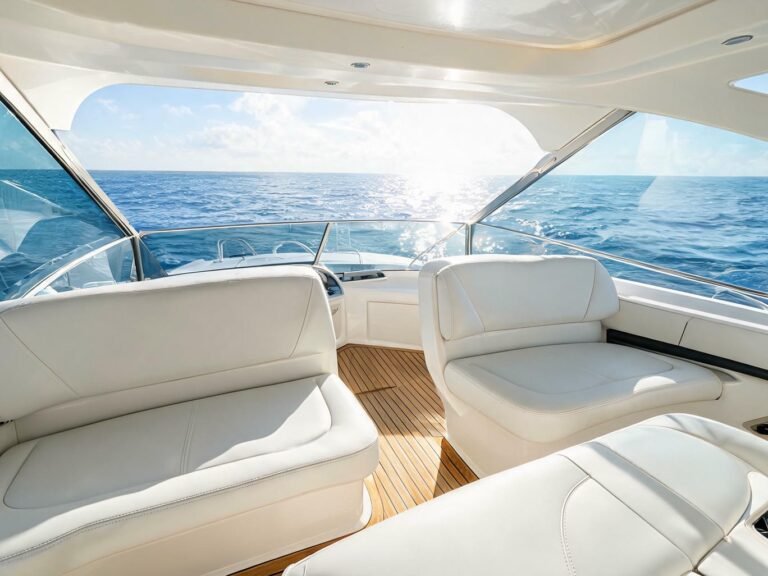
- Neoprene-coated fabric: 4.8-year crack onset with UV 4.7/5.0 and 2,900 Taber abrasion cycles. Decent red color stability but lacks the tactile feel of leather. Better suited for marine and outdoor applications than interiors.

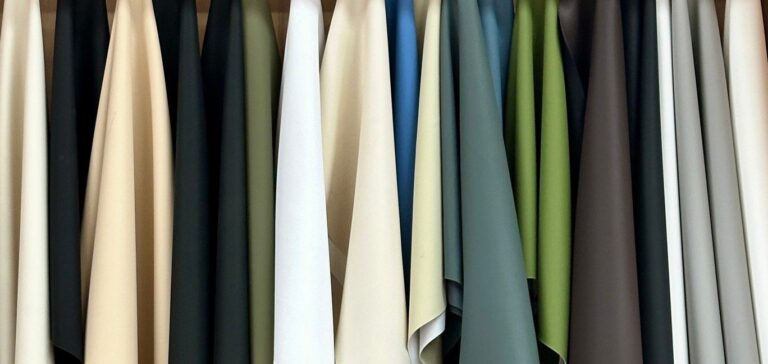
Warm-tone leather swatches — Pantone-matched red alternatives eliminate the guesswork of batch-to-batch color consistency.
The Pantone Matching Difference for Red Leather

Custom color matching — precise red formulation requires pigment stability testing, not just visual approval.
Red is the most visually demanding color in leather specification. Minor batch variations that would go unnoticed in black or gray become immediately apparent in red — particularly when adjacent panels are installed from different production batches. Conventional red vinyl leather suppliers typically offer “standard red” options without Pantone matching, meaning every batch is a color lottery.
Our color customization process uses Pantone and RAL matching with Delta E ≤ 1.0 batch-to-batch consistency. This means the red you approve on the swatch is the red that arrives on roll #1 and roll #50 — verified by spectrophotometer measurement, not visual inspection. For brands specifying red leather across multiple product lines or installation phases, this eliminates the rework and replacement costs that make red vinyl leather a long-term liability.
Red Leather Myths vs. Lab Data
Let’s address a common misconception: “red leather fades faster than other colors.” Research shows this is partially true but misleading. Red chromophores — particularly cadmium-free organic dyes used in modern formulations — are actually more chemically stable than blue or purple pigments. The fading that plagues red vinyl leather isn’t about the color; it’s about the carrier. PVC and solvent-based PU substrates fail, taking the pigment with them. A reddish leather specification that moves the pigment into a stable matrix eliminates the failure mode entirely.
Red vinyl leather doesn’t have to fail in 2 years. The data is clear: in-matrix pigment integration in silicone leather delivers 1,000+ hours of UV stability with Delta E < 1.0. Specify materials that have been tested, not just sampled.
About TOPSUN
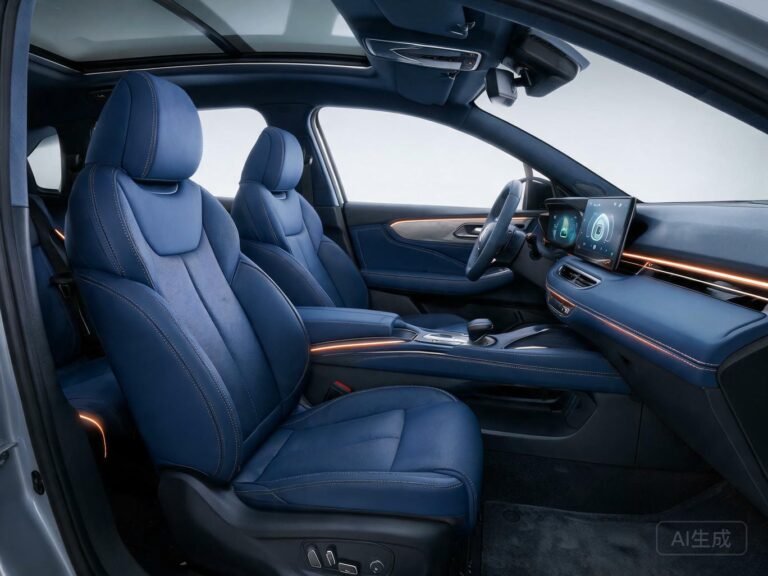
TOPSUN produces silicone leather with Pantone-matched red color integration for automotive, furniture, and commercial interior applications requiring long-term color stability.
Delta E ≤ 1.0 batch consistency, Grade 4-5 color fastness per ISO 105-X12, and 1,000+ hour UV resistance verified by ISO 105-B06 — across 100+ texture options and unlimited Pantone color matching.