A sustainable fashion brand switched from genuine leather to Piñatex (pineapple leaf fiber) for its accessory line in 2023. The sustainability story was compelling — agricultural waste upcycled into a leather-like material. By 2025, customer returns for delamination and surface peeling hit 18%. The brand reformulated with apple leather. Same problem, different material. The issue wasn’t the sustainability claim — it was that nobody tested 5-year durability before launching.
The search for an alternative to leather has produced six material categories, each with different sustainability profiles, performance characteristics, and total cost of ownership. Most procurement decisions focus on unit price and eco-marketing. Few calculate what happens when the material needs replacing at 18 months instead of 10 years. That’s where the real cost lives.
Alternative to Leather: 6 Materials Compared Over 5 Years

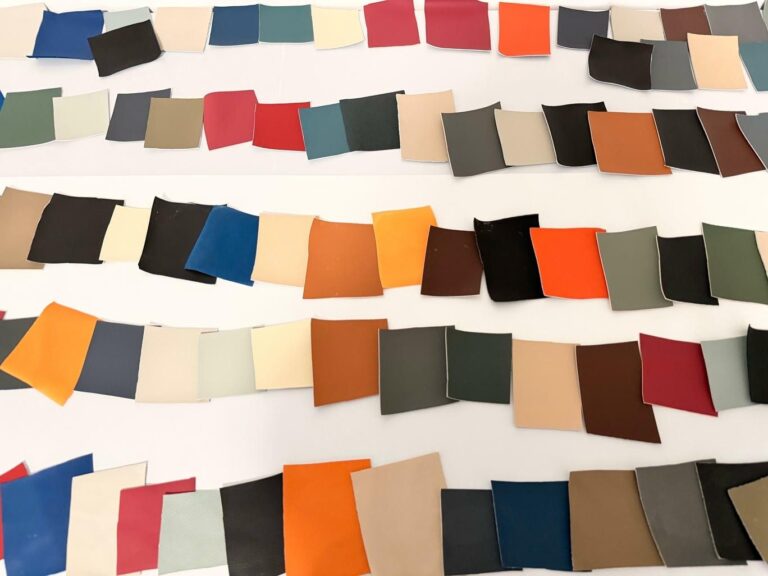
Material swatch display — visual variety doesn’t equal performance parity. Each alternative to leather has different degradation timelines.
- PVC vinyl leather: Lowest unit cost. Service life: 2-3 years. Cracks at -10°C, releases plasticizers. Not recyclable. 5-year TCO: 2x replacement + disposal costs.
- Solvent PU leather: Mid-range price. Service life: 3-5 years. Contains DMF and VOCs. Limited recycling. 5-year TCO: 1x replacement + environmental compliance risk.
- Plant-based (Piñatex, apple, mushroom): Premium eco positioning. Service life: 1-2 years in commercial use. Batch inconsistency. Not waterproof without coatings. 5-year TCO: 3x replacement + reformulation costs.
- Recycled leather: Mid-range. Service life: 3-5 years. Quality depends on fiber source and binder. 5-year TCO: 1x replacement + variable performance.
- Water-borne PU leather: Improved on solvent PU. Service life: 4-6 years. Lower VOC but still petroleum-based. 5-year TCO: possibly 1x replacement.
- Silicone leather: Higher unit cost. Service life: 10+ years. Zero VOC, 100% recyclable, outperforms PU on every durability metric. 5-year TCO: zero replacement, zero disposal costs.
The Sustainability Myth vs. Service Life Reality

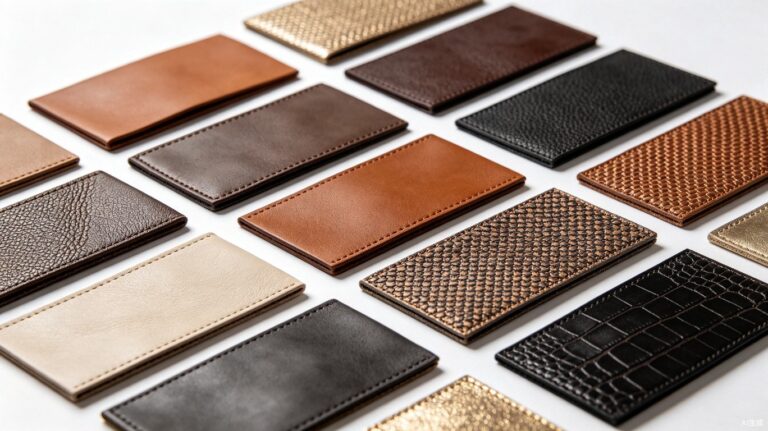
Production process flow — solvent-free coating means zero VOC from manufacture through disposal, not just during use.
Here’s the misconception: plant-based equals sustainable. But sustainability includes the full lifecycle — production, use phase, and end-of-life. A leather alternative material that requires replacement three times in 5 years consumes more total resources than a durable material produced once. Our production uses a solvent-free dry coating process: zero VOC during manufacture, zero off-gassing during use, 100% recyclable at disposal.

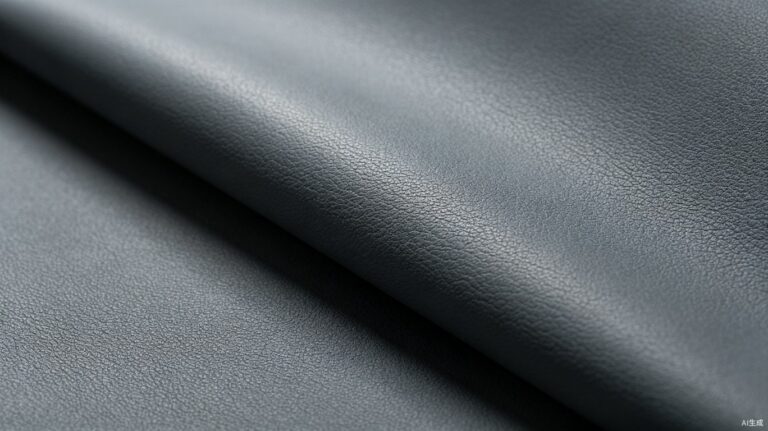
Not all leather alternatives perform equally — bio-based materials lead in eco-marketing but trail in durability testing.
Specifying an Alternative to Leather: 5-Year TCO Checklist
- Request service life data backed by ISO 12947 Martindale and ISO 105-B06 UV testing — not marketing claims.
- Calculate replacement frequency: divide 5 years by stated service life. Factor in labor and downtime for each replacement cycle.
- Include disposal costs: non-recyclable materials incur waste management fees and potential compliance penalties.
- Verify the sustainability claim: is it certified (LEED, EU Ecolabel) or just marketed? Eco-friendly credentials should be documentable.
- Compare total cost, not unit cost: a material lasting 10 years at 2x the unit price of one lasting 2 years saves 60% over 5 years.
About TOPSUN
TOPSUN produces solvent-free silicone leather as a B2B alternative to leather that delivers 10+ year service life across automotive, furniture, healthcare, and consumer goods applications.
Zero VOC, 100% recyclable, PVC-free and phthalate-free — LEED and EU Ecolabel compatible, with 200,000+ Martindale cycles and 1,000+ hour UV stability verified by SGS and Intertek.