A furniture brand sources PVC plastic leather for a 200-room hotel contract. The material passes the client’s initial quality check. Eighteen months later, guests report a chemical odor in newly renovated suites. Testing reveals phthalate migration exceeding EU REACH SVHC limits. The hotel evacuates the floor, the brand faces a $400,000 replacement liability, and the procurement team discovers that their supplier’s “plastic leather compliance certificate” tested only for heavy metals — not phthalates, not dioxins, not the specific SVHCs that triggered the failure. The term “plastic leather” encompasses materials with fundamentally different chemical risk profiles. Here’s the 6-item checklist that would have caught this before the PO was signed. For broader context on PVC-free alternatives, that guide covers the material substitution process.
Request Chemical Compliance Samples
What Is Plastic Leather? PVC, PU, and the Compliance Gap
“Plastic leather” is not a single material — it’s a category that covers two fundamentally different polymer systems with different chemical risk profiles. PVC (polyvinyl chloride) leather uses phthalate plasticizers to achieve flexibility, and those plasticizers migrate out of the material over time, especially under heat and mechanical stress. PU (polyurethane) leather uses solvent-based coating chemistry that can leave residual volatile organic compounds (VOCs) in the finished product.
The compliance gap is this: most suppliers provide a general “compliance certificate” that covers one or two risk categories — typically heavy metals and basic REACH registration. But the chemical risks in plastic leather extend to at least six categories, and a certificate that doesn’t address all six is a certificate that leaves exposure gaps. In our experience auditing supplier documentation, fewer than 20% of PVC leather suppliers provide complete testing across all six categories without being specifically asked.

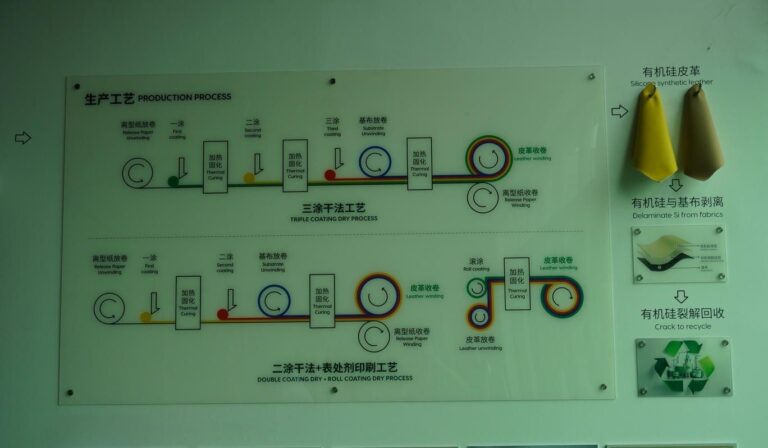
Raw materials lifecycle display — chemical transparency starts at the source
The 6 Chemical Risks: A Procurement Compliance Checklist
Before signing a purchase order for any plastic leather material, procurement teams should verify testing across all six categories below. A single missing test category is a single unmanaged compliance exposure — and in markets like the EU, that exposure can trigger product recalls, market withdrawals, and contractual liability.
Risk 1: Phthalates. PVC plastic leather uses phthalate plasticizers — including DEHP, DBP, BBP, and DINP — to achieve flexibility. These phthalates are classified as SVHCs under EU REACH and are restricted in consumer products. The U.S. EPA has identified phthalates as potential endocrine disruptors. Phthalate migration accelerates under heat: a PVC car interior surface at 65°C can show measurably elevated phthalate release compared to the same material at 25°C. Verification: request a phthalate test report per ECHA REACH Annex XVII restrictions.
Risk 2: Heavy Metals. Lead, cadmium, and chromium VI can be present in plastic leather pigments and stabilizers. RoHS restricts these in electrical products, but non-electronic applications like furniture and automotive interiors fall under REACH and national regulations. Verification: request RoHS and EN 71-3 heavy metal migration testing.
Risk 3: VOC Emissions. PU leather production uses solvents — typically DMF (dimethylformamide) — that can remain as residual VOCs in the finished product. VOC emissions affect indoor air quality and are regulated under ISO 16000-6, VDA 277 (automotive), and EN 717-1 (formaldehyde). Verification: request VOC emission testing per the applicable standard for your market.
Risk 4: Formaldehyde. Both PVC and PU leather can contain formaldehyde releasers in adhesives and crosslinkers. The EU’s new formaldehyde limit (0.062 mg/m³) effective August 2026 bans products exceeding this threshold. Verification: request EN 717-1 chamber testing.
Risk 5: PAHs (Polycyclic Aromatic Hydrocarbons). Plastic leather can contain PAHs from carbon black pigments and extender oils. PAHs are restricted under AfPS GS 2019:01 and the EU REACH restriction on PAHs in consumer products. Several PAHs are classified as carcinogenic. Verification: request PAH testing per AfPS GS 2019:01.
Risk 6: Halogenated Flame Retardants. PVC inherently contains chlorine (a halogen), and additional halogenated flame retardants may be added to meet fire safety standards. When burned, these release dioxins — among the most toxic compounds known. Greenpeace has called PVC “the single most environmentally damaging plastic.” Verification: request halogen content testing and EN 13773 flame retardant classification. For detailed material comparisons, see our silicone vs PU comparison.
Why Phthalate Migration Accelerates Over Time
The hotel failure scenario at the top of this article wasn’t a testing error — the material likely passed initial phthalate content testing. The problem is that phthalate plasticizers are not chemically bonded to the PVC polymer. They’re physical additives, mixed in to make the rigid PVC flexible. Over time, heat, friction, and skin contact cause these plasticizers to migrate to the surface and off-gas.

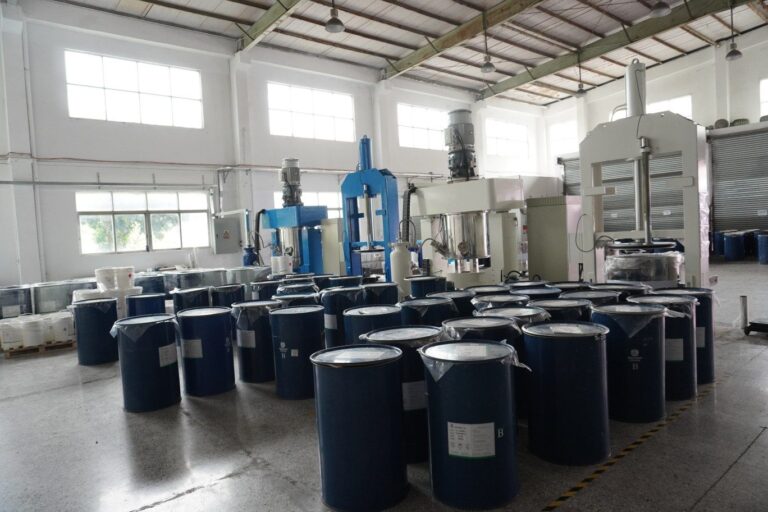
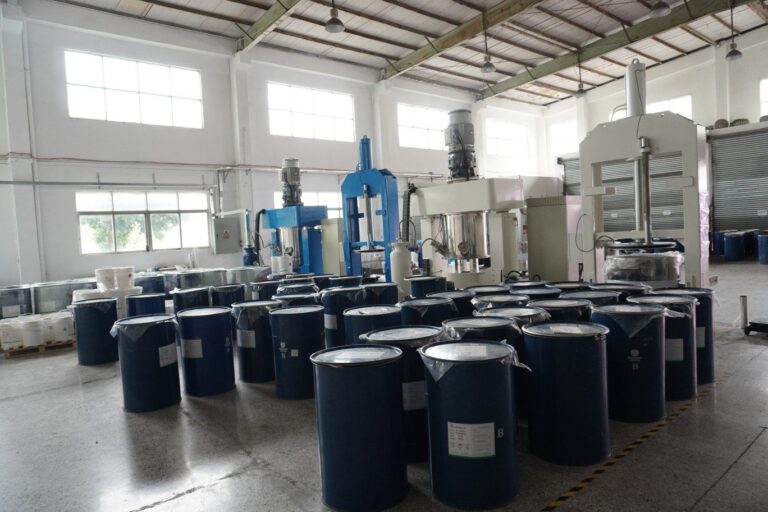
Inspection area — where compliance documentation meets the actual material
This means a material that passes a phthalate test on day one can fail the same test on day 500. The migration rate depends on temperature, humidity, and surface contact frequency. A PVC desk pad in an air-conditioned office at 22°C shows slow migration. The same material in a car interior at 65°C, or on a hotel chair in direct sunlight, shows accelerated migration that can exceed regulatory limits within months.
Key insight: Phthalate testing at the time of purchase does not guarantee compliance at the time of use. For applications involving heat exposure, skin contact, or enclosed spaces, the only safe specification is a material that contains no phthalates to begin with — not one that simply passes a content test at the factory gate.
This is why the eco-friendly silicone leather specification has gained traction in regulated markets — silicone chemistry doesn’t use plasticizers, so there’s nothing to migrate.
The One Material That Passes All 6 Items
Silicone leather passes all six chemical risk categories — not through additives or treatments, but through its inherent polymer chemistry. The Si-O backbone contains no chlorine, no phthalates, no plasticizers, and no solvent residues. The material is halogen-free, phthalate-free, PVC-free, formaldehyde-free, and VOC-free by composition, not by post-treatment.

PVC plastic leather closeup — the flexible surface that comes with hidden chemical costs
The table below maps the six compliance categories across three plastic leather types. When procurement teams specify by this matrix, the conversation shifts from “does your material have a compliance certificate?” to “which specific risks does your certificate cover, and which does it leave open?”
| Risk Category | Regulation | PVC Plastic Leather | PU Leather | Silicone Leather | Verification Test |
|---|---|---|---|---|---|
| Phthalates | REACH Annex XVII | Present (migrates over time) | Typically free | None (inherent) | EN 14372 / CPSC-CH-C1001 |
| Heavy Metals | RoHS / EN 71-3 | Possible (pigments) | Possible (pigments) | None detected | RoHS / EN 71-3 migration |
| VOC Emissions | ISO 16000-6 / VDA 277 | Moderate to high | Contains solvents (DMF) | Zero | ISO 16000-6 chamber |
| Formaldehyde | EN 717-1 / EU 2026 | Possible (crosslinkers) | Possible (crosslinkers) | None | EN 717-1 chamber |
| PAHs | AfPS GS 2019:01 | Possible (carbon black) | Possible (carbon black) | Passed | AfPS GS 2019:01 |
| Halogenated FR | EN 13773 / IEC 61249 | Inherent (chlorine) | Added (if FR required) | Halogen-free (inherent FR) | EN 13773 / IEC 61249-1 |
For brands evaluating PFAS-free leather compliance, silicone leather also addresses emerging “forever chemical” regulations that PVC and PU suppliers are still scrambling to address.
Frequently Asked Questions
Is all plastic leather toxic?
Not all plastic leather is equally toxic, but all plastic leather carries some chemical risk. PVC leather contains phthalate plasticizers that migrate over time, chlorine that releases dioxins when burned, and potentially halogenated flame retardants. PU leather avoids phthalates but can contain solvent residues (DMF) and formaldehyde from crosslinkers. The risk level depends on the specific chemical formulation, the application environment, and whether the supplier has tested across all six risk categories. Silicone leather is the only plastic-alternative material that is inherently free of all six risk categories — no phthalates, no heavy metals, zero VOC, no formaldehyde, no PAHs, and no halogenated compounds.
Can plastic leather pass REACH compliance?
Yes, but compliance depends on which REACH requirements are tested. A supplier certificate stating “REACH compliant” may only confirm that the material is registered under REACH — not that it has been tested for all SVHC restrictions. For PVC plastic leather, full REACH compliance requires phthalate testing per Annex XVII restrictions, SVHC screening for the current candidate list (240+ substances as of 2026), and specific testing for restricted PAHs. Many PVC suppliers provide partial compliance documentation that covers registration but not restriction testing. Procurement teams should request the specific test reports — not a blanket compliance statement. See our hydrolysis-resistant silicone leather page for material specifications that meet full compliance.
Specify by Chemistry, Not by Certificate
The procurement specification for plastic leather should never rely on a blanket “compliance certificate.” The specification should list each of the six risk categories, the applicable regulation, the required test method, and the acceptance criteria. Suppliers who can’t provide all six test reports are suppliers who leave compliance gaps — and those gaps become liability when the material reaches the market. Silicone leather is the only material in the plastic leather category that passes all six items inherently, without additives, without post-treatment, and without the risk of future migration. For brands operating in the EU, US, or any market with tightening chemical regulations, that’s the specification that closes every gap before it opens.
Request Chemical Compliance Samples
About TOPSUN
TOPSUN manufactures silicone leather that passes all six chemical compliance categories — phthalate-free, PVC-free, heavy metal-free, zero VOC, formaldehyde-free, and halogen-free — for brands facing tightening chemical regulations in EU and US markets across automotive, furniture, medical, and consumer goods applications.
REACH compliant (EC 1907/2006) | RoHS compliant | FDA 21 CFR 177.2600 food-contact | EN 71 toy-safe | PAHs passed (AfPS GS 2019:01) | EU E1 formaldehyde | Zero VOC (ISO 16000-6) | EN 13773 Class 4 flame retardant