A Seoul consumer electronics brand attempted to apply photocatalytic leather technology to PU leather laptop sleeves. The concept: coat the PU surface with titanium dioxide (TiO2) nanoparticles that would use ambient light to break down organic stains — a self-cleaning surface. Six months after launch, the sleeves weren’t self-cleaning — they were self-destructing. The TiO2 photocatalyst, activated by indoor lighting, was generating reactive oxygen species that attacked the polyurethane substrate itself. The PU coating broke down at the molecular level, creating surface tackiness, discoloration, and eventual cracking. The brand pulled the line after 340 warranty claims and $58,000 in replacements.
TOPSUN manufactures silicone leather with intrinsic self-cleaning properties that don’t require photocatalytic additives. The non-porous silicone surface repels liquids, resists stains, and is bleach-safe and alcohol-disinfectant compatible — achieving the self-cleaning promise through material chemistry rather than surface coatings that degrade their own substrate. With 200,000+ Martindale abrasion cycles and zero VOC production, our material delivers functional performance without the photocatalytic trade-off.
Request Free Self-Cleaning Samples
How Photocatalytic Leather Is Supposed to Work
Photocatalytic leather is created by incorporating titanium dioxide (TiO2) nanoparticles — typically nitrogen-doped or iron-nitrogen-doped (Fe-N-TiO2) for visible-light activation — into the surface coating of synthetic leather. When the photocatalyst absorbs photons, it generates reactive oxygen species (ROS) including hydroxyl radicals and superoxide anions. These ROS break down organic molecules on the surface — stains, bacteria, volatile organic compounds — into water and carbon dioxide. In laboratory conditions, methylene blue dye stains on photocatalytic leather surfaces degrade completely within 15 hours of UV exposure.
The smart materials guide documents this as one of several functional coating technologies being developed for synthetic leather. The self-cleaning, antimicrobial, and air-purifying properties are genuine — in lab conditions. The problem emerges when the technology meets real-world substrates.

Silicone curing oven — the solvent-free coating process crosslinks silicone at controlled temperatures, creating a non-porous surface with intrinsic stain resistance without photocatalytic additives
The Substrate Problem: When the Catalyst Eats Its Host
The fundamental flaw in photocatalytic leather isn’t the technology — it’s the substrate. TiO2 photocatalysts are non-selective. They generate reactive oxygen species that attack any organic molecule within their reactive radius. On a glass or ceramic surface, this is fine — those substrates are inorganic and immune to ROS attack. On a polyurethane coating, it’s catastrophic. Polyurethane is an organic polymer. The same ROS that degrade stains also degrade the PU molecular chain.
Research published in the National Center for Biotechnology Information demonstrates that TiO2-silica nanoparticle finishes on leather can achieve self-cleaning performance, but the study also notes that the photocatalytic activity affects the substrate over extended exposure. The NCBI study on multifunctional leather finishing shows that the trade-off between photocatalytic activity and substrate stability remains unresolved for PU-based materials.
Some manufacturers have attempted to solve this by applying a protective interlayer between the PU substrate and the TiO2 coating — but the interlayer itself becomes a failure point. If the interlayer is polymeric, it’s also organic and subject to ROS attack. If it’s ceramic, it creates adhesion problems and brittleness. The Seoul brand’s experience confirms what materials science has been telling the industry: you cannot put a non-selective photocatalyst on an organic substrate without long-term substrate degradation.

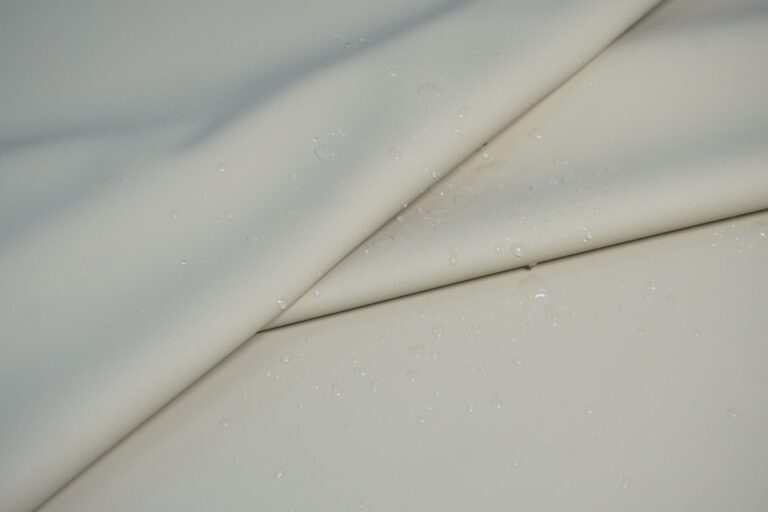
Water droplet test — silicone leather’s non-porous surface repels liquids at the molecular level, providing intrinsic self-cleaning without photocatalytic additives that degrade the substrate
Material Comparison: Self-Cleaning Approaches
| Property | TiO2 on PU | TiO2 on PVC | Sol-Gel TiO2 on Leather | Silicone (Intrinsic) |
|---|---|---|---|---|
| Self-cleaning mechanism | ROS degradation of organics | ROS degradation of organics | ROS + photocatalytic oxidation | Non-porous liquid repellency |
| Substrate degradation risk | High — PU is organic | High — PVC plasticizer attacked | Moderate — collagen is organic | Zero — silicone is inorganic |
| Activation requirement | UV or visible light | UV light | UV light | None — passive |
| Real-world substrate lifespan | 4-8 months | 6-12 months | 12-24 months | 10+ years |
| Cleaning method | Light-activated (slow) | Light-activated (slow) | Light-activated (slow) | Water wipe (instant) |
| Bleach / alcohol safe | No — accelerates degradation | No | No | Yes — fully compatible |
| Antimicrobial | Yes (ROS) | Yes (ROS) | Yes (ROS) | Yes (intrinsic, no additives) |
| VOC emission | Contains solvent carriers | Contains plasticizers | Sol-gel solvent residue | Zero VOC |
The comparison reveals the core issue: every photocatalytic approach requires light activation and attacks organic substrates. Silicone leather’s non-porous surface achieves self-cleaning through a completely different mechanism — physical liquid repellency rather than chemical degradation. The antimicrobial test guide documents how silicone’s intrinsic antimicrobial properties work without any photocatalytic additives or chemical treatments.
Why Silicone Leather Achieves Self-Cleaning Without Photocatalysts

Flame retardant test — silicone leather’s inherent material properties include self-extinguishing flame performance, antimicrobial activity, and stain resistance without any surface additives
Silicone leather’s self-cleaning performance comes from its molecular structure, not from a coating applied to its surface. The Si-O-Si backbone creates a surface that is:
- Non-porous — liquids bead up and roll off rather than penetrating. AATCC 127 water resistance certified. Coffee, ink, and oil sit on the surface and wipe clean with water.
- Stain-resistant — no chemical bond forms between staining agents and the silicone surface. ISO 105-X12 rubbing fastness Grade 4-5 means stains don’t transfer under mechanical cleaning.
- Bleach-safe — sodium hypochlorite (household bleach) at 5% concentration causes zero surface degradation. The same bleach destroys PU, PVC, and photocatalytic coatings.
- Alcohol-disinfectant compatible — 70% isopropyl alcohol wipes leave no residue, no tackiness, no surface change. Critical for medical and consumer electronics applications.
- Intrinsically antimicrobial — the silicone surface inhibits bacteria, mold, and mildew without chemical additives or photocatalytic activation. The mechanism is physical: microorganisms cannot adhere to or colonize the non-porous surface.
The key difference: photocatalytic leather requires light energy to generate reactive chemicals that break down stains. Silicone leather prevents stains from bonding in the first place. One approach is active, energy-dependent, and self-degrading. The other is passive, energy-independent, and permanent.
Frequently Asked Questions
Does photocatalytic leather actually work for self-cleaning?
Photocatalytic leather does work in laboratory conditions — TiO2 nanoparticles generate reactive oxygen species that break down organic stains when activated by UV or visible light. However, the same reactive oxygen species also attack the organic polymer substrate (PU or PVC) that the photocatalyst is applied to. In real-world conditions, this means the self-cleaning coating gradually degrades the material it’s supposed to protect, leading to surface tackiness, discoloration, and cracking within 4-12 months. The technology works against itself when applied to organic substrates.
Is there a self-cleaning leather that doesn’t degrade over time?
Yes. Silicone leather achieves self-cleaning through its non-porous molecular surface structure rather than through photocatalytic additives. The Si-O-Si backbone repels liquids and prevents stains from bonding — no light activation required, no reactive chemicals generated, no substrate degradation. Stains sit on the surface and wipe clean with water or bleach. This passive self-cleaning mechanism is permanent for the 10+ year service life of the material.
Self-cleaning technology should clean the surface — not consume it. TOPSUN’s silicone leather achieves the functional goal of photocatalytic leather (stain resistance, antimicrobial activity, easy cleaning) through material chemistry that doesn’t require light activation or generate self-degrading reactive species. Request your self-cleaning material evaluation kit today.