In Q1 2026, a procurement manager at a mid-sized furniture factory watched her leather hide cost climb 23% in a single quarter. She had budgeted for the year based on 2025 pricing — and was already $180,000 over by March. This isn’t an isolated story; it’s the new normal for B2B buyers sourcing genuine leather hides. Raw hide prices surged 62% on the Global Hide Price Index, cattle supply contracted 6.5%, and analysts at the Yale Budget Lab project leather goods to remain 22% elevated for the next one to two years (IB Times, 2026). Meanwhile, a quieter option sits off most procurement radars — one that locks in stable pricing for a decade.
Request Free Cost Comparison Samples
Why Leather Hide Cost Surged 62% in 2026
Here’s the thing about leather hide price fluctuation: it’s driven by forces completely disconnected from leather demand. Ranchers raise cattle for meat, not hides. When Brazil’s cattle slaughter rates stayed low throughout 2025, global raw hide supply dropped roughly 6.5% — but demand from automotive, furniture, and fashion held firm. The result was a supply-demand mismatch that sent the Global Hide Price Index from a baseline of 100 to 162 in under eighteen months (Global Leather Market Outlook 2026).
Layer on top of that the tariff environment. The Yale Budget Lab attributes a significant portion of the projected 22% price increase on leather goods to tariff impacts on imported hides and finished leather. For procurement teams, this means the price you negotiated in Q4 2025 may no longer reflect what you actually pay in Q3 2026 — and renegotiation cycles are getting shorter. For a deeper look at structural leather hide supply chain risk factors, our previous analysis covers the key red flags.
Key takeaway: Hide pricing volatility is structural, not cyclical. B2B buyers who plan around “normal” 2024 pricing are budgeting against a market that no longer exists.

Automated production line at TOPSUN’s facility — stable capacity of 500,000+ m/month, unaffected by cattle market volatility
Real Leather Hide Cost per Square Foot by Grade
Not all leather hide cost per square foot is created equal. The grade of the hide — which layer of the skin is used and how much the surface has been corrected — drives pricing dramatically. Here’s what B2B buyers actually encounter in 2026 markets (Genuine Leather Price Guide):
| Leather Grade | Cost per sq ft | Expected Lifespan | Common Application |
|---|---|---|---|
| Full-grain cowhide | $8 – $15 | 15 – 25 years | Luxury furniture, premium bags |
| Top-grain cowhide | $6 – $12 | 10 – 15 years | Mid-market upholstery, wallets |
| Split leather | $3 – $6 | 5 – 7 years | Budget linings, low-end goods |
| USA finished full-grain | $10 – $18 | 20+ years | Automotive OEM, aviation |
In our experience advising procurement teams, buyers often fixate on the per-square-foot number and stop there. But a $15/sq ft full-grain hide doesn’t equal $15 of usable material per square foot — and that’s where the real cost story begins.
The Hidden Costs Beyond the Hide Price
When procurement teams ask “how much does a leather hide cost,” they’re usually quoting the supplier’s sticker price. The actual cost-per-use tells a different story. Here’s what inflates the real number:
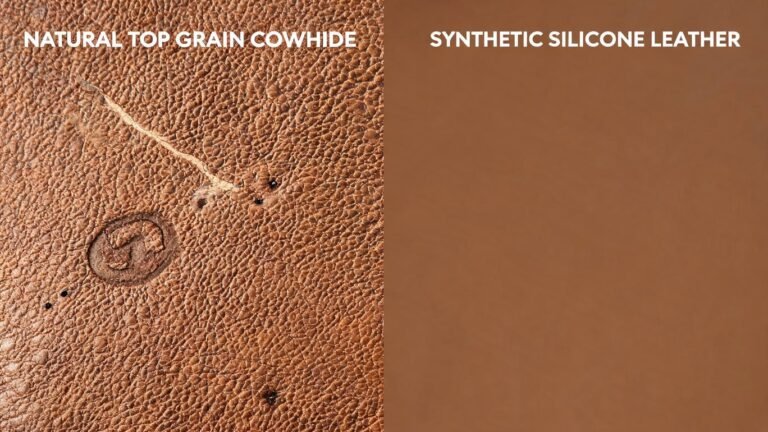
- Cutting waste: Natural hides have irregular shapes, scars, and brand marks. Expect 15–25% waste on full-grain hides versus 3–5% on roll-based synthetic materials.
- Defect rate: Up to 30% of a natural hide may be unusable for premium applications due to insect bites, wrinkles, or stretching during tanning.
- Color matching: Each hide absorbs dye differently. Batch-to-batch color consistency is a known challenge, requiring overspend on surplus material for repairs.
- Maintenance and conditioning: Genuine leather requires periodic conditioning treatments ($0.50–$2.00/sq ft annually) to prevent cracking — a cost rarely factored into initial procurement.
- Replacement cycles: In commercial upholstery, genuine leather typically needs replacement at 5–7 years; in automotive interiors, 3–5 years under UV exposure.

Color swatch rack — natural hide variation means each batch requires individual color matching, adding hidden procurement cost
One of our clients — a regional furniture manufacturer — switched from full-grain cowhide to silicone-coated fabric after calculating that their true cost per usable square foot was $19.40, not the $12.50 they were paying per hide. The 55% hidden cost overhead came from waste, color matching labor, and annual conditioning supplies.
Silicone Leather vs Genuine Hide: 5-Year TCO

Supplier evaluation guide — comparing genuine hide sourcing against synthetic alternatives requires a 5-year TCO framework
The synthetic leather alternative to real hide conversation often stops at material cost. But when you model a five-year total cost of ownership — including waste, maintenance, replacement, and operational disruption — the picture flips. Our leather covering TCO analysis framework shows how these hidden costs compound. Here’s the comparison based on our factory testing data and client procurement records:
| Cost Factor (5-Year) | Genuine Full-Grain Hide | Silicone Leather |
|---|---|---|
| Material cost / sq ft | $12.50 | Comparable OEM pricing |
| Cutting waste rate | 20% | 3–5% |
| Replacement cycle | 5–7 years | 10+ years (verified) |
| Annual maintenance | $0.50–$2.00 / sq ft | $0 (water-cleanable) |
| Supply price stability | Volatile (±62% in 18 months) | Contract-locked pricing |
| 5-year TCO / sq ft (est.) | $19–$25 | $8–$12 |
In our Martindale abrasion testing, silicone leather demonstrates 200,000+ cycles without surface breakdown — a benchmark that genuine leather typically reaches at 15,000–25,000 cycles before showing visible wear. That’s an 8–13x durability advantage that directly translates to fewer replacement cycles over a product’s commercial life. For a 500-seat auditorium, that’s the difference between reupholstering once in 5 years versus once in 10+ years.
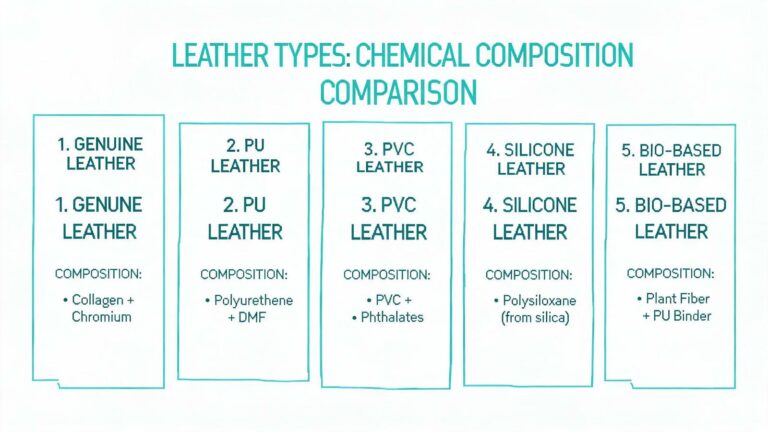
Our factory production operates on a solvent-free dry coating process, which means pricing isn’t subject to the petrochemical volatility that affects PU and PVC alternatives either. With 500,000+ meters of monthly capacity across three production bases, we can lock in contract pricing for 12-month terms — something hide suppliers simply cannot guarantee given the cattle market’s structural unpredictability.
Frequently Asked Questions
Is leather hide cost expected to decrease in 2027?
Industry analysts project leather goods prices to remain approximately 22% elevated through at least 2026–2027. The underlying drivers — shrinking cattle herds, tariff structures, and reduced global hide supply — are structural rather than temporary. A meaningful price decrease would require a sustained increase in cattle slaughter rates, which current beef market dynamics do not support.
How does silicone leather compare to genuine hide in durability testing?
Under ISO 12947-2 Martindale abrasion testing, TOPSUN silicone leather achieves 200,000+ cycles without surface degradation, compared to genuine leather’s typical 15,000–25,000 cycles. Silicone leather also passes UV resistance testing at 1,000+ hours with no fading (ASTM G154), while genuine leather shows visible degradation under equivalent UV exposure. Learn more in our silicone vs PU material comparison.
Making Procurement Decisions in a Volatile Market
The leather hide cost surge of 2026 isn’t a blip — it’s a structural shift that rewards buyers who think in total cost of ownership, not just unit price. For procurement teams evaluating alternatives, the question isn’t whether to abandon genuine leather entirely; it’s whether your application genuinely requires the aesthetic and tactile properties of natural hide, or whether a high-performance synthetic can deliver equivalent or superior performance at a fraction of the 5-year cost.
Silicone leather offers pricing stability, 10+ year verified service life, and zero maintenance cost — three factors that directly address the pain points driving today’s procurement budget overruns. Whether you’re sourcing for automotive interiors, furniture upholstery, or consumer goods, modeling the five-year TCO before committing to a material decision is no longer optional; it’s due diligence.
About TOPSUN
TOPSUN manufactures solvent-free silicone leather for B2B buyers seeking cost-stable, supply-secure alternatives to volatile genuine hide markets, serving automotive interior, furniture upholstery, and consumer goods applications.
200,000+ Martindale abrasion cycles verified (ISO 12947-2) · 10+ year service life · 500,000+ m monthly capacity across three facilities · MOQ 500m with 7–15 day lead time · Free A4 swatches shipped worldwide via DHL/FedEx