If you own anything made of faux leather — a sofa, a bag, a jacket, a car seat — you have probably wondered whether you should be using a fake leather conditioner to keep it looking good. After all, genuine leather needs regular conditioning, right? So fake leather must need it too… or does it?
The short answer is: it depends on what kind of fake leather you have and what you want to achieve. But here is the thing that most product labels will not tell you — a lot of fake leather conditioner products on the market do not actually do what they claim, and some can even damage your faux leather by causing discoloration, stickiness, or surface degradation. In this guide, I will walk you through what works, what does not, and how to keep your faux leather looking great without wasting money on unnecessary products.
See Low-Maintenance Leather Materials

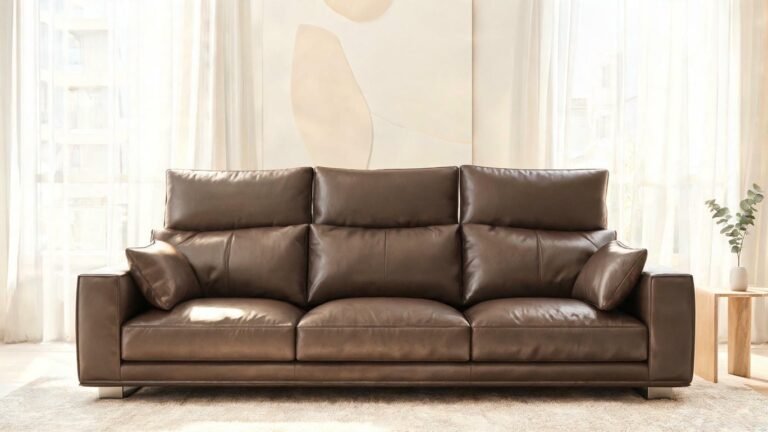
Well-maintained faux leather stays soft and supple — but does it actually need conditioner to stay that way?
First: Why Genuine Leather Needs Conditioner (and Fake Leather Does Not)
To understand whether fake leather needs conditioner, you first need to understand what conditioner actually does for real leather. Genuine leather is made from animal hide, which contains natural oils and fats that keep it soft and flexible. Over time, these oils evaporate — especially with heat, sunlight, and regular use — and the leather dries out, becomes stiff, and can crack. Leather conditioner replaces those lost oils, keeping the hide moisturized and supple.
Fake leather — whether it is PU, PVC, microfiber, or silicone — is a synthetic material. It has no natural oils to lose. It does not dry out from the inside out like genuine leather does. Its surface is a polymer coating, and its flexibility comes from the polymer formulation itself, not from oils that need replenishing. So the core reason for conditioning real leather simply does not apply to fake leather.
That said, fake leather can develop issues that look similar to drying — surface wear, fading, scuffing, and a dull or chalky appearance. But these are not caused by oil loss, and slathering on a leather conditioner is not going to fix them. In fact, it might make them worse.
Myth Busting: “Conditioning” fake leather does not restore oils because there are no oils to restore. What some conditioners actually do is add a temporary surface coating that makes the material look shinier — but this is cosmetic, not restorative.
What “Fake Leather Conditioner” Products Actually Do
Walk down the cleaning products aisle or search online, and you will find dozens of products labeled “faux leather conditioner,” “synthetic leather care,” “vinyl conditioner,” and so on. What are these products, and do they do anything useful?
Most faux leather conditioners fall into one of three categories:
- Silicone-based sprays — These add a thin silicone coating to the surface that makes the material look shiny and feel slippery. They provide some water repellency but can build up over time, creating a sticky or tacky surface that attracts dust. They are cosmetic only.
- Oil-based conditioners — These are essentially the same products sold for genuine leather, repackaged for faux leather. The oils sit on top of the synthetic surface and can be difficult to remove. They may darken the material temporarily, but they do not absorb or condition anything.
- Water-based protectants — These are the most legitimate category. They add a clear, thin protective coating to the surface that can help resist stains, UV fading, and minor abrasion. They are not really “conditioners” — they are more like a topcoat refresher.
| Product Type | What It Does | Verdict |
|---|---|---|
| Silicone Spray | Adds temporary shine and slippery feel | Skip — builds up, attracts dust |
| Oil-Based Conditioner | Sits on surface, may darken color temporarily | Skip — can damage PU coating over time |
| Water-Based Protectant | Adds protective topcoat, resists stains and UV | Useful — for high-wear items |
| Mild Soap + Water | Cleans surface dirt and grime | Best — use regularly |

Most faux leather is already water-resistant — a simple wipe-down with mild soap and water is usually all the cleaning it needs
The Right Way to Care for Fake Leather
If conditioner is not the answer, then what is? Actually, keeping fake leather looking great is simpler than you think — and it mostly involves prevention and gentle cleaning. Here is my step-by-step routine that works for all types of faux leather.
Step 1: Regular dusting and wiping. Once a week (or more often for high-use items), wipe the surface with a soft, dry microfiber cloth to remove dust and surface dirt. This prevents grime from building up and becoming harder to remove. For sofas and seating, vacuuming with a soft brush attachment also works well.
Step 2: Gentle cleaning when needed. When you see visible dirt, stains, or spills, clean the area promptly with a solution of mild dish soap and warm water. Dip a clean microfiber cloth in the solution, wring it out well (it should be damp, not soaking), and gently wipe the surface. Then wipe again with a clean, damp cloth to remove soap residue, and pat dry with a towel. Do not use harsh chemicals, bleach, abrasive cleaners, or scrub brushes — these can damage the surface coating.
Step 3: Protect from sun and heat. This is the single most important thing you can do to extend the life of your faux leather. UV radiation from direct sunlight causes fading, discoloration, and surface cracking — especially for PU leather, which is particularly susceptible to photodegradation. Keep faux leather furniture out of direct sun, or use window treatments. Do not place hot items directly on faux leather surfaces. And for car interiors, use sunshades when parked outside.
Step 4: Avoid sharp objects and abrasive materials. Fake leather scratches more easily than genuine leather, and once the surface coating is scratched, it cannot be fixed. Be careful with keys, pens, pet claws, and other sharp items on faux leather surfaces. If you have pets, consider using a protective throw on furniture.
Step 5: Rotate and flip. For furniture cushions, rotate and flip them regularly to distribute wear evenly. This prevents one area from getting all the use and developing a worn, shiny spot long before the rest of the piece shows its age.

Proper care and maintenance can significantly extend the life of any leather product — real or faux
Care Differences by Material Type
Not all fake leather is the same, and the care routine that works for one type might not be ideal for another. Here is a quick breakdown by material.
PU leather is the most common type of faux leather, and it is also the most sensitive. PU can dry out and crack from UV exposure and heat, so sun protection is critical. Clean with mild soap and water only — avoid solvent-based cleaners, alcohol, and oil-based products, which can break down the PU coating. PU leather does not need conditioner, but a water-based UV protectant can be helpful for items that see some sun exposure.
PVC (vinyl) leather is more durable and water-resistant than PU. It can handle more aggressive cleaning — you can even use diluted bleach solutions on white vinyl for tough stains. The main issue with vinyl is plasticizer migration — over time, the plasticizers that keep it flexible can migrate to the surface, creating a sticky or greasy feel. Regular wiping with a damp cloth helps remove this buildup. Avoid oil-based products, which can accelerate plasticizer loss.
Silicone leather is the lowest-maintenance option of all. It is inherently UV-resistant, stain-resistant, and temperature-stable. Spills wipe off easily with a damp cloth — even tough stains like wine, coffee, and ink. Silicone does not need any conditioner or protectant because it is already inert and stable. You can clean it with mild soap, rubbing alcohol, or even bleach without damaging the surface. For anyone who hates maintenance, silicone leather is basically a “wipe and forget” material. Learn more about silicone leather properties and care.
Microfiber leather has a suede-like texture that requires different care. You cannot just wipe it with a cloth — you need to use a soft brush to restore the nap. For stains, use a specialized microfiber cleaner and blot (do not rub). Some microfiber leathers can be gently brushed with a suede brush to refresh the surface. Always check the manufacturer’s care instructions, as microfiber formulations vary.

Material testing in the factory — the real durability of fake leather comes from its formulation, not from after-market conditioners
When a Protectant Actually Helps (and When It Does Not)
Let me be clear about when a faux leather protectant (the water-based kind) is actually worth buying, and when you can skip it entirely.
Worth it if:
- Your faux leather item gets a lot of direct sun exposure and you cannot move it
- It is a high-touch item (like a steering wheel or chair arm) that sees heavy daily use
- You have kids or pets and the material gets constant spills and stains
- The manufacturer specifically recommends a protectant for the material
Save your money if:
- The item is indoor furniture in a shaded room with no direct sun
- You already clean it regularly with mild soap and water
- It is silicone leather — it is already as durable and stain-resistant as it gets
- The item is low-use or decorative rather than functional
If you do decide to use a protectant, always test it on an inconspicuous area first — the bottom of a sofa cushion, the back of a bag, the underside of a strap. Wait 24 hours and check for discoloration, stickiness, or any other changes before applying it to the whole piece. And follow the product instructions — more is not better. A thin, even coat is all you need. For furniture applications, this is especially important because of the large surface area and high visibility.
Compare Low-Maintenance Material Samples
Frequently Asked Questions
Can I use real leather conditioner on fake leather?
I do not recommend it. Real leather conditioners are oil-based and designed to absorb into porous genuine leather. Fake leather has a non-porous synthetic surface, so the conditioner just sits on top — creating a greasy, sticky residue that attracts dust and can be hard to remove. Oil-based conditioners can also break down the PU coating on faux leather over time, causing it to degrade faster. If you have already applied real leather conditioner to your fake leather by mistake, clean it off with mild soap and warm water as soon as possible, using a damp microfiber cloth to gently wipe away the residue.
How do I fix peeling or cracking faux leather?
Unfortunately, once faux leather starts peeling or cracking, there is no way to fully repair it — the surface coating has been damaged, and no conditioner or repair product can restore it to its original condition. For small, minor areas, you can find leather repair kits with color-matched fillers that can make the damage less noticeable, but they will not look perfect and they are a temporary fix at best. Prevention is really the only solution: keep your faux leather out of direct sun, avoid harsh cleaners, and do not let it get too hot. If you have a piece that is peeling badly, your options are to reupholster it with a new material or replace it.
Keep It Simple: Clean Gently, Protect from Sun, Skip the Conditioner
Fake leather conditioner is one of those products that sounds like it should be necessary — after all, real leather needs conditioning, so why would not fake leather? — but the science just does not support it. Synthetic materials do not have oils to replenish, and most conditioner products do nothing more than add a temporary shine at best, or cause damage at worst.
The best care routine for fake leather is simple: wipe it regularly with a soft cloth, clean spills promptly with mild soap and water, and keep it out of direct sun and away from excessive heat. That is it. No fancy products, no expensive conditioners, no complicated routines. Just basic, consistent maintenance that takes a few minutes a week and keeps your faux leather looking great for years.
Explore Low-Maintenance Furniture Leather
About TOPSUN
TOPSUN silicone leather is designed for low-maintenance, long-lasting performance — stain-resistant, UV-stable, and easy to clean with just soap and water. No conditioners or special treatments required.
Stain-resistant (wine, coffee, ink) • UV-stable (no yellowing) • Temperature range -40°C to 250°C • 200,000+ Martindale cycles • Easy wipe-clean surface • ISO 9001 certified