A procurement manager at a European furniture brand recently told us their entire Q1 shipment was held at customs for 19 days — because the chromium VI test report didn’t match the production batch number. REACH Annex XVII Entry 72 has been enforceable since January 2026, banning leather articles containing ≥3 mg/kg of chromium VI in skin-contact products. Yet most B2B buyers still accept supplier safety claims without batch-level verification.
The cost of non-compliance isn’t just delays — it’s destroyed product, contractual penalties, and brand-damaging recalls. Leather chemicals remain the single largest compliance risk in synthetic material procurement. This article identifies which chemicals to eliminate, which regulations to verify, and what documents to demand before signing a purchase order.
Request Chemical-Free Leather Samples

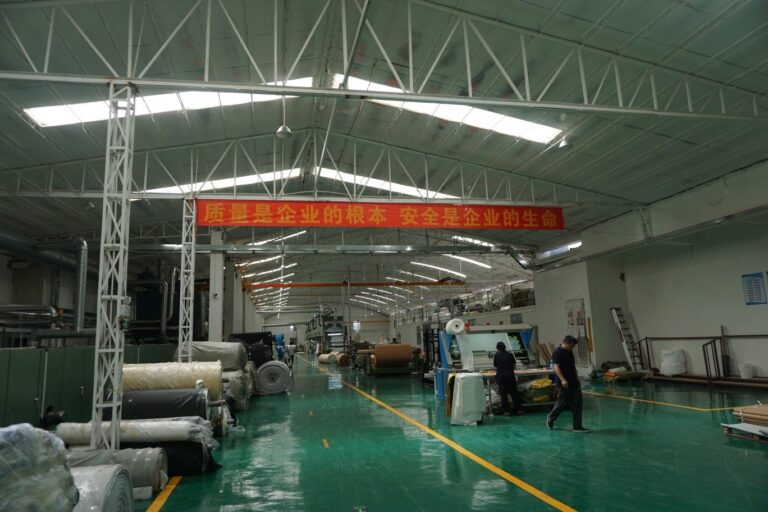
Chemical drums in a leather processing workshop — every drum must be traceable to a test report
The 7 Restricted Substances Hiding in Leather Chemicals
Leather processing involves dozens of chemical inputs — tanning agents, dyes, fatliquors, finishes, and preservatives. The TFL Eco Guidelines identify the seven substance groups most frequently flagged in compliance audits:
| Restricted Substance | Source in Leather Process | Regulatory Limit | Health Risk |
|---|---|---|---|
| Chromium VI | Chrome tanning oxidation | ≤3 mg/kg (REACH Annex XVII) | Carcinogenic, skin sensitization |
| Formaldehyde | Tanning, finishing | ≤75 mg/kg (EU E1) | Respiratory irritant, carcinogen |
| DMF (dimethylformamide) | PU leather production | SVHC under REACH | Reproductive toxicity |
| Phthalates | PVC plasticizers | 0.1% limit (REACH) | Endocrine disruption |
| Chlorinated phenols | Preservatives (PCP, TeCP) | ≤5 mg/kg (various) | Toxic, persistent pollutant |
| Nonylphenol ethoxylates | Wetting/scouring agents | Banned (REACH) | Aquatic toxicity, hormone disruption |
| Heavy metals (Pb, Cd, Hg) | Dyes, pigments | RoHS limits | Neurotoxicity, organ damage |
Not so fast — the list isn’t static. REACH SVHC candidates are updated twice annually, meaning a material that complied last year may not comply today. The ZDHC (Zero Discharge of Hazardous Chemicals) Roadmap to Zero program adds further restrictions that major brands now require from their supply chains. Procurement teams need a system for tracking regulatory changes, not a one-time compliance check.
Chromium VI: The REACH Compliance Deadline That Already Passed
Here’s the thing about chromium VI: it doesn’t come from the tanning agent itself. Chrome-tanned leather uses chromium III salts, which are relatively safe. Chromium VI forms later — during storage, under heat, or in alkaline conditions — when chromium III oxidizes. This means a compliant batch at the factory can become non-compliant by the time it reaches your warehouse.
The 3 mg/kg limit applies to any leather article in prolonged skin contact — footwear, gloves, furniture upholstery, car seats, handbags, watch straps. That’s not a narrow category. It covers most B2B leather applications. China’s new GB 20400-2026 standard, effective April 2027, adds further restrictions with expanded test items and tighter limits.

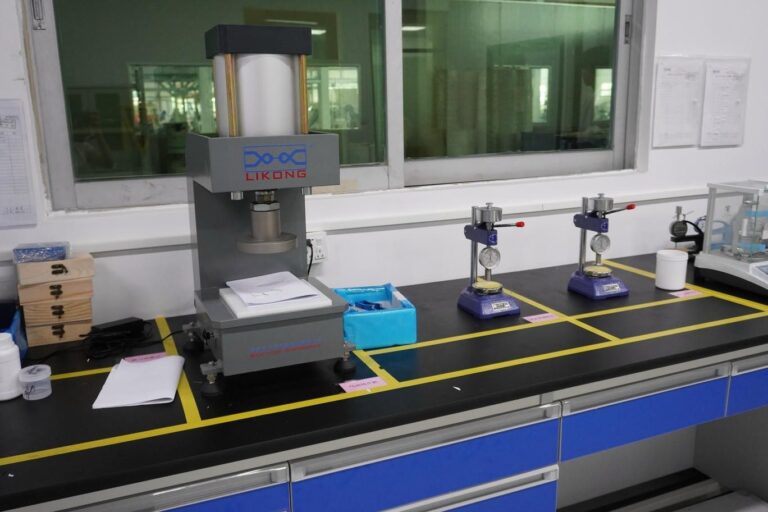
Color fastness testing machine — one of several tests required to verify leather chemical compliance
DMF and Solvent-Based PU: Why Leather Chemicals Pollute Indoor Air
Polyurethane leather production relies on dimethylformamide (DMF) as a solvent. DMF is classified as a Substance of Very High Concern under REACH due to reproductive toxicity. While residual DMF in finished PU leather is typically low, the manufacturing process exposes workers and releases VOCs into the environment.
In our production facility, we eliminated DMF entirely by switching to a solvent-free dry coating process for silicone leather. The difference is measurable: ISO 16000-6 chamber testing shows zero detectable VOC emissions from our finished material. PU leather, even water-based PU, typically registers detectable VOC levels. For automotive interiors where cabin air quality is regulated by VDA 277, this distinction is not academic — it’s a compliance requirement.
Procurement reality check: If your supplier cannot provide ISO 16000-6 or VDA 277 test data with the batch number matching your PO, the claim “low VOC” is unverifiable. Request the full chamber test report — not a summary, not a data sheet — before approving the material.

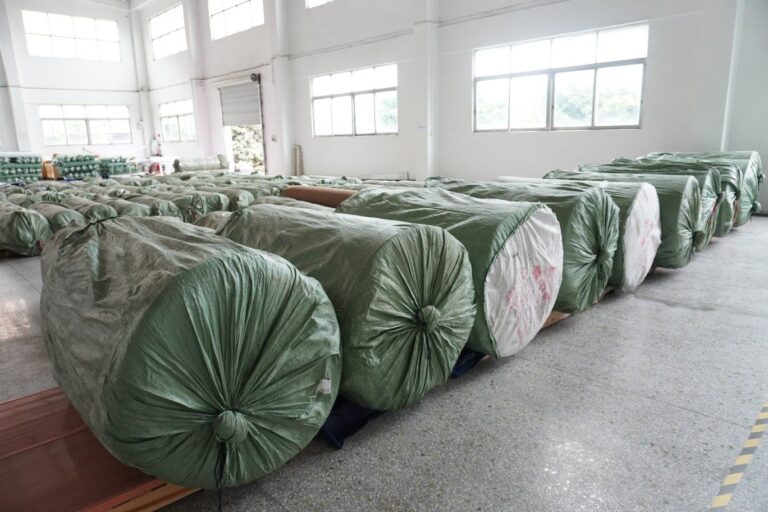
Inspection area where incoming materials are verified against chemical compliance documentation
How Silicone Leather Eliminates Leather Chemicals Entirely
Silicone leather represents a fundamentally different chemistry. The base polymer — liquid silicone rubber — is coated onto fabric backing through a dry process that uses no solvents, no plasticizers, no chromium, no aldehydes, and no phthalates. There’s nothing to restrict because nothing hazardous was added.
In our experience transitioning B2B clients from PU to silicone leather, the compliance documentation burden drops dramatically. Instead of tracking REACH SVHC updates for dozens of chemical inputs, the compliance file contains three documents: REACH compliance statement, ISO 16000-6 VOC test, and ISO 10993-5 biocompatibility certification. One of our medical device clients reduced their supplier audit preparation time by 60% after switching to eco-friendly silicone leather — not because the material is magical, but because there are simply fewer chemicals to audit.
The silicone vs PU comparison shows that eliminating leather chemicals isn’t a trade-off — it’s an upgrade. Silicone leather delivers 200,000+ Martindale cycles, 10+ year service life, and -40°C to 250°C temperature tolerance without a single restricted substance in the formulation.

Water-based PU production reduces but does not eliminate chemical inputs — silicone leather goes further
Chemical Audit Checklist: 6 Documents to Request From Your Supplier
Whether you’re sourcing chrome-tanned, PU, or silicone leather, these six documents form the minimum viable compliance file. If a supplier cannot produce any of these within 72 hours, consider it a red flag:
• REACH SVHC full-list compliance statement — signed, dated, referencing the current SVHC candidate list version
• Chromium VI test report — per ISO 17075, batch-referenced to your PO
• VOC emission test — ISO 16000-6 (general) or VDA 277 (automotive), full chamber data
• RoHS heavy metal screening — lead, cadmium, mercury, chromium VI
• Formaldehyde emission report — per EN 717-1
• SDS (Safety Data Sheet) — GHS-formatted, 16 sections, for any chemical input used in production
For more context on compliance frameworks, see our analysis of leather and PU compliance safety and our guide to solvent-free synthetic leather. The procurement function’s job isn’t to test chemicals — it’s to verify that someone else did, properly, on the right batch.
Zero VOC verified — how TOPSUN’s silicone leather eliminates chemical compliance risk at the material level
Eliminating Chemicals Is Cheaper Than Auditing Them
Leather chemicals compliance is a recurring cost — test reports expire, regulations update, and each new batch requires re-verification. The procurement teams that gain a competitive edge are the ones who eliminate the chemical risk at the source rather than auditing it perpetually. Silicone leather removes chromium, DMF, phthalates, and formaldehyde from the equation entirely — turning a compliance liability into a compliance asset.
Get Chemical-Free Leather Samples
About TOPSUN
TOPSUN manufactures silicone leather that eliminates conventional leather chemicals entirely — no chromium, no aldehydes, no DMF, no plasticizers — for B2B brands requiring REACH-compliant, health-safe materials across automotive, furniture, and healthcare applications.
Zero VOC verified to ISO 16000-6 · REACH SVHC compliant · FDA 21 CFR 177.2600 food-contact certified · ISO 10993-5 biocompatibility certified · EN 13773 Class 4 flame retardant · 500,000+ m monthly capacity