Color is the number one reason B2B leather orders get rejected on arrival. A furniture brand orders 500 meters of “warm beige” for a new sofa line. The first batch arrives perfect. The second batch, three weeks later, arrives visibly different — not wrong enough to fail inspection, but different enough that customers notice when the sofa sits next to last season’s model in a showroom. The brand eats the rework cost, the supplier blames natural hide variation, and the cycle repeats.
This isn’t a supplier quality problem — it’s a material chemistry problem. Genuine leather is drum-dyed, and even with pH-controlled processes and identical dye lots, batch-to-batch Delta E values commonly range from 2.8 to 5.6. That’s well above the 1.5 threshold the human eye perceives as a different color. PU and PVC leather achieve better initial matching, but surface pigments drift after 12–18 months of UV exposure, causing color shift within a single product line.
Silicone leather solves both problems. The color is integrated into the silicone polymer during platinum-curing — not applied as a surface coating — which means batch consistency is controlled at the pigment paste formulation stage, not dependent on substrate absorption. TOPSUN’s color matching process delivers Delta E ≤ 1.0 from the first sample to the thousandth batch. Here’s how the process works, what Delta E actually means, and how to verify that your supplier can deliver color consistency at production scale.

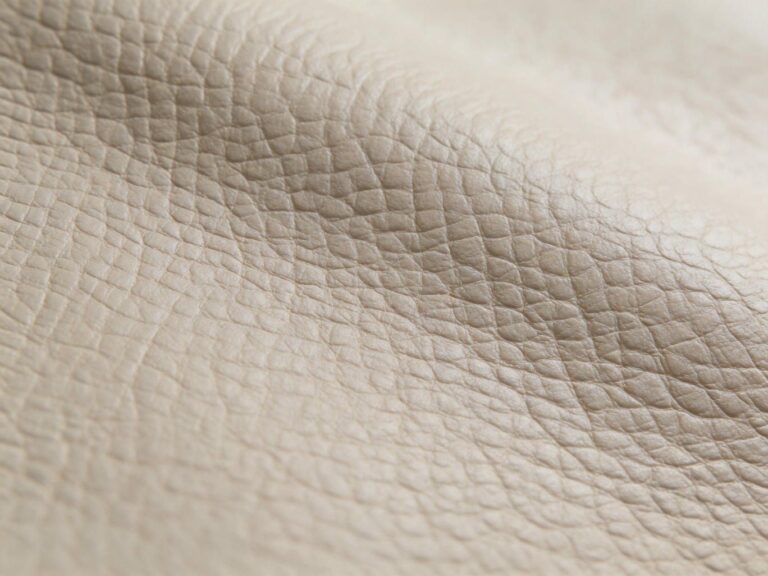
Custom color development — pigment paste formulation and sample evaluation under D65 standard lighting
The 6-Step Silicone Leather Color Matching Process
Achieving Delta E ≤ 1.0 isn’t about eyeballing a color and hoping. It’s a controlled laboratory process that goes from target input to batch production in 7–10 days. Here’s what happens at each step.
Step 1: Target Input (Day 1)
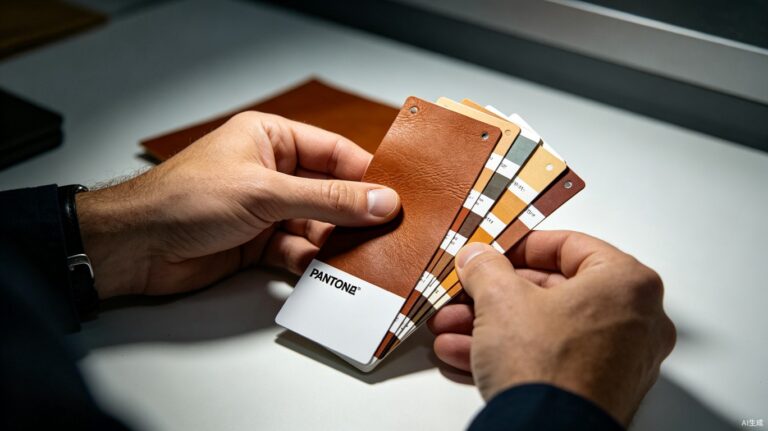
The process starts with a color target — typically a Pantone [$TOPSUN](https://www.pantone.com/) code, RAL number, NCS reference, or a physical color chip sent to the lab. For brand-specific colors, we also accept physical product samples — a piece of existing upholstery, a fabric swatch, or a finished good — and reverse-match the color. The target is logged into the color management system with spectrophotometer readings under D65 (standard daylight) and A (incandescent) illuminants to detect potential metamerism.
Step 2: Pigment Paste Formulation (Days 2–3)
Unlike PU leather, which uses solvent-based pigment coatings applied after the substrate is formed, silicone leather integrates color into the polymer itself. Pigment pastes are formulated to be compatible with platinum-cured silicone resins — meaning the pigment becomes part of the cross-linked polymer matrix, not a surface layer. The lab develops three variants: an on-target match, a slightly lighter shade, and a slightly deeper shade. This three-variant approach gives the client a visible range to evaluate under their own lighting conditions.
Step 3: Lab Sample Production (Days 3–4)
The three pigment formulations are applied to a small drum using the actual production substrate — the same base fabric, the same thickness, the same texture pattern. This is critical: color appears different on different substrates. A color that reads as “warm beige” on a lychee texture may look cooler on a smooth texture because of how light scatters off the surface pattern. By matching on the actual production substrate, the sample represents what production rolls will look like, not what a flat lab sample predicts.
Step 4: Delta E Verification (Day 5)
Each variant is measured against the target using a spectrophotometer under D65 lighting. The measurement produces a Delta E value — the mathematical distance between two colors in CIELAB color space. A Delta E of 0 means the colors are identical. The human eye typically perceives color difference at Delta E > 1.0. TOPSUN’s internal standard is Delta E ≤ 1.0, meaning the color difference between the sample and your target is imperceptible to the human eye. The spectrophotometer data is recorded and shared with the client.

Color fastness testing equipment — spectrophotometer verification ensures Delta E ≤ 1.0 before production approval
Step 5: Client Approval (Days 6–7)
The three variants are shipped to the client for evaluation. We recommend reviewing samples under D65 lighting (standard daylight simulator) and under the actual lighting where the finished product will be used — showrooms, retail floors, or vehicle interiors often use different light temperatures. The client selects the approved variant, and the approved pigment formulation is locked into the production system.
Step 6: Batch Production and Consistency Protocol (Day 8+)
Once the formulation is locked, every production batch is spectrophotometer-verified against the approved standard before shipping. This is the step that separates real color management from one-time matching. A supplier that can match a color once but can’t reproduce it across batches is selling you a sample, not a material. TOPSUN’s batch-to-batch consistency protocol means roll #1 and roll #1000 are spectrophotometer-verified to the same Delta E ≤ 1.0 standard.
Delta E: What the Number Means and Why 1.0 Matters
Delta E (ΔE) is the standardized metric for quantifying color difference. It measures the distance between two colors in CIELAB color space — a three-dimensional model where L* represents lightness, a* represents green-to-red, and b* represents blue-to-yellow. The higher the Delta E, the more different two colors appear. Here’s what different values mean in practice:
| Delta E Range | Perceptibility | What It Means for B2B Production |
|---|---|---|
| ≤ 1.0 | Imperceptible | Colors appear identical. Acceptable for premium brand production where adjacent products must match. |
| 1.0–2.0 | Barely perceptible | Acceptable for general commercial furniture. Noticeable only under direct comparison. |
| 2.0–3.5 | Perceptible | Visible color difference. Products placed side-by-side look mismatched. Common in genuine leather batches. |
| 3.5–5.6 | Clearly different | Colors are recognizably different shades. Typical of genuine leather drum-dyed batches. Triggers customer returns. |
| > 5.6 | Different color | Colors appear as distinct shades. Production lot failure in any quality standard. |
The data is clear: genuine leather, even from top-tier tanneries with pH-controlled drum-dyeing, produces batch Delta E values of 2.8–5.6. That’s in the “perceptible to clearly different” range — which is why furniture brands using genuine leather routinely experience color matching complaints. Silicone leather’s integrated pigment system, verified by spectrophotometer at each batch, keeps Delta E at or below 1.0 across the entire production run.
Color Matching Performance: 4 Leather Types Compared
| Color Property | Genuine Leather | PU Leather | PVC Leather | Silicone Leather |
|---|---|---|---|---|
| Color application method | Drum dye (aniline/semi-aniline) | Surface pigment coating | Surface pigment + plasticizer | Integrated in polymer matrix |
| Batch Delta E (typical) | 2.8–5.6 | 1.5–3.0 | 2.0–4.0 | ≤ 1.0 |
| UV color stability (1,000 hrs) | Moderate fading | Significant fading | Yellowing + fading | Grade 4–5 (minimal) |
| Metamerism risk | High | Moderate | High | Low |
| Color development lead time | 3–6 weeks | 2–4 weeks | 2–4 weeks | 7–10 days |
| Batch verification | Visual inspection | Visual + occasional | Visual inspection | Spectrophotometer per batch |

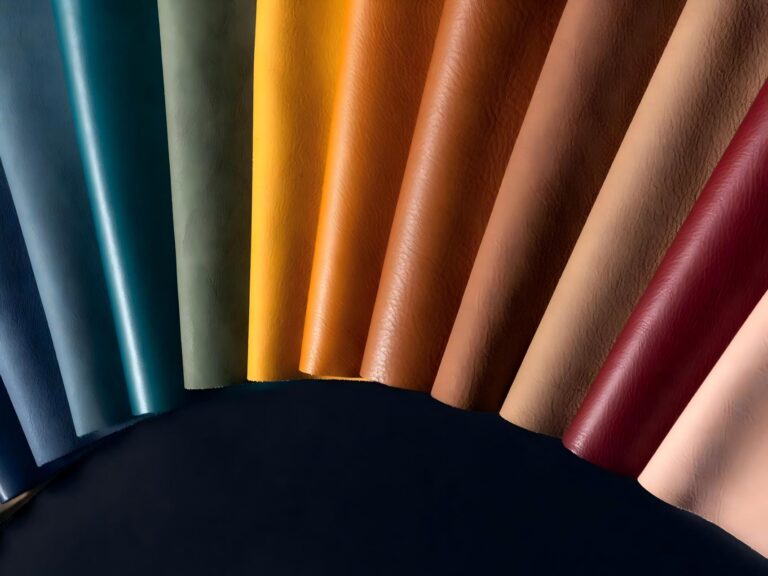
Color swatch display wall — each color is spectrophotometer-verified and locked into the batch production system
4 Color Matching Pitfalls That Cause Order Rejections
Even with a capable supplier, color matching failures happen when communication and verification protocols break down. Here are the four most common pitfalls and how to prevent them:
- Metamerism — the showroom trap. Two colors match perfectly under D65 daylight but look different under warm store lighting or LED panels. This happens because the pigments have different spectral reflectance curves. Fix: evaluate samples under the actual lighting where the finished product will be displayed, not just under lab D65. Request spectrophotometer data under multiple illuminants (D65, A, F11).
- Substrate mismatch. A color matched on a smooth texture looks different when produced on a lychee or pebbled texture because of how surface topography affects light scattering. Fix: always match on the actual production substrate and texture — not on a generic flat sample. TOPSUN matches on the exact texture specified for production.
- UV drift over time. A color matches on delivery but drifts after 12–18 months of sun exposure because surface pigment coatings degrade. PU and PVC leather are particularly susceptible. Fix: request UV color fastness data (ISO 105-B06). Silicone leather achieves Grade 4–5 after 1,000+ hours of UV exposure — meaning minimal color drift over the product’s service life.
- No batch verification protocol. The first order matches perfectly. The second order is off because the supplier has no spectrophotometer-based batch QC — they matched by eye. Fix: require spectrophotometer Delta E verification on every batch, not just the initial sample. Document the acceptable Delta E tolerance in your purchase contract.
Color fastness test — UV exposure verification showing silicone leather’s resistance to color shift over time
About TOPSUN: Color Precision at Production Scale
TOPSUN operates a dedicated color laboratory at its Dongguan facility, equipped with spectrophotometer verification and D65/A/F11 multi-illuminant evaluation. The color customization service matches to any Pantone, RAL, or NCS reference — or to a physical sample — with Delta E ≤ 1.0 accuracy, delivering three lab variants in 7–10 days. Every production batch is spectrophotometer-verified against the approved standard before shipping, ensuring that roll #1 and roll #1000 are color-identical. With 500,000+ meters monthly capacity across three production facilities, TOPSUN provides color-verified silicone leather at B2B production scale. Free A4 swatches in custom colors are available through the samples center.
Request a Color Match Consultation
Silicone Leather Color Matching: Frequently Asked Questions
What is Delta E and why does ≤ 1.0 matter?
Delta E (ΔE) measures the mathematical distance between two colors in CIELAB color space. The human eye typically perceives a color difference at Delta E > 1.0. A Delta E ≤ 1.0 means the difference between the target and the produced material is imperceptible — colors appear identical even under direct comparison. This is the standard for premium B2B production where products sit side-by-side and color mismatch would be visible to customers.
Can you match an exact Pantone color in silicone leather?
Yes. TOPSUN matches to any Pantone, RAL, or NCS code — or to a physical color sample — with Delta E ≤ 1.0 accuracy. Because silicone leather integrates pigment into the polymer matrix during platinum-curing, color matching is controlled at the formulation stage rather than relying on surface coating. Three lab variants (on-target, lighter, deeper) are delivered in 7–10 days for client approval.
How do you ensure batch-to-batch color consistency?
Every production batch is spectrophotometer-verified against the client-approved standard before shipping. The approved pigment formulation is locked into the production system, and each batch’s Delta E is recorded. If a batch exceeds Delta E 1.0 against the approved standard, it’s flagged and held — not shipped. This protocol ensures color consistency from the first order through continuous production.
Does silicone leather color fade over time?
Silicone leather achieves Grade 4–5 color fastness (ISO 105-B06) after 1,000+ hours of UV exposure, meaning minimal color drift over the product’s 10+ year service life. Unlike PU and PVC leather, where surface pigment coatings degrade under UV, silicone leather’s integrated pigment is locked into the cross-linked polymer matrix — UV exposure doesn’t break down the color bond.
The Color Matching Bottom Line
Color matching in B2B leather isn’t about getting lucky with a good batch — it’s about having a controlled process that delivers the same color every time. Genuine leather’s drum-dyeing chemistry makes that impossible (Delta E 2.8–5.6 is inherent, not a quality failure). PU and PVC achieve initial matching but drift under UV. Silicone leather’s pigment-in-polymer system, verified by spectrophotometer at every batch, delivers Delta E ≤ 1.0 from sample to production — consistently, repeatably, and at scale.
If your supplier can’t provide spectrophotometer Delta E data on your current batch, ask why. If the answer is “we match by eye,” that’s your color consistency risk — and your next order rejection waiting to happen.
Related: Color Customization Service | Leather Color Customization Guide | Color Stability Analysis | Texture Customization | Texture Design Center