“Faux leather” isn’t one material — it’s four. PU, PVC, microfiber, and silicone leather all fall under the faux leather label, and procurement teams that treat them as interchangeable are setting up their products for failure. A PU sofa cover and a silicone leather sofa cover look similar on day one, but after three years of daily use, one is ready for the landfill and the other still looks new.
The confusion is understandable. B2B marketplaces list all four under “faux leather” or “synthetic leather,” and suppliers rarely explain the performance differences. But the chemistry behind each type dictates everything — durability, safety, cleanability, environmental impact, and total cost of ownership.
After testing all four material types across our standard protocol — Martindale abrasion, UV exposure, flex resistance, and hydrolysis — here’s a ranked comparison that cuts through the marketing.
Request Free Material Comparison Samples

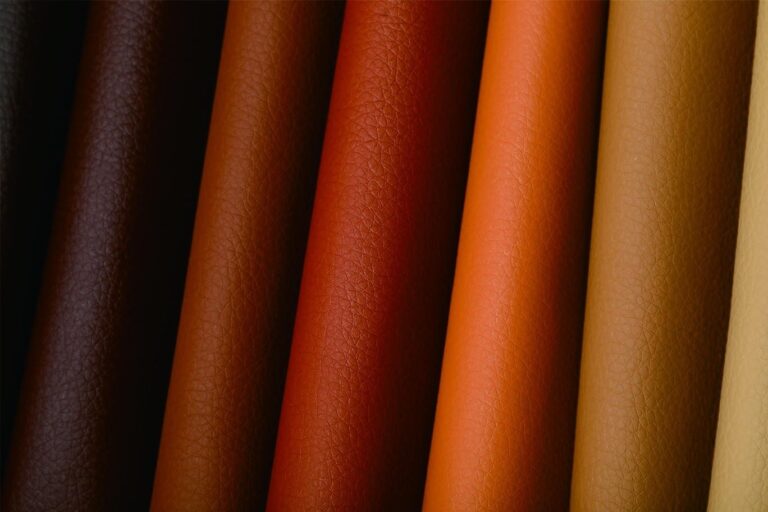
Material sample strips — different faux leather formulations for direct comparison
PVC Leather: The Cheapest Option With the Highest Risk
Polyvinyl chloride leather is the oldest synthetic leather type — and the one causing the most headaches for B2B buyers. It’s made by coating a fabric backing with a PVC layer loaded with plasticizers (typically phthalates) to achieve flexibility. At $1.50–3 per meter, it’s the most budget-friendly option on paper.
But PVC faux leather carries significant compliance and performance risks:
- Phthalate content: Many PVC formulations contain restricted SVHC substances under REACH. If you’re selling into the EU, always demand a full REACH compliance certificate — not a generic MSDS.
- Short service life: 2–3 years in typical indoor use, less in UV-exposed or high-humidity environments. Plasticizers migrate out, leaving the surface brittle and cracked.
- Poor cleanability: The porous surface absorbs stains and bacteria. Alcohol-based disinfectants accelerate surface degradation.
- Environmental liability: PVC is not recyclable and releases toxic smoke if burned. Growing numbers of brands are phasing it out for ESG reasons.
In our ranking, PVC faux leather leather sits at the bottom. It’s acceptable for disposable or short-life products, but for anything sold with a warranty, it’s a liability.
PU Leather: The Market Standard With a Degradation Problem
Polyurethane-coated fabric is the workhorse of the faux leather world. It’s softer than PVC, more breathable, and doesn’t contain phthalates in most formulations. At $2.50–5 per meter, it dominates the mid-market for furniture upholstery, automotive interiors, fashion accessories, and consumer electronics.
The problem with PU leather is hydrolysis. The ester-based polyurethane used in most formulations reacts with moisture in the air, breaking down the polymer bonds over time. In humid climates, PU leather shows visible surface degradation within 2–3 years — the coating becomes sticky, then brittle, then peels. Our hydrolysis resistance testing shows PU samples failing after 4 weeks in 70°C / 95% RH chambers.
Procurement insight: PU leather’s 3–5 year service life is adequate for products with short replacement cycles (fashion accessories, budget furniture). But for automotive interiors, medical equipment, or any product sold with a 5+ year warranty, PU’s hydrolysis failure becomes a warranty cost center.

Calendering process — the production method that determines coating uniformity and material quality
Microfiber Leather: Premium Feel, Moderate Durability
Microfiber leather sits between PU and genuine leather in both price and performance. It’s made by coating ultra-fine nylon microfibers with polyurethane, creating a structure that mimics genuine leather’s fiber network more closely than standard PU. The result is a softer hand feel, better breathability, and higher tear strength.
At $5–10 per meter, microfiber leather is a solid choice for premium applications where the look and feel of genuine leather matters. However, it still uses polyurethane as the coating — which means it’s subject to the same hydrolysis problem, just at a slower rate. Expect 4–6 years of service life in typical indoor conditions.
Silicone Leather: The Only Faux Leather That Lasts a Decade
Silicone-coated leather fabric is the newest entrant in the faux leather category, and it solves the fundamental problems that plague the other three types. Instead of PU or PVC, the coating is medical-grade silicone — the same polymer used in baby bottle nipples, medical tubing, and food-contact bakeware.
| Property | PVC | PU | Microfiber | Silicone |
|---|---|---|---|---|
| Martindale abrasion | 25K–50K | 50K–100K | 50K–100K | 200K+ |
| UV resistance | Poor | 200–500h | 200–500h | 1,000h+ |
| Hydrolysis | Moderate | Poor | Moderate | Excellent |
| Service life | 2–3 yr | 3–5 yr | 4–6 yr | 10+ yr |
| VOC emission | High | Moderate | Low | Zero |
| Recyclable | No | Limited | Limited | Yes |
Silicone leather achieves its 10+ year service life because it doesn’t rely on plasticizers or ester-based polymers. The silicone coating is chemically inert — it doesn’t react with moisture, UV, or temperature the way PU and PVC do. For a deeper comparison, see our silicone vs. PU technical breakdown.
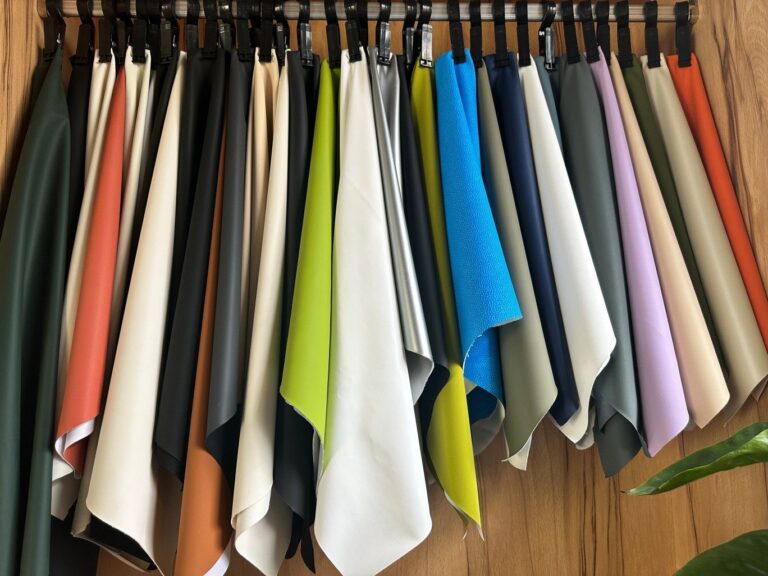
Material comparison overview — how silicone leather performs against PU, PVC, and microfiber

Material structure comparison — cross-section showing coating and backing differences
How to Choose: Match the Material to Your Product’s Lifecycle
The right faux leather leather type depends on how long your product needs to last and what environment it faces. Here’s a quick decision framework:
- PVC → Use for: disposable packaging, short-life promotional items, products sold in markets without REACH enforcement. Avoid for: anything with a warranty, baby/children’s products, food-contact applications.
- PU → Use for: budget furniture (2–3 year replacement cycle), seasonal fashion, promotional items. Avoid for: automotive interiors, medical equipment, humid climates, long-warranty products.
- Microfiber → Use for: premium fashion accessories, mid-range furniture, automotive interiors with 3–5 year target life. Avoid for: applications requiring chemical disinfection or hydrolysis resistance.
- Silicone → Use for: products with 5+ year warranties, medical/healthcare, baby products, marine/outdoor, food-contact, and any application where hygiene and durability are non-negotiable. For eco-friendly positioning, it’s the only option that’s both PVC-free and recyclable.
The simplest test: request A4 samples of all four types from different suppliers, expose them to your product’s real-world conditions for 30 days, and compare. The performance gap becomes obvious fast. According to ISO 5402 flex resistance standards, only silicone leather consistently passes 50,000+ cycles without visible surface damage.
Frequently Asked Questions
What is the difference between faux leather and real leather?
Faux leather is a synthetic material made by coating a fabric backing (polyester, cotton, or microfiber) with a polymer layer (PVC, PU, or silicone). Real leather is animal hide that has been tanned. Faux leather is more consistent in quality, available in any color, and cruelty-free. Premium silicone faux leather now outperforms genuine leather in durability, cleanability, and dimensional stability.
Which faux leather type is most eco-friendly?
Silicone leather is the most eco-friendly faux leather type. It’s PVC-free, phthalate-free, zero-VOC, and 100% recyclable. PVC leather is the least eco-friendly — it’s not recyclable and releases toxic chemicals during disposal. PU and microfiber leather fall in between, with limited recyclability and moderate VOC emissions.
Specify the Type, Not Just the Term
The biggest mistake B2B buyers make with faux leather leather is treating it as a single material. “Faux leather” on a spec sheet is meaningless without knowing whether it’s PVC, PU, microfiber, or silicone — because the performance range spans from 2-year throwaway to 10+ year premium surface.
If your product needs to last, specify silicone. If budget is the only constraint, PVC works — but build the replacement cost into your pricing. And if you’re somewhere in between, PU and microfiber offer reasonable middle-ground performance. The key is making a conscious choice based on your product’s lifecycle, not just the per-meter price on a supplier’s quote.
Talk to Our Material Engineers
About TOPSUN
TOPSUN manufactures silicone leather — the highest-performance faux leather type — for B2B buyers who need verified material specs, batch-to-batch consistency, and compliance documentation across automotive, medical, furniture, and consumer product applications.
PVC-free & phthalate-free | Zero VOC | 200K+ Martindale | REACH & RoHS | FDA food-contact | 500m MOQ | Free A4 swatches