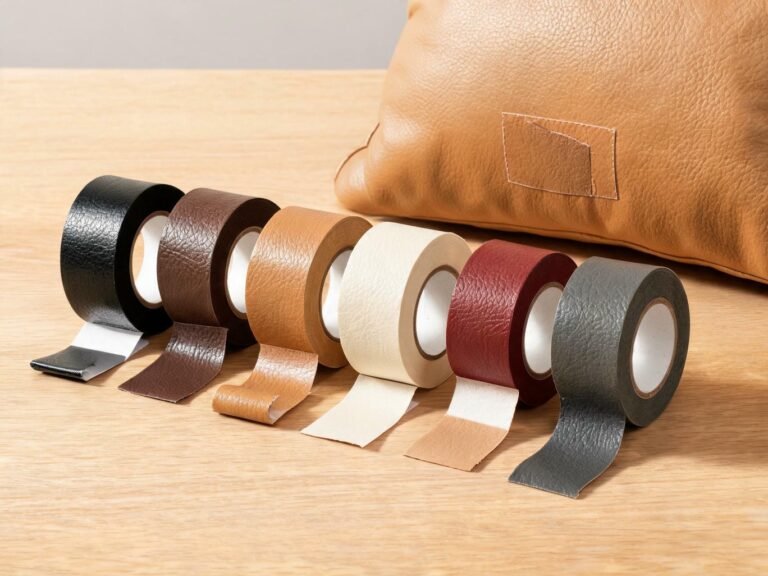
A refurbishment manager we work with once ordered leather furniture tape by the case — two rolls per technician, replenished every quarter. On paper, each patch cost less than two dollars. On her year-end report, tape-related labor had quietly consumed 380 technician hours across a 1,200-unit furniture fleet. That’s the part of the tape decision nobody puts in a spreadsheet. Here’s the uncomfortable math: consumer-grade upholstery tape holds for 6–24 months at best, because adhesion degrades under humidity, heat, and repeated flexing. If you run furniture for hotels, rentals, or corporate spaces, the real question isn’t “which tape is best” — it’s “when does taping become the most expensive option on the list.”
Request Free Refurbishment Samples
What Leather Furniture Tape Actually Fixes — and What It Doesn’t
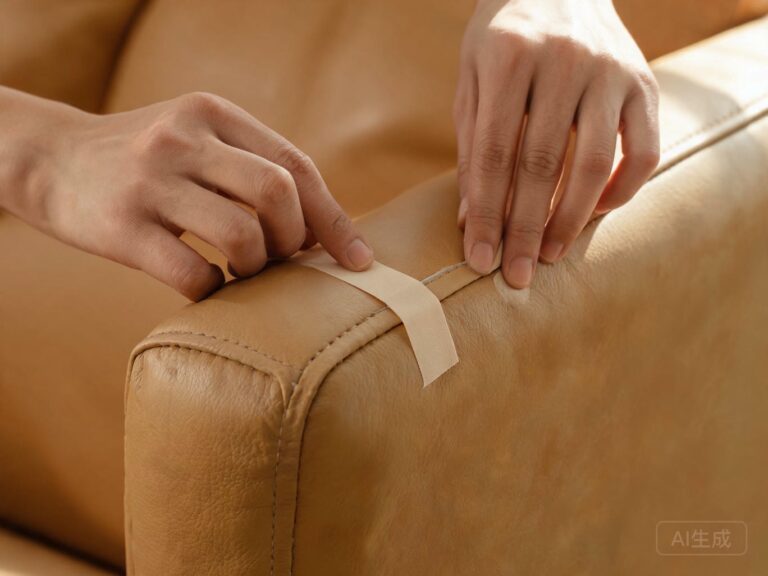
Self-adhesive tape has a legitimate job: it’s triage, not treatment. It buys time on a tear until a proper repair is scheduled, and on low-contact vertical surfaces it can hold for a surprisingly long while. The trouble starts when triage becomes the policy.
- Tape handles: clean slices on rarely-touched panels, armrest edge wear, staging units waiting for refurbishment, back-of-house furniture with cosmetic-only damage.
- Tape cannot handle: seat-center flex zones, spring-adjacent stress points, seams under daily shear, anything on a cleaning schedule that involves wipes or disinfectant.
- Hard limit: tape is not load-bearing and cannot restore tensile strength — a cracked seat panel patched with tape fails again at the same stress point.
If you want the consumer-side application steps in detail, our earlier walkthrough of leather tape for sofa repairs covers surface prep and patch sizing. This article focuses on the commercial side: what happens after the third or fourth re-tape.
Why Adhesion Gives Up in 6–24 Months
Two failure modes work in tandem. First, the adhesive: pressure-sensitive glue softens in summer heat, embrittles in winter cold, and shears loose under the micro-movement of a seat that flexes every time someone sits down. Second, the tape itself — most economy rolls are PVC or PU film, the same material families that crack and peel on their own within a few years of UV and flex exposure. You are, quite literally, patching a failing polymer with a thinner version of the same polymer. In our silicone vs PU comparison testing, PU-coated samples showed visible surface cracking well before silicone equivalents even registered a change.

Durability belongs in the lab, not in a drawer of tape rolls — TOPSUN’s abrasion testing line
Here’s the thing about “several years” claims in tape reviews: those tests run on private car seats and home couches, maybe a few uses per week. A hotel lobby chair takes more sitting cycles in one month than a home armchair sees in a year. Commercial duty cycles are a different sport entirely. When we evaluate covering materials for furniture clients, we require verified abrasion numbers — our own rolls are tested at 200,000+ Martindale cycles by third-party labs such as SGS, with flex resistance of 50,000–100,000 cycles per methods referenced through ASTM and ISO protocols. No adhesive tape on the market publishes anything comparable, because none can pass.
The 5-Year Math: Tape Loop vs. Re-Covering Once
Industry benchmarks help frame the decision. Furniture restoration typically runs 70–90% cheaper than full replacement, and commercial reupholstery generally lands at 40–60% of new-furniture cost. Tape is cheaper still — per incident. The cost only becomes visible when you annualize it. Assume a 400-seat hotel restaurant where seat-center wear generates 60 damage reports a year:
| Repair route | Cost per incident | Expected lifespan | 5-year labor load |
|---|---|---|---|
| Tape patch loop | $2–6 material + 15 min labor | 6–24 months, seat-center zones shorter | High — same seats re-taped 3–6× |
| Professional panel repair | $150–400 typical panel scope | 2–4 years on worn substrate | Moderate — depends on substrate age |
| Re-cover with durable rolls | Material per seat, cut-and-sew labor once | 10+ years (silicone leather, tested) | Low — one intervention per seat |
The pattern we see in refurbishment programs: tape wins the first year on cash outlay, then loses every year after, because labor is billed per visit while a re-covered seat is billed once. One apartment-furnishing client of ours tracked 18 months of tape-driven callouts against a one-time re-cover quote; the quote paid for itself before month 30. For a fuller framework on lifecycle costing, see our 5-year upholstery TCO analysis.
Tape is priced per patch. Re-covering is priced per seat. Over five years of commercial duty, the seat price always wins.

Re-covering stock: finished rolls ready to ship for scheduled refurbishment batches
When Leather Furniture Tape Is Genuinely the Right Call
None of this makes tape a bad product — it makes tape a scoped tool. Keep rolls in the maintenance closet for unit staging, cosmetic edge wear, and the gap between damage report and scheduled refurbishment date. Specify re-covering for anything in a flex zone, anything under warranty claims pressure, and anything your client will photograph for a review. The materials you re-cover with should match the duty cycle: for high-traffic furniture and sofa applications, our silicone leather rolls carry 200,000+ Martindale cycles, hydrolysis resistance, and bleach-safe cleaning — specs no adhesive patch will ever meet.

Commercial seating absorbs home-couch wear rates in weeks, not years
Where the real savings hide: watch how one re-covering cycle replaces years of repeat patching
Frequently Asked Questions
How long does leather furniture tape last on commercial seating?
Expect 6–24 months on low-contact surfaces and considerably less on seat-center flex zones. Heat, humidity, cleaning chemicals, and daily sitting cycles all accelerate adhesive failure. Treat any “years of durability” claim as a home-use scenario, not a commercial one.
Can I tape over silicone leather or other coated fabrics?
Technically yes, but it’s rarely worth it. Non-porous, low-surface-energy materials like silicone leather give adhesives very little to grip, so patches peel early. The better route is a matched-material panel replacement cut from the same roll specification.
Is tape ever cheaper than re-covering over five years?
On a single low-use chair, possibly. Across a fleet, almost never — because each re-tape bills labor again while a re-cover bills once. The break-even point typically lands between the second and third re-tape of the same seat panel.
The Leather Furniture Tape Decision, in One Line
Use leather furniture tape for what it is — a bridge between damage and scheduled repair — and budget re-covering for the seats your business actually runs on. Five years from now, the operators who bought one durable covering will have spent less than the ones who kept ordering tape, and they’ll have the maintenance logs to prove it.
Get a Re-Covering Material Quote
About TOPSUN
TOPSUN manufactures silicone leather rolls for commercial furniture refurbishment programs, supplying hospitality seating, corporate lounge suites, and rental-fleet re-covering projects across automotive, marine, and interior markets.
500,000+ m monthly capacity · MOQ 500 m with 7–15 day lead time · 200,000+ Martindale cycles verified · Free A4 swatches shipped worldwide via DHL/FedEx.