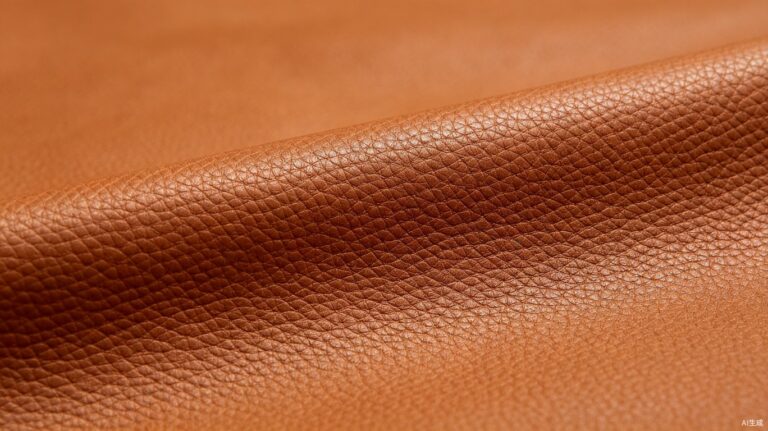
When a sustainability director asks us about cactus leather Desserto, the first document we request is not the lookbook. It’s the composition sheet. Here’s what it says: Desserto runs roughly 35% cactus content against 65% bio-based polyurethane, on a woven polyester-cotton backing. That split matters because it defines what you can and cannot claim. The material is genuinely a step forward on carbon — the company’s published Early Life Cycle Assessment reports 34.33 kg CO2 per square meter cradle-to-gate, against 335.84 for animal leather. But it is not a plastic-free material, and procurement teams that write “plant-based” into a marketing brief without reading the polymer share are building a greenwashing exposure. This audit walks through both columns of that ledger: where cactus leather legitimately wins, and where the claims deserve a harder look.
Cactus Leather Desserto: The Composition Behind the Claim
Desserto is produced by harvesting mature nopal cactus pads in Mexico, drying them under sun, and grinding them into a powder that becomes the organic filler inside a polyurethane matrix. The published specification for the standard grade: about 35% cactus, 65% bio-PU, with total biomass content around 56% ±5%, on a 55/45 polyester-cotton woven backing, at roughly 610 g/m². Some catalog variants use 100% recycled cotton knit backing, which improves the end-of-life story. None of this is hidden — Desserto publishes it. The issue is how the material gets described downstream: “cactus leather” on a product page reads as a plant product to consumers, while the binding polymer is still polyurethane, and industry estimates put cactus-based materials at roughly 65% plastic overall. Trade bodies have flagged exactly this gap between perception and composition across apple, pineapple, and cactus leathers alike. For buyers mapping the broader plant-based landscape, our overview of plant-based leather and sustainable materials places each option on the same axes.

Plant-based leathers earn their strongest position in fashion and accessories, where duty cycles are light and story value is high
The Carbon Math: Where Cactus Leather Genuinely Wins
Strip away the marketing and the carbon numbers hold up well. Beyond the 34.33 vs 335.84 kg CO2/m² cradle-to-gate comparison, nopal cultivation is rain-fed rather than irrigated — a meaningful contrast with both cattle and many crop-based fibers — and the plantations themselves sequester carbon: the company reports its 14 acres of organic cactus absorbing 8,100 tons of CO2 annually against 15.3 tons generated at the farm. As a sustainability narrative for fashion and accessories, that is a legitimately strong story, and brands from Fossil Group to luxury automotive programs have used it. Methodology discipline matters here too: a credible LCA follows the ISO 14040 series framework, and ISO’s life cycle assessment standards define what a cradle-to-gate claim must cover. When we audit material claims for clients, the first filter is whether the LCA boundary is stated at all — “lower carbon than leather” without a boundary is a slogan, not a number.

Sustainability claims are only as strong as the documentation behind them — raw material traceability on the production floor
The Fine Print: Durability, Chemistry, and Scale Limits
Now the harder column. Durability first: realistic service life for cactus leather runs 4–7 years of regular use, against 5–10 for high-quality cattle hide — respectable, but not heirloom territory, and below what commercial seating warranties typically demand. The chemistry is the deeper issue: because the matrix is polyurethane, hydrolysis remains a live failure mode in humid climates, exactly as it is for conventional PU. The plant filler changes the carbon story, not the water-chemistry story. Then there’s the operating envelope: cactus leather performs well from roughly -10 °C to 70 °C with good UV resistance, but high-friction and high-stress applications remain beyond it — recent-generation materials reach about 10,000 Taber abrasion cycles and 25 MPa tensile, which approaches mid-range genuine leather, not the top of it. Finally, price and scale: catalog pricing runs $39–42 per linear meter with no MOQ on some grades, and European brands report material costs of €25–40 per square meter — several times conventional PU, with production capacity that a mass-market seating program would consume in weeks. None of these are disqualifiers. They are constraints, and pretending otherwise is how sustainability programs end up in retreat.
| Sustainability claim | What the data supports | Audit watch-out |
|---|---|---|
| “Plant-based leather” | ~35% cactus content, ~56% total biomass | ~65% PU matrix — “plant-based” alone overstates purity |
| “Lower carbon than leather” | 34.33 vs 335.84 kg CO2/m² cradle-to-gate | Confirm the LCA boundary and methodology before quoting |
| “Water-saving agriculture” | Rain-fed nopal, no irrigation reported | PU production water footprint usually excluded from claims |
| “Durable alternative” | 4–7 years realistic use; ~10,000 Taber cycles | PU matrix still hydrolyzes — humid-market warranties need care |
Audit rule: claim the carbon, disclose the polymer. “35% cactus in a bio-PU matrix, 34 kg CO2/m² cradle-to-gate” survives scrutiny — “plant-based leather” alone eventually won’t.
Cactus Leather vs Silicone Leather: The Portfolio Logic
Sourcing teams increasingly treat these as complementary materials rather than competitors, and that’s the right frame. Cactus leather wins the carbon-and-story category for fashion, accessories, and premium short-cycle goods — anywhere the narrative carries margin and the duty cycle stays light. Silicone leather wins the durability-and-chemistry category: an inorganic Si-O backbone with no hydrolysis pathway, 200,000+ Martindale cycles, a -40 °C to 250 °C envelope, zero-VOC emission, and full recyclability — the profile that automotive interior programs and commercial seating actually spec.
When plant-based samples come through our comparison lab, the pattern is consistent: they benchmark beautifully on carbon and hand-feel, then hit a wall on abrasion and humidity aging that silicone doesn’t have in the first place. For buyers assembling a defensible vegan portfolio, our guide to vegan leather alternatives maps which material can honestly carry which claim.
And when the audit turns inward — because serious buyers always turn it inward — the same standard applies to us: our eco-friendly silicone leather documentation lists every certification behind the claims made in this article.

A serious vegan portfolio needs both columns: story materials and performance materials
What a certified sustainability claim looks like: the documentation stack behind every roll
Frequently Asked Questions
Is cactus leather 100% plant-based?
No. Desserto’s standard grade contains roughly 35% cactus in a 65% bio-polyurethane matrix, with total biomass content around 56%. It is partially bio-based, and the binding polymer is still polyurethane. Fully plastic-free plant leathers exist in the market, but at higher prices and very limited volumes.
How expensive is Desserto cactus leather?
Catalog pricing has run $39–42 per linear meter for standard grades, and European brands report material costs of €25–40 per square meter. That’s several times conventional PU and well above most silicone leather grades — the premium buys the carbon story, not superior durability.
Does cactus leather last as long as real leather?
Generally no. Realistic service life is 4–7 years of regular use versus 5–10 for quality cattle hide, and the PU matrix means humid climates accelerate aging just as with conventional faux leather. For high-wear commercial applications, spec the abrasion and hydrolysis data before committing.
The Honest Version of the Story
Cactus leather Desserto deserves its place in the sustainable materials conversation — the carbon reduction is real, the agriculture is genuinely low-impact, and the material has pushed the entire industry toward transparency it didn’t have five years ago. But a claim that survives audit always names the polymer, states the boundary, and separates the carbon story from the durability story. Do that, and cactus leather earns a legitimate slot in your portfolio next to a performance material that covers what it can’t. Sustainability programs don’t fail because materials underdeliver; they fail because claims were written bigger than the data. If you’re benchmarking options for a carbon-neutral roadmap, our analysis of carbon-neutral leather pathways extends this comparison to the certification level.
Request Sustainability Documentation
About TOPSUN
TOPSUN produces silicone leather for sustainability-led product programs across automotive, furniture, and consumer goods, with a solvent-free dry coating process and full documentation for ESG reporting.
Zero VOC emissions verified · REACH and RoHS compliant · 100% recyclable material stream · 10+ year service life reducing replacement cycles · Third-party testing via SGS and Intertek.