Why Cream Leather Color Matching Fails in Mass Production
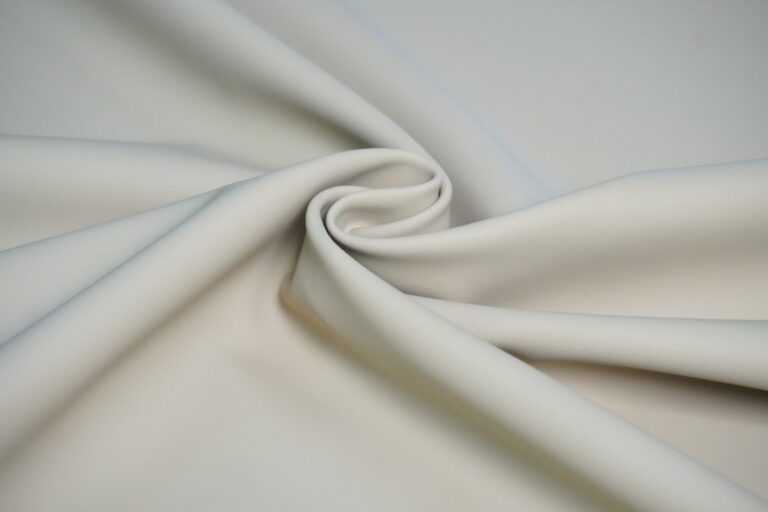
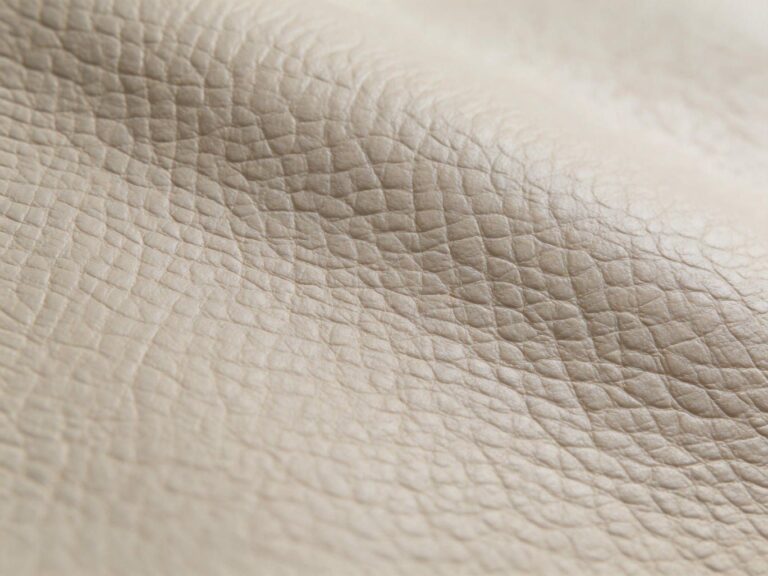
A cream leather color that looks perfect on a swatch can shift three shades darker after six months of UV exposure — and most buyers discover this only after a customer complaint arrives. In my role overseeing quality control for a silicone leather facility, I have rejected hundreds of meters of material where the Pantone code matched on paper but the physical sample told a different story. The cream spectrum is unforgiving: even a Delta E of 2.0 between batches becomes visible to the naked eye on light-toned surfaces, especially across furniture upholstery and automotive interiors where panels sit side by side.
The root cause is rarely the pigment itself. It is the interaction between the carrier resin, the UV stabilizer package, and the coating process. PU and PVC leathers use solvent-based colorants that migrate under heat and light, causing cream tones to yellow or darken. Silicone leather avoids this through a solvent-free dry coating process where silicone polymers inherently resist UV degradation — maintaining color stability for 1,000+ hours under ASTM G154 testing without yellowing. Understanding this difference is the foundation of any reliable cream leather color specification.

Pantone, RAL, and NCS: Translating Cream Into Production Specs
Three color systems dominate B2B leather specifications, and each carries trade-offs. Pantone (TPG/TCX codes) is the language of fashion and branding — your design team thinks in Pantone 7527 C. RAL Classic (such as RAL 9001 for cream) is the standard in industrial and automotive design. NCS (Natural Color System) appears in architecture and interior specifications. A supplier who only accepts one system forces you to convert codes manually, introducing translation errors that compound across revision rounds.
At TOPSUN, our color lab accepts all three systems — or you can send a physical swatch and we reverse-match it spectrophotometrically. The critical metric is Delta E (ΔE), which quantifies the perceptual difference between two colors. A ΔE of 1.0 is the threshold below which the human eye cannot distinguish a difference. We hold cream leather color production to ΔE ≤ 1.0 against the master standard, with batch-to-batch tolerance controlled within the same limit. For comparison, the typical industry tolerance for PU leather ranges from ΔE 2.0 to 3.0 — enough to produce visible mismatched panels in a single production run.
| Color Property | PU Cream | PVC Cream | Silicone Leather |
|---|---|---|---|
| Delta E (batch tolerance) | 2.0–3.0 | 2.5–3.5 | ≤ 1.0 |
| Light fastness (ISO 105-B06) | Grade 3–4 | Grade 3 | Grade 4–5 |
| Rub fastness (ISO 105-X12) | Grade 3 | Grade 2–3 | Grade 4–5 |
| UV yellowing (1,000 hrs) | Visible yellowing | Severe yellowing | No change |
| Color migration risk | High (plasticizer migration) | High (plasticizer migration) | None |
Color Fastness Standards: What Grade 4-5 Actually Means for Cream Leather Color
Color fastness ratings are not marketing language — they are pass/fail gates in a QC protocol. When we say our cream silicone leather achieves Grade 4–5 on ISO 105-B06 (light fastness) and ISO 105-X12 (rubbing fastness), it means the material withstands 1,000+ hours of xenon-arc UV exposure without perceptible color change, and survives 200,000+ Martindale abrasion cycles without pigment transfer to the rubbing medium. For a direct comparison, standard PU cream leather typically rates Grade 3–4 on light fastness and shows visible discoloration after 500 hours of equivalent exposure.
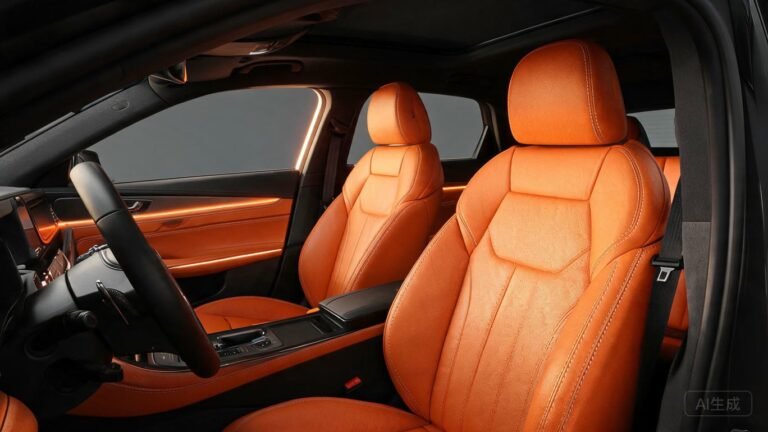
The practical consequence: a cream-toned automotive interior trimmed in PU leather may show measurable color shift within 18 months of daily sun exposure. The same interior in silicone leather holds its original tone for 10+ years. This is not a coating upgrade — it is a fundamental material property. Silicone’s Si-O-Si backbone is inherently UV-stable, meaning no UV absorber additives are needed to maintain the cream leather color over the product lifecycle. You can verify these claims through our technical data sheet and third-party test reports from SGS and Intertek.

Batch Consistency: Delta E and Tolerance Management
Specifying ΔE ≤ 1.0 is the easy part. Achieving it across a 500-meter production run — and repeating it on the next order six months later — requires a controlled process. At TOPSUN, every cream leather color starts with a master standard: a physical swatch signed off by the buyer and stored in a climate-controlled dark room. We create limit samples defining the acceptable range (master ± 0.8 ΔE) and save digital spectral data for future reference.
During production, a spectrophotometer reads every batch at three points across the web width and at five intervals along the roll length. Any reading exceeding ΔE 1.0 triggers an automatic hold and re-matching. This is how we maintain consistency for designer-grade finishes where cream tones must match across different textures, gloss levels, and even metallic variants within the same project. The MOQ for custom cream color matching is 500 meters, with a lead time of 7–15 days including color approval rounds.

Video: Silicone Leather Color Fastness Test
See how cream silicone leather performs under standardized color fastness testing — including UV exposure and rubbing tests that simulate years of real-world wear.
Color fastness testing — cream tones holding under UV exposure and rubbing.
Sourcing Checklist: Cream Silicone Leather for B2B Buyers
When evaluating a supplier for cream leather color production, verify these six points before committing to a purchase order:
- Color system support — Does the supplier accept Pantone, RAL, and NCS, or only one? Multiple-system support reduces translation errors and speeds approval.
- Delta E guarantee — Is ΔE ≤ 1.0 stated in writing? Ask for the spectrophotometer protocol: how many measurement points per roll, and what triggers a hold.
- Master standard retention — Does the supplier store a signed physical master and digital spectral data? This is your insurance for repeat orders matching the original.
- Third-party fastness reports — Request ISO 105-B06 (light) and ISO 105-X12 (rubbing) test certificates from SGS or Intertek, not internal lab data.
- UV stability data — Ask for ASTM G154 or ISO 11507 test results showing color change after 1,000+ hours. PU suppliers often cannot provide this.
- Batch-to-batch track record — Request samples from two different production dates and compare them yourself under D65 lighting. A supplier confident in consistency will provide this willingly.

About TOPSUN
TOPSUN operates a 60,000+ m² silicone leather manufacturing facility in Dongguan, Guangdong, with a dedicated color lab supporting Pantone, RAL, and NCS matching systems. Our cream leather color production holds ΔE ≤ 1.0 batch tolerance, Grade 4–5 color fastness ratings, and 1,000+ hour UV stability — backed by third-party test reports from SGS and Intertek. We serve B2B buyers across automotive interiors, furniture upholstery, medical equipment, and fashion accessories, with an MOQ of 500 meters and 7–15 day lead times. Free A4 color swatches are available worldwide via DHL/FedEx — request yours through our samples center. Contact our color lab at info@topsunsiliconeleather.com or WhatsApp +44 744 461 7933.
Frequently Asked Questions
How accurate is Pantone color matching for silicone leather?
Our silicone leather achieves ΔE ≤ 1.0 against the Pantone master standard, meaning the matched color is indistinguishable from the reference under standardized D65 lighting. This accuracy is maintained across batch-to-batch production through spectrophotometric monitoring at multiple points along each roll. For cream tones specifically, we recommend providing both a Pantone code and a physical swatch to account for substrate effects on perceived color.
Does cream silicone leather yellow or fade over time?
No. Silicone polymers have a Si-O-Si backbone that is inherently UV-stable, meaning no UV absorber additives are required to maintain color. Under ASTM G154 testing, our cream silicone leather shows no perceptible color change or yellowing after 1,000+ hours of xenon-arc exposure. By contrast, PU and PVC cream leathers typically show visible yellowing within 500 hours of equivalent testing due to photooxidation of carbon-based polymers and plasticizer migration.
Request Your Cream Leather Color Samples
Do not specify a cream leather color on paper alone. Order physical A4 swatches in your exact Pantone or RAL code, compare them under your own lighting conditions, and run your own abrasion and UV tests before committing to a production order. TOPSUN provides free color swatches shipped worldwide — request yours today through our samples center, or contact our engineering team to discuss a custom cream leather color development project for your next furniture, automotive, or medical product line. Reach us at info@topsunsiliconeleather.com or WhatsApp +44 744 461 7933.