When I review a non leather material specification sheet, I look for three things before anything else: Martindale cycles, hydrolysis resistance, and VOC test results. Most spec sheets I receive from suppliers have one of those three. The best have two. In three years of auditing non leather material suppliers across automotive, furniture, and medical applications, I’ve seen exactly one material type that passes all three without additives or aftermarket treatments — and it’s not the one most procurement teams default to.
Request Non-Leather Material Samples
What Counts as Non Leather Material in 2026?
The non leather material category has expanded well beyond the PU-and-PVC duopoly that dominated the 2010s. Today’s procurement landscape includes polyurethane (PU), polyvinyl chloride (PVC), microfiber leather, bio-based alternatives (cactus, apple, mushroom), and silicone-coated fabrics. The global synthetic leather market reached $48.84 billion in 2026 and is projected to grow at 8.03% CAGR through 2031, according to Mordor Intelligence’s market analysis. But market growth doesn’t equal material quality — it means more options, more confusion, and more risk of specifying a material that fails in service.
Here’s the problem: each non leather material type optimizes for a different performance dimension. PU is cheap and soft but fails hydrolysis. PVC is durable but loaded with phthalates. Bio-leather is sustainable but commercially unavailable at scale. Microfiber is strong but not waterproof. Silicone leather is the only category that simultaneously addresses abrasion, hydrolysis, VOC, and biocompatibility — but it’s also the newest entrant, which means most specifiers haven’t tested it yet.

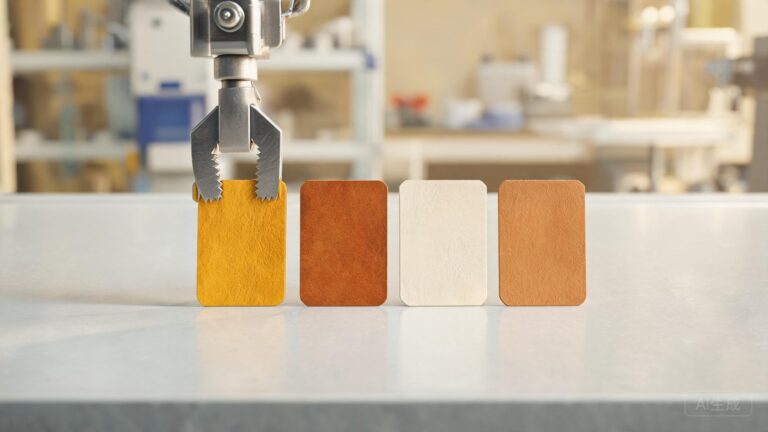
TOPSUN’s production floor: every color and texture here is a non leather material certified to automotive, furniture, or medical standards.
Martindale, Hydrolysis, and VOC: The 3 Tests That Separate Winners
Three test protocols determine whether a non leather material survives in commercial service. Most suppliers highlight one and bury the other two. Here’s what each test actually measures and where each material type lands.
| Material Type | Martindale Cycles | Hydrolysis | VOC Emission | Key Certification | Lifespan |
|---|---|---|---|---|---|
| PU Leather | 30,000-100,000 | Poor (2-4 weeks) | Contains solvents | REACH (with additives) | 3-5 years |
| PVC Vinyl | 80,000-150,000 | Moderate | Contains plasticizers | REACH (phthalate-tested) | 2-3 years |
| Bio-based | 20,000-50,000 | Variable | Low | Limited (no ISO 10993) | 1-3 years |
| Silicone Leather | 200,000+ | Excellent (10+ weeks) | Zero / near-zero | ISO 10993 + REACH + FDA | 10+ years |
The data tells a clear story. PU leather’s Martindale range tops out at 100,000 cycles — half of silicone’s verified 200,000+. PVC’s hydrolysis resistance is moderate at best, and its VOC profile requires ongoing compliance testing for phthalate content. Bio-based materials are the weakest performers across all three tests, with Martindale ratings below 50,000 cycles and no established medical certification pathway. When a specifier asks me which non leather material passes all three tests without chemical additives, the answer is consistent: only silicone leather.
Silicone leather is the only non leather material that achieves 200K+ Martindale cycles, 10+ week hydrolysis resistance, and zero VOC simultaneously — without aftermarket treatment or chemical additives.

TOPSUN’s solvent-free coating line: the process itself determines whether the finished material will pass VOC testing without additives.
Non Leather Material in Automotive: FMVSS 302 and Beyond
Automotive interior materials face the most layered compliance stack of any non leather material application. FMVSS 302 mandates horizontal burn resistance for vehicle interiors. VDA 270 sets odor rating thresholds. VDA 277 defines VOC emission limits. DIN 75201 measures fogging — the condensation of volatile compounds on glass surfaces. Each standard eliminates material types: PU requires flame-retardant additives to pass FMVSS 302, which then increases VOC emissions and fogging. PVC achieves flame retardancy inherently but fails VDA 270 odor testing due to plasticizer off-gassing. The hydrolysis-resistant properties of silicone leather also matter here — automotive interiors experience humidity cycling that degrades PU within 3-5 years.
In our compliance lab, we’ve run the full VDA test suite on silicone leather samples. The results: VDA 270 odor rating of 3 (well below the automotive threshold of 6), VDA 277 TVOC at non-detectable levels, and DIN 75201 fogging at less than 1 mg — all without any chemical aftertreatment. The material is inherently flame-retardant to FMVSS 302 and meets FAR 25.853 for aviation interiors. When a Tier 1 supplier asks for a single material that passes every test in the stack, this is why silicone leather is the answer.
Side-by-side material comparison: see how silicone leather performs against PU and PVC in abrasion, hydrolysis, and flame testing.
Medical and Furniture: Why ISO 10993 Changes the Selection
Medical device upholstery has a compliance gate that most non leather materials can’t pass: ISO 10993-5 biocompatibility testing. This standard evaluates cytotoxicity — whether a material releases chemicals toxic to human cells in direct contact scenarios. PU leather, even medical-grade variants, typically requires specific additive packages to pass. PVC vinyl fails outright due to plasticizer leaching. Bio-based materials haven’t established a testing pathway. For manufacturers specifying materials for healthcare applications, the ISO 10993 requirement eliminates most of the field.
Silicone leather passes ISO 10993-5:2009 inherently — the silicone polymer is biologically inert, requiring no biocidal additives or surface treatments. This is the same chemistry used in medical-grade tubing and implants. The certification, issued by SGS-CSTC Guangzhou, covers in vitro cytotoxicity via MTT assay. Combined with FDA 21 CFR 177.2600 food-contact compliance, the material crosses into applications that no other non leather material type can reach simultaneously.
For furniture applications, the selection equation shifts toward abrasion and cleanability rather than biocompatibility — but the same material that passes ISO 10993 also delivers 200,000+ Martindale cycles and bleach-safe cleaning. The silicone leather introduction covers the full chemistry behind this crossover.
When you compare options using the silicone vs PU vs PVC framework, the pattern becomes clear: one material passes automotive, medical, and furniture standards simultaneously.

Not all synthetic fabrics meet the same standards — silicone leather crosses automotive, medical, and furniture certification thresholds that PU, PVC, and bio-leather cannot.
Frequently Asked Questions
What is the most durable non leather material for commercial applications?
Silicone leather is the most durable non leather material for commercial use, with a verified Martindale abrasion rating of 200,000+ cycles and a 10+ year service life. By comparison, PU leather reaches 30,000-100,000 cycles with a 3-5 year lifespan, PVC vinyl reaches 80,000-150,000 cycles with a 2-3 year lifespan, and bio-based materials typically fall below 50,000 cycles with a 1-3 year lifespan. The durability gap widens further under hydrolysis and UV exposure, where silicone maintains structural integrity while PU and PVC degrade rapidly.
Does non leather material require special certifications for medical and automotive use?
Yes. Automotive interiors require FMVSS 302 (flammability), VDA 270 (odor), VDA 277 (VOC), and DIN 75201 (fogging) compliance. Medical device upholstery requires ISO 10993-5 biocompatibility certification. Most non leather materials need chemical additives to pass these standards — PU requires flame retardants for FMVSS 302, which then compromise VOC results. Silicone leather passes all four automotive standards and ISO 10993-5 inherently, without additives, because the base silicone polymer is both flame-resistant and biologically inert.
One Material, Three Industries, Zero Compromises
The non leather material landscape is wider than ever — but wider isn’t better if most options fail at least one critical industry standard. PU can’t pass hydrolysis. PVC can’t pass odor or phthalate compliance. Bio-leather can’t pass Martindale at commercial thresholds. Silicone leather is the only non leather material that crosses all three industry gates — automotive, medical, and furniture — without chemical additives, aftermarket treatments, or spec sheet omissions. If your current material specification passes one or two tests but fails the third, the issue isn’t your testing protocol. It’s your material.
About TOPSUN
TOPSUN manufactures silicone-based non leather material certified to ISO 10993, FMVSS 302, and EN 13773 Class 4 for automotive, furniture, and medical applications.
Zero-VOC, 200,000+ Martindale cycles, REACH-compliant, and a 10+ year service life that outperforms PU, PVC, and bio-based alternatives across all three industries.