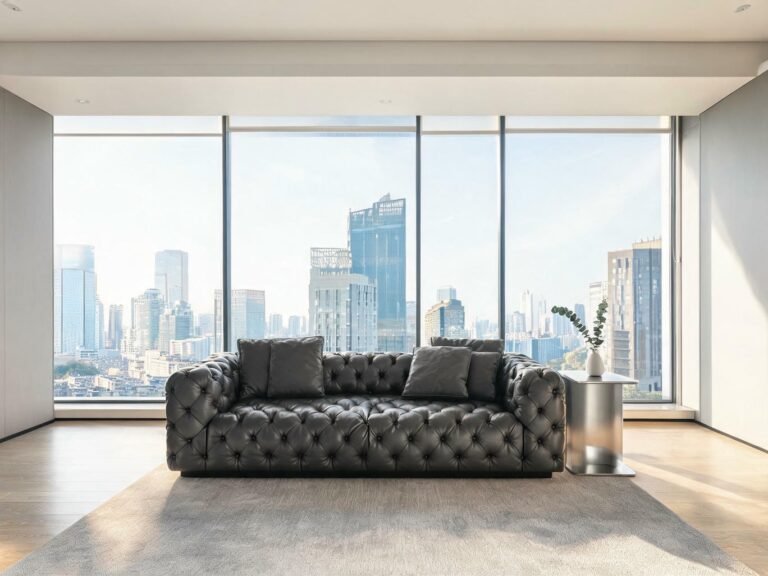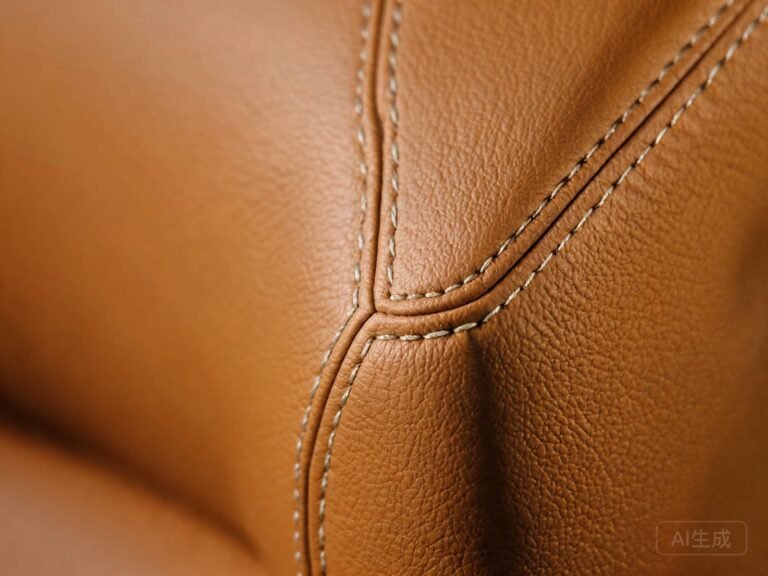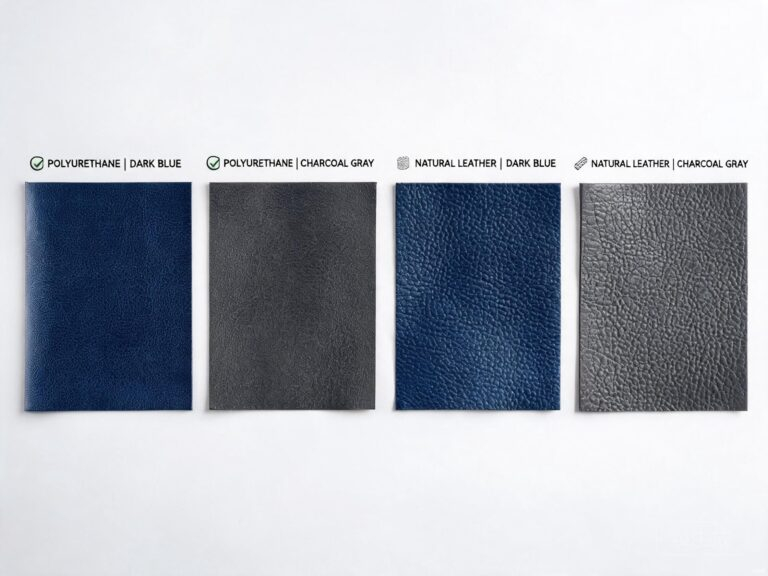
In 15 years of specifying leather marine upholstery for yachts and commercial vessels, I’ve learned one thing: the material that looks best in the showroom rarely survives the first saltwater season. I’ve overseen $20,000 in replacement costs when “marine-grade” vinyl cracked and yellowed after 18 months — because nobody verified the UV test hours during supplier qualification. The leather marine material that lasts 10 years versus 3 years comes down to three tests that most procurement teams never ask to see.
Request Marine Material Samples
The 3 Marine Killers: UV Radiation, Saltwater, and Mildew
Three environmental forces attack leather marine upholstery simultaneously, not sequentially. UV radiation breaks polymer chains at the molecular level — causing yellowing, surface chalking, and tensile strength loss. Saltwater corrodes coating-to-substrate adhesives and drives delamination at the bond layer. Persistent humidity — 80%+ in marine cabins — feeds mildew and mold spores deep into porous material structures. A material that resists one force but not all three fails within 36 months. For a comprehensive material comparison across these factors, our marine upholstery weather-resistant guide breaks down performance by material type.

Why Genuine Leather Fails at Sea
Genuine leather absorbs moisture through its porous structure — the same breathability that makes it comfortable indoors becomes a liability on the water. Saltwater penetrates the hide, crystallizes as it dries, and strips natural oils from the fiber matrix. The result: hardening, cracking, and structural failure within 12–18 months of regular marine exposure. UV radiation degrades chrome-tanning agents and vegetable dyes, causing color fade at 200–500 UV hours — a threshold exceeded in a single summer season on an exposed flybridge.
Marine-grade genuine leather treatments exist, but they apply surface coatings that wear off — they don’t change the substrate’s inherent moisture absorption. Genuine leather has its place in climate-controlled yacht cabins away from direct spray, but for any exposed seating, helm stations, or deck-adjacent upholstery, it’s a specified failure. This is why the leather marine materials conversation has shifted entirely to synthetic alternatives.
Marine Vinyl: The 200-Hour UV Ceiling
Standard marine vinyl — the default specification for most production boats — begins visible color shift after 200–300 UV hours. That’s a single Florida summer. Premium grades with enhanced UV stabilizers push that ceiling to 1,000–2,500 hours, but at a cost premium that approaches silicone leather pricing. The deeper problem with vinyl isn’t just UV: plasticizer migration causes progressive stiffening over 3–5 years, transforming a supple surface into something that cracks under flex. Cold crack failure at -10°C to -20°C disqualifies vinyl for vessels operating in northern latitudes or winter storage conditions.

Vinyl’s advantage is upfront cost — $8–15 per yard versus $25–40 for silicone leather. But when replacement cycles are factored in (vinyl at 3–5 years vs silicone at 8–10+), the lifetime cost equation reverses. A yacht that goes through two vinyl reupholsteries in 10 years spends more than one silicone leather installation that lasts the full decade. For yacht-specific silicone leather case data, see our Sileather marine yacht analysis.
Silicone Leather Marine Performance: 2,000+ Hours Without Yellowing
Silicone leather’s UV stability is intrinsic, not additive-dependent. The Si-O-Si backbone of silicone polymers requires 445 kJ/mol of energy to break — versus 290 kJ/mol for the C-C bonds in vinyl. That molecular difference translates to 2,000+ QUV hours without yellowing, cracking, or tensile loss. In salt spray testing per ASTM B117, silicone leather passes 1,000+ hours without adhesion failure or surface corrosion. Cold crack resistance extends to -40°C, making it suitable for year-round marine storage in any climate.

Mildew resistance is where the gap widens further. Silicone’s non-porous surface provides no nutrient pathway for fungal growth — scoring 0 (no growth) on ASTM G21 fungal resistance testing. Vinyl and PU, by contrast, rely on antimicrobial surface treatments that abrade away with cleaning. In a marine cabin maintaining 80%+ humidity for weeks at sea, that difference determines whether the upholstery stays clean or becomes a mildew colony. For application-specific guidance, our marine and outdoor applications page covers performance requirements by vessel type.
Spec Sheet Checklist: 5 Tests to Demand Before Qualifying
Any supplier claiming “marine-grade” leather marine performance should provide documented test results for these five benchmarks. If they can’t produce the paperwork, the claim is marketing, not material science:
- UV Resistance (QUV hours): Demand 2,000+ hours. Anything below 1,000 means visible fading within 2 years on exposed flybridge seating.
- Salt Spray (ASTM B117): Demand 1,000+ hours without adhesion failure. This is the single best predictor of coating-substrate bond survival in marine conditions.
- Cold Crack Temperature: Demand -30°C or lower. Materials that crack at -10°C will fail during winter storage or northern latitude operation.
- Martindale Abrasion: Demand 50,000+ cycles. Marine seating experiences high-friction loading from wet swimwear, gear, and repeated boarding.
- Fungal Resistance (ASTM G21): Demand rating 0–1 (no growth to trace growth). Anything higher means the material supports mold colonization in marine humidity.
Leather Marine Materials: Performance Comparison
| Material | UV Hours | Salt Spray (B117) | Cold Crack | Mildew (G21) | Marine Lifespan |
|---|---|---|---|---|---|
| Genuine Leather | 200–500 hrs | Fails (porous) | -10°C | 3–4 (high growth) | 1–2 yrs (exposed) |
| Marine Vinyl | 200–2,500 hrs | 500–1,000 hrs | -10°C to -20°C | 1–2 (treatment-dependent) | 3–5 yrs |
| PU Faux Leather | 300–800 hrs | 300–500 hrs | -15°C | 2–3 (moderate) | 4–6 yrs |
| Silicone Leather | 2,000+ hrs | 1,000+ hrs | -40°C | 0 (no growth) | 8–10+ yrs |
Watch our UV resistance testing to see how silicone leather performs under accelerated marine conditions:
UV resistance testing — how silicone leather performs under accelerated marine conditions
FAQ: Leather Marine Materials
What is the best leather marine material for saltwater environments?
Silicone leather is the best leather marine material for saltwater environments. It resists 2,000+ QUV hours of UV exposure without yellowing, passes 1,000+ hours of ASTM B117 salt spray testing without adhesion failure, and scores 0 (no growth) on ASTM G21 fungal resistance testing. Its 8–10+ year marine lifespan is 2–3x longer than marine vinyl or PU faux leather.
How long does marine vinyl last before UV degradation?
Standard marine vinyl begins visible color shift after 200–300 UV hours — roughly one Florida summer. Premium grades with enhanced UV stabilizers reach 1,000–2,500 hours. Typical marine vinyl lifespan is 3–5 years before requiring replacement, with progressive stiffening from plasticizer migration starting in year 2.
Can genuine leather be used for marine upholstery?
Genuine leather is suitable only for climate-controlled yacht cabin interiors away from direct saltwater spray and UV exposure. Its porous structure absorbs moisture, salt crystallizes within the fiber matrix causing cracking, and UV degrades tanning agents within 200–500 hours. For any exposed seating, helm stations, or deck-adjacent applications, synthetic leather marine materials are required.
About TOPSUN
TOPSUN supplies silicone leather for marine upholstery, flybridge seating, and yacht cabin interiors where salt spray resistance, UV stability, and mildew prevention are non-negotiable. Our leather marine materials deliver 2,000+ QUV hours without yellowing, pass ASTM B117 salt spray testing at 1,000+ hours, and achieve 8–10+ year service life in marine environments. Production capacity of 16,000 meters daily supports both custom yacht and commercial vessel programs.
The difference between leather marine upholstery that lasts 3 years and 10 years isn’t the showroom feel — it’s the test data behind the material specification. Demand the UV hours, salt spray results, and mildew ratings before signing a purchase order. The paperwork costs nothing to request; the replacement costs everything to execute.